



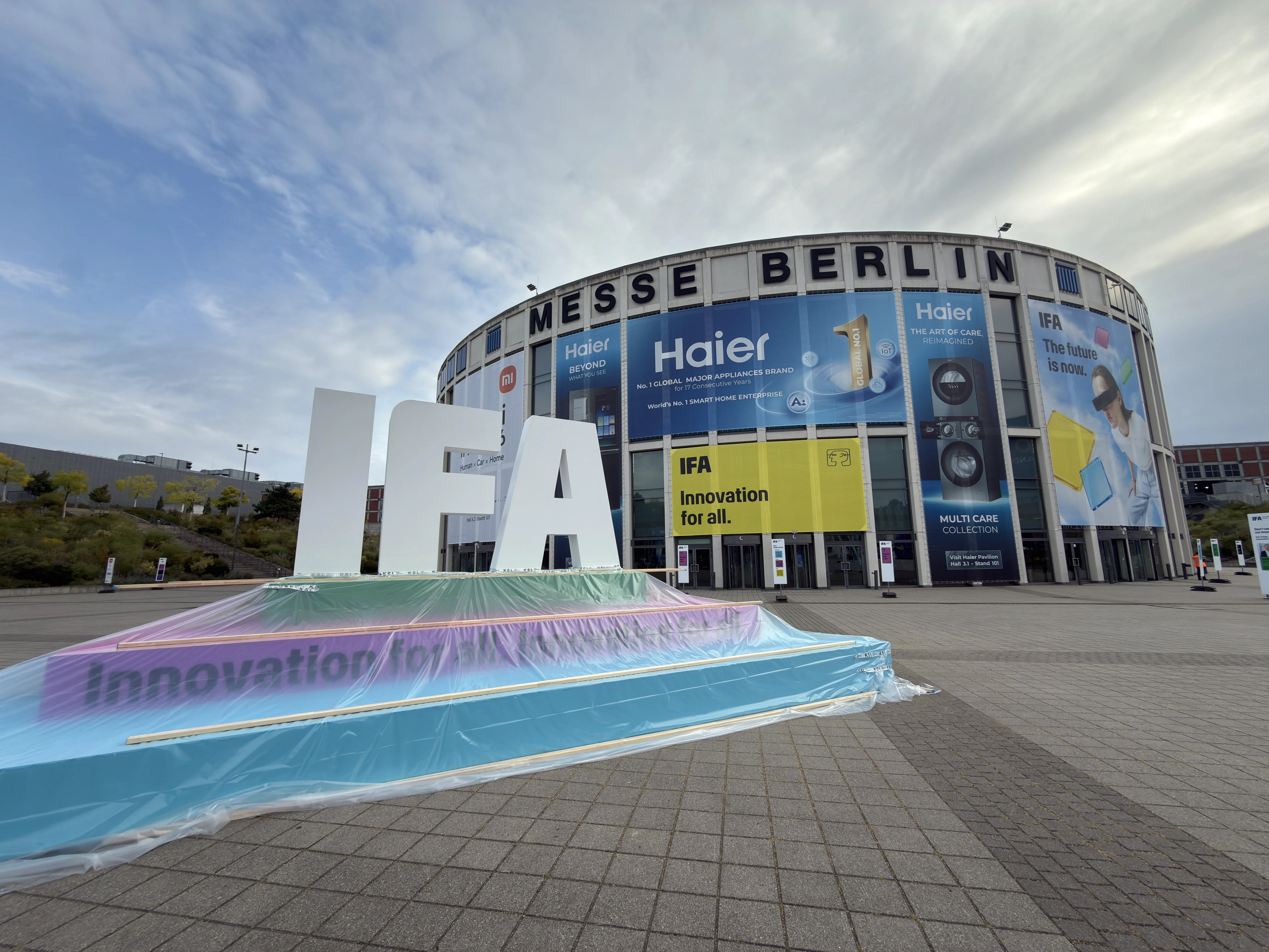
IFA 2026 is currently underway in Berlin, with product announcements arriving at a rapid pace. Although Europe’s largest technology exhibition does not officially open its doors to the public until Friday, press previews have been taking place earlier this week, providing an early glimpse of upcoming televisions, laptops, wearables, smart home devices, and unusually specific appliances.
Over 1,900 brands are expected to participate at Messe Berlin through Tuesday, including industry giants such as Samsung, LG, Lenovo, and Acer. Artificial intelligence will, predictably, be woven throughout the event, appearing in computers, appliances, and likely in a few products that absolutely did not require it. Alongside AI, attendees can expect to see robots, new gaming hardware, and whatever other innovations emerge from the show floor.
Our editorial team is present in Berlin, conducting hands-on evaluations of the most significant products and sifting through the exhibition to identify the developments truly deserving of attention. Continue reading below for our latest news, initial impressions, photographs, and video coverage from IFA 2026.
This page will be continuously updated as additional announcements are made.
Our team is on the ground at IFA Berlin. This premier European consumer technology showcase rivals CES, though it carries a distinctly European character. While the exhibition officially commences Friday, we secured early access to preview the technology that will dominate industry conversations.
Seven members of our team are currently navigating the halls of the Messe Berlin Expo Center, identifying the most innovative, unusual, and impressive technological developments. Follow our coverage if you have an interest in robotics, flying vehicles (we have already located flying cars), advanced kitchen technology, beauty and wellness innovations, or smart home ecosystems.
Cheers!
Editors’ note: Travel expenses for CNET staff contributing to this live coverage were sponsored by IFA, Roborock, Xiaomi, and Lenovo. All judgments and opinions expressed remain those of CNET.

Although IFA has not officially commenced, we have already had the opportunity to experience a world-first product. Premium German appliance manufacturer Miele introduced an intelligent dishwasher featuring an AI-powered camera mounted on the interior of the door.
An intriguing concept, indeed.
The Diamond G8 employs image recognition technology to identify the contents of the dishwasher, enabling it to select the optimal wash cycle. This ensures cleaner dishware while consuming only the necessary amount of detergent and energy. Additionally, the smart appliance schedules its operation during periods when electricity rates are lowest in the user’s region.

When I initially viewed photographs of Anker’s new bedside speaker, the SleepLab Pro, I was impressed by its sophisticated design. Upon seeing it in person, my appreciation only increased.
The circular speaker module is suspended within an orb-shaped enclosure and illuminates in various colors. Despite its height, the slim profile ensures the device maintains a modest footprint.
At the top sits a retractable radar sensor that monitors sleep patterns, heart rate, and respiration, subsequently playing personalized audio to facilitate falling asleep and maintaining sleep, all without requiring wearable devices.
One aspect I find puzzling is how the radar sensor functions when two individuals share the bed. While wearable-free sleep tracking is appealing in principle, it appears vulnerable to inaccuracies when multiple people are present.
Nevertheless, I am sufficiently impressed by the speaker’s aesthetics that I would readily consider the standard version as well, which offers identical functionality without the radar monitoring. This variant simply helps users drift to sleep with gentle music and ambient lighting, while also serving as a morning alarm.
Having previously been impressed with Anker’s sleep headphones, I am eager to discover how this latest sleep technology might further enhance rest quality.
This morning, I was briskly walking through the corridors of Messe, the Berlin convention center hosting IFA, determined to arrive at my appointment punctually.
However, I was detained by the XPENG booth. My attention was captured by an electric vertical takeoff and landing aircraft, alongside a van that bore some resemblance to a Cybertruck.
This turned out to be a flying car concept comprising a “mothership” six-wheel-drive ground vehicle (the van) and an autonomous, detachable two-passenger aerial module. Developed by ARIDGE under the XPENG corporate umbrella, this concept enables the mothership to transport the air module within its cargo area to various locations. The mothership incorporates an automated separation and reconnection system capable of deploying the air module.
At the XPENG booth, both vehicles remained entirely stationary, and I found it difficult to envision how the air module, with its extended propeller arms, could possibly fit within the mothership.
 Andrew Lanxon/CNET
Passport-style designs are emerging as the prevailing trend in foldable smartphones, with Samsung having launched its Galaxy Z Fold 8 and Apple strongly rumored to be adopting a similar form factor with its anticipated folding iPhone Ultra. Not to be outdone, Xiaomi has unveiled its Xiaomi 18 Fold at IFA.
The passport configuration gives the device a more compact appearance when closed, while the larger internal display features a wider aspect ratio, making it more suitable for video content consumption. While precise dimensions have not yet been disclosed, the device appears comparable in size to Samsung’s Galaxy Z Fold 8.
Notably, Xiaomi has elected not to utilize a Qualcomm or MediaTek processor, instead developing its proprietary Xring 03 chip. Both Apple and Google have pursued custom silicon solutions, and Xiaomi clearly recognizes the strategic advantages of this approach.
The device’s true competitive position will become clearer when it launches in China later in September. Unfortunately, international availability has not yet been announced.
Also Read
- 5 Best Video Doorbell Cameras (2026): Subscription-Free, Video, and More
- Psilocybin Shows Promise in Shielding Nerves from Chemotherapy Damage in Mouse Study
- AI’s Unprecedented Capital Concentration: Why Investors Are Backing Both Anthropic and OpenAI
- Psilocybin May Prevent Nerve Damage Caused by Chemotherapy, Study Finds