



Asset recovery may sound like a technical term, yet it represents one of the central pledges of Hungary’s new administration.
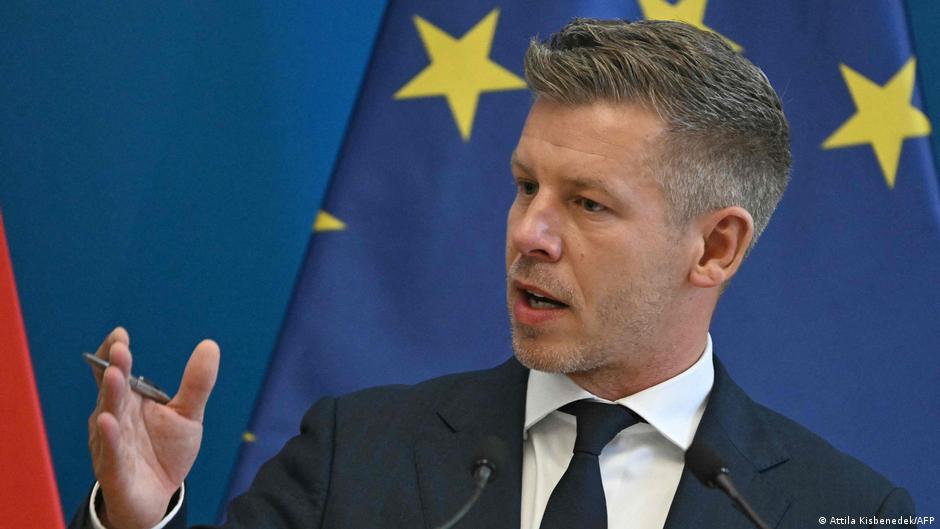
Prime Minister Péter Magyar and his Tisza party aim to reclaim funds and assets that allegedly flowed, through questionable channels, to the family of former leader Viktor Orbán, his allies, oligarchs, and intermediaries. The government intends to return these resources to the state purse and pursue legal accountability for those who benefited.
Billions of euros are reported to have been misappropriated or diverted, and many Hungarians, according to social media sentiment, demand that those responsible face criminal charges. Magyar has cited a figure of roughly €60 billion (US$70 billion), while other analysts suggest the actual sum could be as high as three times that amount.
Orban, allies lived lives of luxury
Analysts contend that the outcome of the asset‑recovery effort will largely determine the political trajectory of Prime Minister Magyar and the Tisza party.
The vast sums are associated with ostentatious lifestyles during Orbán’s tenure. His family, party affiliates, and allied oligarchs reportedly owned lavish estates, traveled by private jets, enjoyed yacht holidays, and repeatedly secured public contracts valued in the billions.
Entrepreneurs, artists, scholars, and journalists linked to Orbán also received substantial public funding over the years, frequently on the basis of personal loyalty to the former premier rather than merit.
Such opulence stood in stark contrast to the reality faced by many Hungarians living in poverty, deteriorating public infrastructure, underfunded schools and hospitals, and a wave of youth emigration, alongside a state budget deficit amounting to roughly 7.5 % of national income. These disparities help explain the widespread public demand for accountability.
Nearly four months have passed since the Magyar administration assumed office, and its anti‑corruption measures are now underway.
At the close of July, the government created the National Asset Recovery Authority (NVVH), a body endowed with extensive investigative and prosecutorial powers and operational independence.
Hungary has lacked a comparable institution in its modern era. The privatization of state assets in the 1990s, following the end of communist rule, was fraught with difficulties—a pattern seen across the former Soviet bloc. When Orbán first assumed power in 2010, a tentative effort to confront the corruption of the preceding Ferenc Gyurcsány administration was made, but it yielded little result.
Hungary new PM lifts lid on Orban-era government luxury
To view this video please enable JavaScript, and consider upgrading to a web browser that supports HTML5 video
This round, authorities intend a different approach.
The NVVH will trace the flow of public money and examine how assets such as real estate were utilized. Although no firm timeline has been announced, the inquiry will concentrate on the Orbán era from 2010 onward. The body also aims to prevent recurrence by assessing how public funds and assets should be managed going forward.
Equipped with both police and prosecutorial authority, the NVVH can conduct investigations and file charges. It remains answerable to the Hungarian parliament.
Controversy around new anti-corruption body
Nevertheless, the establishment of the NVVH has sparked debate.
Last week, parliament appointed 46‑year‑old political scientist Anna Unger of Eötvös Loránd University in Budapest to lead the new anti‑corruption and asset‑recovery agency. Unger specializes in political systems, democratic institutions, and party finance, and she was selected after a multi‑stage process that considered nearly 100 candidates.
Some observers expressed surprise, noting that Unger is not a widely known public figure. Although her work has touched on political corruption, she is neither a recognized specialist in the field nor a lawyer. Many had anticipated the appointment of a legal professional or anti‑corruption expert, such as Miklós Ligeti, who has headed the legal department of Transparency International Hungary since 2012.
Ligeti also submitted an application and is reportedly being weighed for a deputy director role. Unger will be supported by four deputies overseeing distinct functions. Katalin Tasnády, a seasoned prosecutor with roughly two decades of criminal‑law experience, has been appointed deputy chief of investigations for the NVVH.
Government officials noted that Unger outlined a comprehensive vision for the agency’s mandate during her parliamentary hearing. She argued that under Orbán, Hungary experienced more than ordinary corruption; an almost feudal patronage system had taken hold. Consequently, she maintained that beyond restitution and asset recovery, the system must be fully investigated and exposed to prevent its recurrence.
No justice in next 6 years?
Unger stirred controversy by stating that expecting legally binding verdicts in major corruption cases during the NVVH’s initial six‑year mandate would be unrealistic.
Social‑media commentator Robert Puzser labeled the remark “devastating,” noting that voters had granted Magyar unprecedented authority to pursue the nation’s alleged plunderers. He warned that requiring a wait longer than six years could undermine the new government’s stability.
Prime Minister Magyar responded angrily to critics who contended that the NVVH should have been led by a lawyer.
“Nobody promised voters they could choose the NVVH’s chief as if it were a reality‑TV contest,” he wrote on Facebook. Numerous experts maintained that Unger was well suited for the position.
In a podcast on the 24.hu outlet, political scientist Gábor Torók observed that the NVVH’s structure suggests it will function as a strong political institution tasked with reckoning with the recent past.
Torók added that the public expects the Tisza party to confront the former system comprehensively, and that the new government can retain public confidence only if it appears not to be letting the former regime’s beneficiaries escape accountability for their past actions.
This article was originally written in German.
New Hungarian Prime Minister Magyar takes on Orban’s legacy
To view this video please enable JavaScript, and consider upgrading to a web browser that supports HTML5 video