



Beyond Three Years: Morocco’s Earthquake Survivors Face Divergent Recovery Paths
On September 8, 2023, a devastating earthquake struck the Al Haouz region in Morocco, killing over 2,900 people, injuring more than 5,500 and causing widespread destruction.
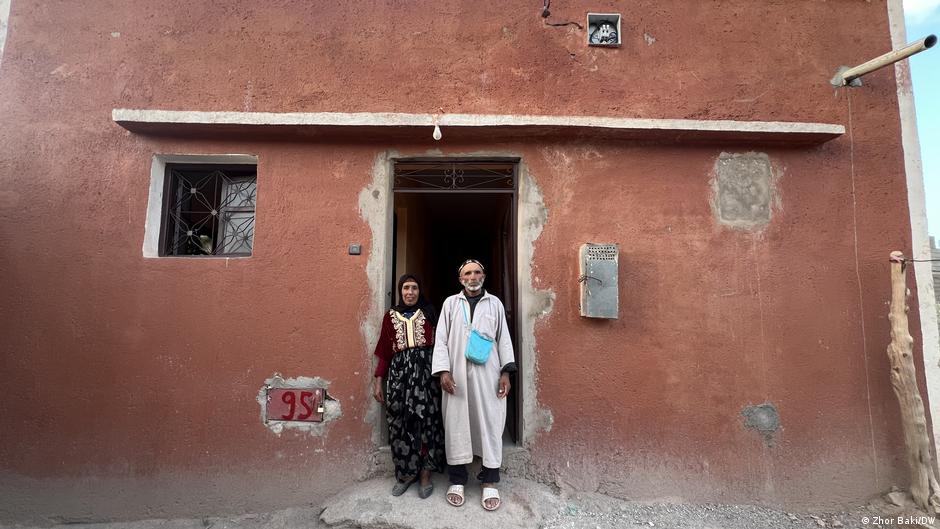
In the village of Ighermane in the High Atlas Mountains, about 50 kilometers (30 miles) southwest of Marrakech, Mohamed Ait Belaid, 72, reports that three years after the disaster his situation has improved considerably. He transitioned from residing in a temporary shelter to living in a newly constructed home, though this residence is smaller than the one destroyed during the seismic event.
“I benefitted from partial state support and received 80,000 dirhams (approximately €7,300) for rebuilding,” he shared with DW. “I contributed roughly 100,000 dirhams (~€9,110) from personal savings, and thankfully, thanks to divine provision, I am comfortable in my new house. My peace comes from the health of my wife, my children, and ours—none have been lost.”
Why Such Different Experiences?
Reconstruction efforts are proceeding significantly faster in Ighermane, where Mohamed Ait Belaid resides. Approximately 90% of the village’s houses have been restored and most residents have returned to a normal routine, according to Omar Saeed from the Ighermane Association for Development and Solidarity.
Of the village’s roughly 150 households, 114 received state assistance, though many needed to cover part of their own contribution to repair efforts.
In contrast, Azgour—which suffered the greatest impact locally—still faces considerable delays. Of about 76 families that have secured rebuilding aid, 56 others continue to await relief. Moreover, those who relocated to alternative destinations are experiencing difficulties reconnecting to essential utilities such as water and electricity, Mr. Ait Jelloulat explained.
Rebuilding Difficulties in Remote Mountain Villages
The High Atlas Development Agency (ADHA), created in October 2023 to expedite aid distribution, reported that 54,425 homes have been constructed or rehabilitated, while more than 3,000 projects remain underway. The government disbursed over 7.2 billion dirhams (roughly €656 million, $770 million) to assist affected families, encompassing both rebuilding expenses and monthly emergency stipends.
Marrakech‑based architect Mohamed Belmejjad observes that the state’s response represents commendable progress at this stage, calling the pace “fairly positive.” He acknowledges various logistical obstacles—immediacy concerns initially hindering access to isolated mountain settlements, extensive rubble removal prerequisites, peripheral road infrastructure limitations affecting material transportation, challenges in restoring water and power supply, and the necessity of relocating entire communities to mitigate natural hazards such as landslides. Additionally, respecting local architectural traditions requires using robust, long‑lasting construction materials.
“None Have Remembered Us”
Nonetheless, despite overall reconstruction advancements, the National Coordination for Al Haouz Earthquake Victims logs complaints from more than 3,000 families who have failed to obtain governmental assistance.
Montasser Itri, a coordinator, clarifies that certain families were marginalized because they relocated elsewhere for work, causing their national identity records to list non‑disaster‑impacted addresses. “Authorities reduce these Al Haouz victims to numbers in construction summaries rather than recognizing them as distinct individuals desiring dignity,” Itri told DW.
That’s why the coordinating committee is already demanding an independent and transparent investigation into how local authorities have handled the payouts. In the past they’ve organized demonstrations outside parliament buildings in the capital, Rabat, to demand compensation and rehousing solutions and to accuse local authorities of failing to honor commitments.
Other impacted locals are hopeful that the upcoming general election, slated for September 23, might bring change.
“[Prime Minister Aziz] Akhannouch promised us a solution to the issue and God knows we are waiting,” said Fawzia Aliban, whose home in Amizmiz was damaged in the earthquake. “We hope the problems will be resolved because I was denied benefits even though my house is on the verge of collapse.”
“Three years have passed, and no one has remembered us […] but recently some political figures turned up and promised to solve the problem,” added Mohamed Belkaid, who is still living in a tent in the Amizmiz area with his four children.
He hasn’t received any aid to rebuild because he is listed as a tenant, not an owner, and remains pessimistic about change.
Also Read
- Police Deploy Batons and Pepper Spray to Disperse Far-Right Demonstrators in Portsmouth Unrest
- Syria arrests former Assad-era major general linked to Hama massacre and 2011 protests
- Germany’s ‘Firewall’ Against the Far Right Is Being Tested as Never Before
- Trump says Canadian aviation giant Bombardier can no longer sell aircraft in the United States