



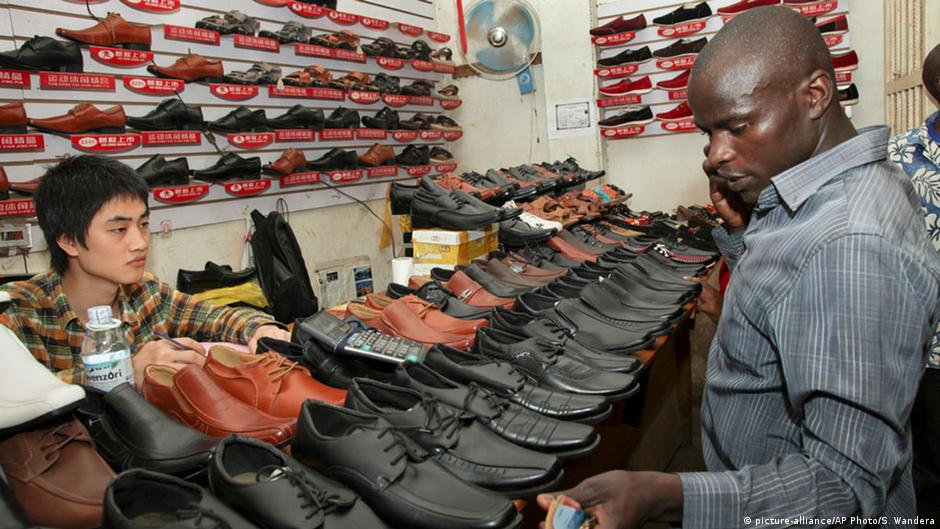
Kenyan authorities are intensifying enforcement against foreign nationals operating within the country’s informal economy. This move follows President William Ruto’s directive to reserve small-scale retail and hawking activities primarily for Kenyan citizens.
“We have a bill in parliament [requiring] that there are some trading activities that foreigners can’t do in Kenya,” he explained, noting that foreign nationals should not compete with citizens in low-capital business sectors.
The government announced that enforcement of this regulation would commence on Monday, September 7, and has begun implementing the directive.
President Ruto framed the initiative as a strategic economic protection measure. He emphasized that Kenya’s economic development should prioritize foreign investors who provide significant capital, generate employment, and support local production.
“The investor confidence we have built is for investors, not traders and hawkers. From next week, all traders doing those small businesses should close them,” Ruto emphasized, citing a notable increase in informal traders from China within the country.
Divided Public Opinion on the Policy
Public reaction in Kenya has been polarized. Some citizens have welcomed the crackdown, arguing that foreign traders deplete job opportunities in an already strained economy.
“We have been suffering for a long time. Our jobs are being taken,” said Nairobi resident James Mwaurah, noting that many Kenyans face unemployment while competing with foreign workers who may accept lower wages.
“We express our gratitude to the president for this action,” Mwaurah added.
Conversely, other residents support the enforcement of immigration and business laws but oppose the mass expulsion of foreign nationals.
“We accept having foreigners in our country. Legally, we live with them very peacefully,” Babu Claudius, a Nairobi resident, told DW.
Claudius noted that Kenya still relies on foreign labor and international commerce, warning that “chasing them away might scare investors.” However, many locals, including Claudius, agree that all foreign nationals “must be here legally.”
China, US and EU all want to do business in Africa
To view this video please enable JavaScript, and consider upgrading to a web browser that supports HTML5 video
Official 2024 data indicates that approximately 17.4 million people work in Kenya’s informal sector, with 80% of those workers engaged in registered business activities.
For many, including foreign nationals, hawking or operating small shops remains one of the few accessible means of subsistence.
Political Context and Economic Outlook
Political economist Sheila Owigo Olang suggests there is little evidence that removing these traders will immediately create more opportunities for Kenyan nationals.
Olang posits that the timing of the policy may be politically motivated, appearing at a “convenient” moment ahead of upcoming elections. She characterized the crackdown as a “populist” and “feel-good policy” intended to appeal to voters, while warning it might cause foreign investors to “coil back or freeze” until after the elections.
Olang argues that to maintain its attractiveness to serious international investment, Kenya should address structural issues rather than targeting small-scale traders. “We need to work on corruption and improve our Ease of Doing Business Index to make investing in Kenya easier,” she told DW.
Despite these concerns, Kenya saw a record $3.2 billion (€2.75 billion) in foreign direct investment in 2025, a nearly 38% increase from the previous year, according to UNCTAD. President Ruto aims to build upon this momentum.
Legislative Efforts to Boost Local Employment
One key component of the government’s strategy is the proposed Local Content Bill 2025. If passed, this law would require foreign companies to source at least 60% of certain goods and services locally and ensure that at least 80% of their workforce consists of Kenyan citizens.
However, Olang believes this may fail to solve the root causes of unemployment among the youth. The World Bank estimates the unemployment rate for Kenyans aged 15 to 24 at 15.25%, though regional organizations like the Federation of Kenya Employers suggest that up to two-thirds of young Kenyans are affected by unemployment or underemployment.
Impact and Legal Implications
The government has not released a specific list of businesses targeted by the crackdown, leaving the total number of affected foreign nationals uncertain.
Abraham Korir Sing’oei, Kenya’s Foreign Affairs Principal Secretary, emphasized that foreign nationals who comply with all legal requirements—including possessing valid work permits and licenses—will remain protected. He stated that the initiative is directly linked to the Local Content Bill and is not a campaign to expel foreigners entirely.
Legal questions persist regarding East African Community (EAC) Common Market rules, which grant citizens of member states the right to move and provide services across the region, subject to national licensing laws.
The current atmosphere has drawn comparisons to South Africa, where economic stagnation has triggered anti-immigrant campaigns and attacks on foreign-owned businesses. While Kenya has not yet seen similar levels of anti-migrant violence, the tension remains a point of concern.
Immigrants in South Africa pushed out of their own shops
To view this video please enable JavaScript, and consider upgrading to a web browser that supports HTML5 video