




Food is a deeply personal and universal way to express care and affection. Over the years, preparing family dinners has become a natural extension of showing love, hoping that each meal offers a sense of comfort and warmth. This passion for culinary hospitality extends to gifting food to others in times of need. While large, family-sized casseroles are traditional, there are many situations where smaller, individual portions are far more practical and appreciated.
Recently, a family member underwent surgery, and I wanted to support their recovery with homemade meals that were both comforting and highly convenient. The goal was to provide nourishing food that fit seamlessly into their busy healing schedule without adding stress or extra dishes to wash.
This is where the innovative utility of Souper Cubes comes into play.
As a long-time advocate for this simple yet brilliant kitchen tool, I have frequently praised its versatility for meal prepping, organizing leftovers, and maximizing freezer space. It turns out these silicone molds are also exceptionally well-suited for gifting meals, offering a level of convenience that traditional containers cannot match.
When preparing food for someone in need, thoughtful planning is essential. It is important to consider whether multiple neighbors or friends are also dropping off meals, what size portion the recipient actually needs, and how to provide a useful gift without creating extra chores or cleanup for them.
While disposable containers are popular because they require no washing or returning, reusable silicone molds like Souper Cubes offer an even more practical and eco-friendly solution for portion-controlled meal gifting.
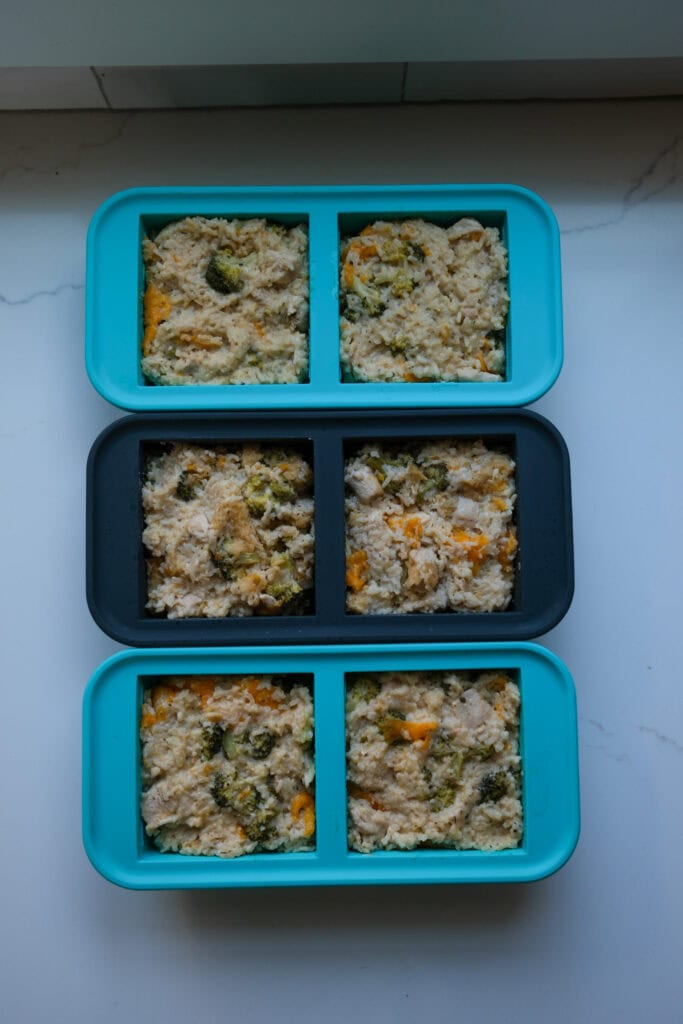
For this occasion, I prepared the meals and froze them in individual two-cup portions. Once solid, I popped the frozen cubes out of the silicone molds, transferred them to gallon-sized freezer bags, and gifted them alongside the Souper Cubes stoneware. This setup allows the recipient to heat and enjoy a single serving whenever hunger strikes, avoiding the refrigerator clutter of a massive casserole dish and eliminating the pressure to consume everything at once.
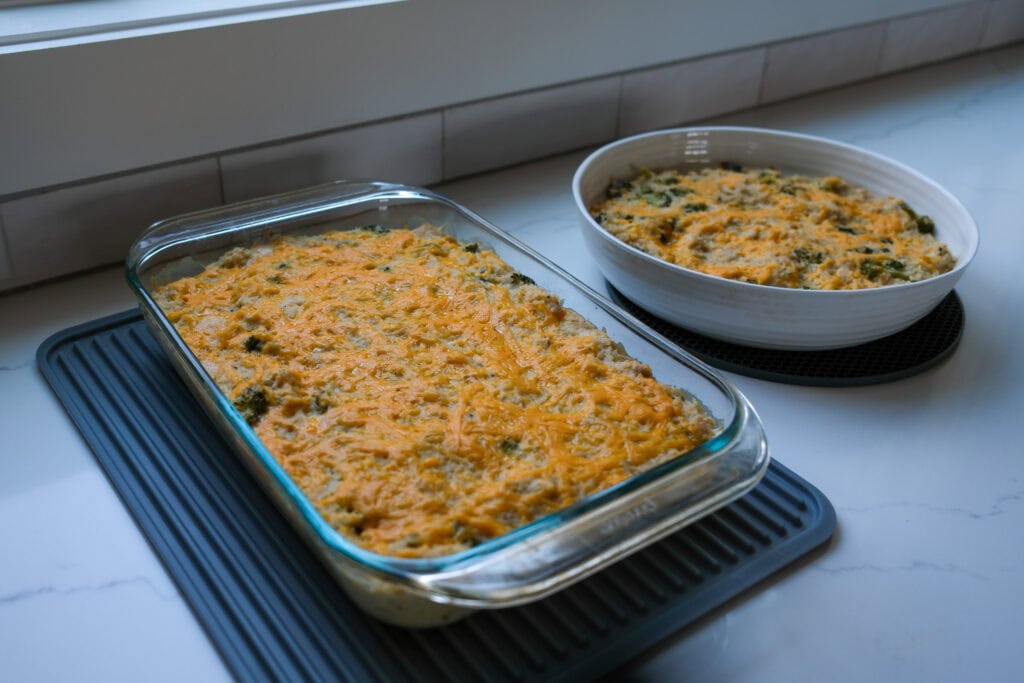
For this specific delivery, I prepared a comforting Chicken, Broccoli, and Rice Casserole alongside a classic Shepherd’s Pie.
The chicken casserole was fully baked before being portioned into the silicone molds and frozen in neat, individual servings.
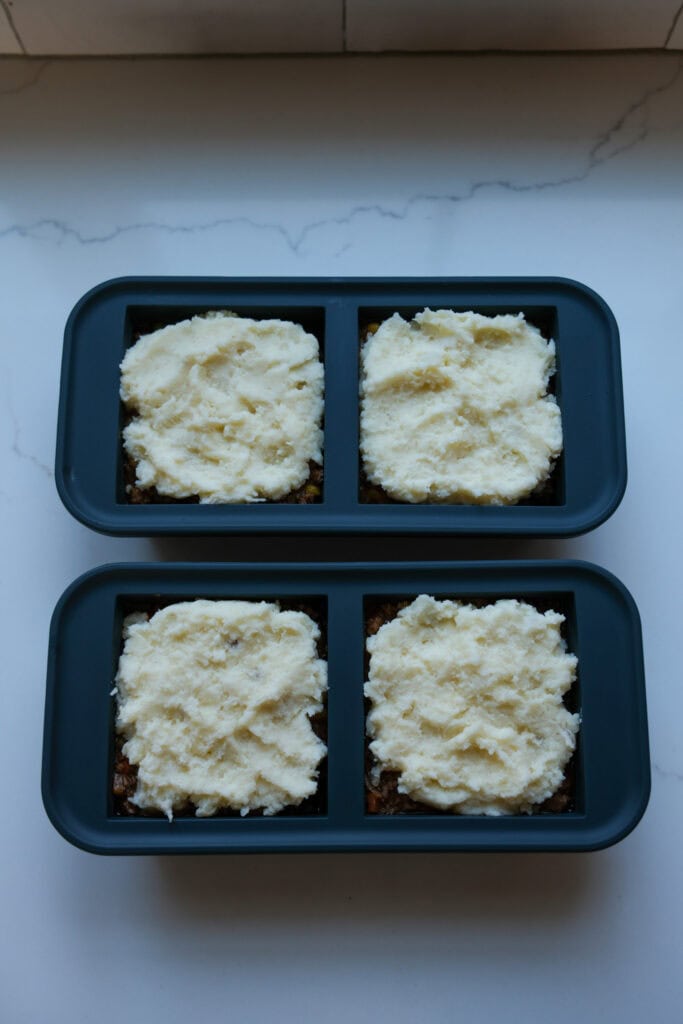
For the Shepherd’s Pie, I prepared the savory meat filling and mashed potatoes separately. Rather than baking them together initially, I layered the meat mixture into the molds, topped each with a generous scoop of mashed potatoes, and froze them. This method allows the components to bake together beautifully during reheating.
Other Meals That Freeze Well in Individual Portions
I have successfully used this method for spaghetti with meat sauce and lasagna roll-ups, and I am constantly brainstorming other dishes that would freeze and reheat beautifully in individual portions. While I have not tested every option, the following meals are excellent candidates for this portion-controlled freezing and reheating setup:
- Lasagna or baked ziti
- Enchiladas
- Chili
- Soups and stews
- Taco meat or shredded chicken
- Breakfast casseroles
- Macaroni and cheese
- Pulled pork or shredded beef
- Curry and rice
This approach is particularly beneficial for recipients with smaller appetites, families with varying schedules, or individuals and couples who do not require a massive family-sized portion. Instead of reheating an entire pan and dealing with leftovers, they can simply grab the exact portion they need.
How to Reheat Frozen Souper Cube Food
To ensure ease of use for the recipient, I always write clear reheating instructions directly on the freezer bags containing the meal portions. This takes the guesswork out of warming up the food when the time comes.
For most casserole-style dishes, the ideal method is to transfer the frozen portion to a baking dish and allow it to thaw in the refrigerator overnight. Once thawed, cover the dish and bake at 350°F until thoroughly heated, which typically takes between 25 and 35 minutes. Uncovering the dish for the final few minutes of baking helps achieve a nicely crisped top layer.
However, in a busy household, the more realistic scenario is often reheating the food directly from frozen. This is entirely possible, though it requires a bit more time—typically between 45 and 60 minutes. Because cooking times vary based on the specific meal and portion size, it is crucial to verify that the center is fully heated. Using a meat thermometer is the best way to ensure safety; insert it into the center and confirm it reaches at least 165°F.
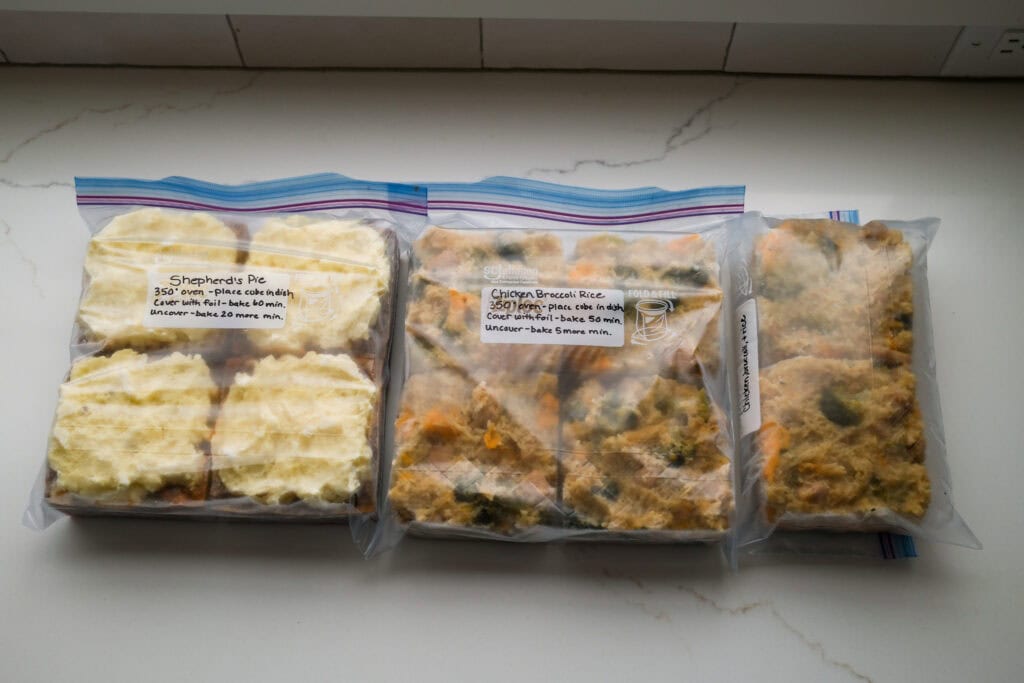
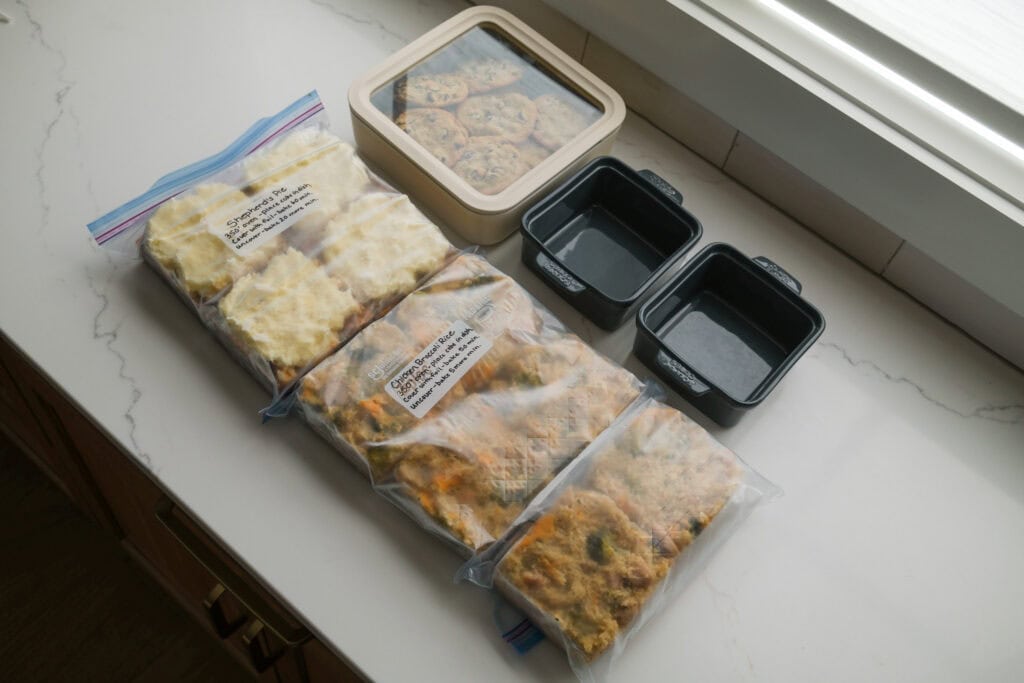
A quick but crucial tip: once your food is frozen solid in the silicone molds, pop the individual cubes out before storing them! I once had a friend who kept purchasing additional Souper Cubes simply because she didn’t realize the frozen portions could be transferred to a standard freezer bag. Furthermore, it is a beautifully perfect fit when four two-cup cubes are placed into a gallon-sized Ziplock bag, as if they were designed specifically for this purpose.
For this delivery, I quietly slipped over to load the frozen cubes into their freezer and placed the stoneware dishes on the counter alongside a thoughtful note and a batch of freshly baked chocolate chip cookies. Because a sweet treat is always the perfect complement, offering comfort for both the body and the soul during recovery.
I wanted to share this creative gifting idea because it has proven to be a wonderful, thoughtful twist on traditional food delivery. Beyond helping friends and family, this method is also incredibly effective for stocking your own freezer ahead of major milestones, such as welcoming a new baby, navigating a significant life transition, or simply surviving a busy sports season.
What is your favorite dish to prepare when you want to support a friend or family member going through a tough time?