




In July 2025, a large, bright cosmic object traveled through our solar system from beyond its boundaries. Named 3I/ATLAS, the comet briefly visited the inner solar system over four months, quickly becoming a major topic of scientific interest.
The comet’s fame initially drew attention due to speculative claims about its potential as evidence of alien technology; however, detailed observations have confirmed it behaves like a natural comet. Despite its apparent origins as a fragment of a distant planetesimal, astronomers studying data from ground and space-based telescopes believe it may hold key insights into understanding life elsewhere in our galaxy.
3I/ATLAS is likely a preserved remnant of a planetesimal—a planetary building block—from another star system, offering a rare opportunity to study organic chemistry in extraterrestrial environments. Martin Cordiner, an astrochemistry researcher at NASA’s Goddard Space Flight Center, explained that analyzing its composition could reveal whether life’s precursors are common in other star systems.
Composition and Organic Molecules Found
Comets like 3I/ATLAS may play a vital role in seeding planetary systems with the carbon-based compounds necessary for life. Darryl Seligman, an astronomy professor at Michigan State University, noted that such objects can deliver organic molecules such as methanol and amino acids. These compounds form the basis of proteins and nucleic acids, which are essential for life as we know it. Recent samples from NASA’s OSIRIS-REx mission to asteroid Bennu—in which 14 of the 20 naturally occurring Earth amino acids were identified—support this hypothesis.
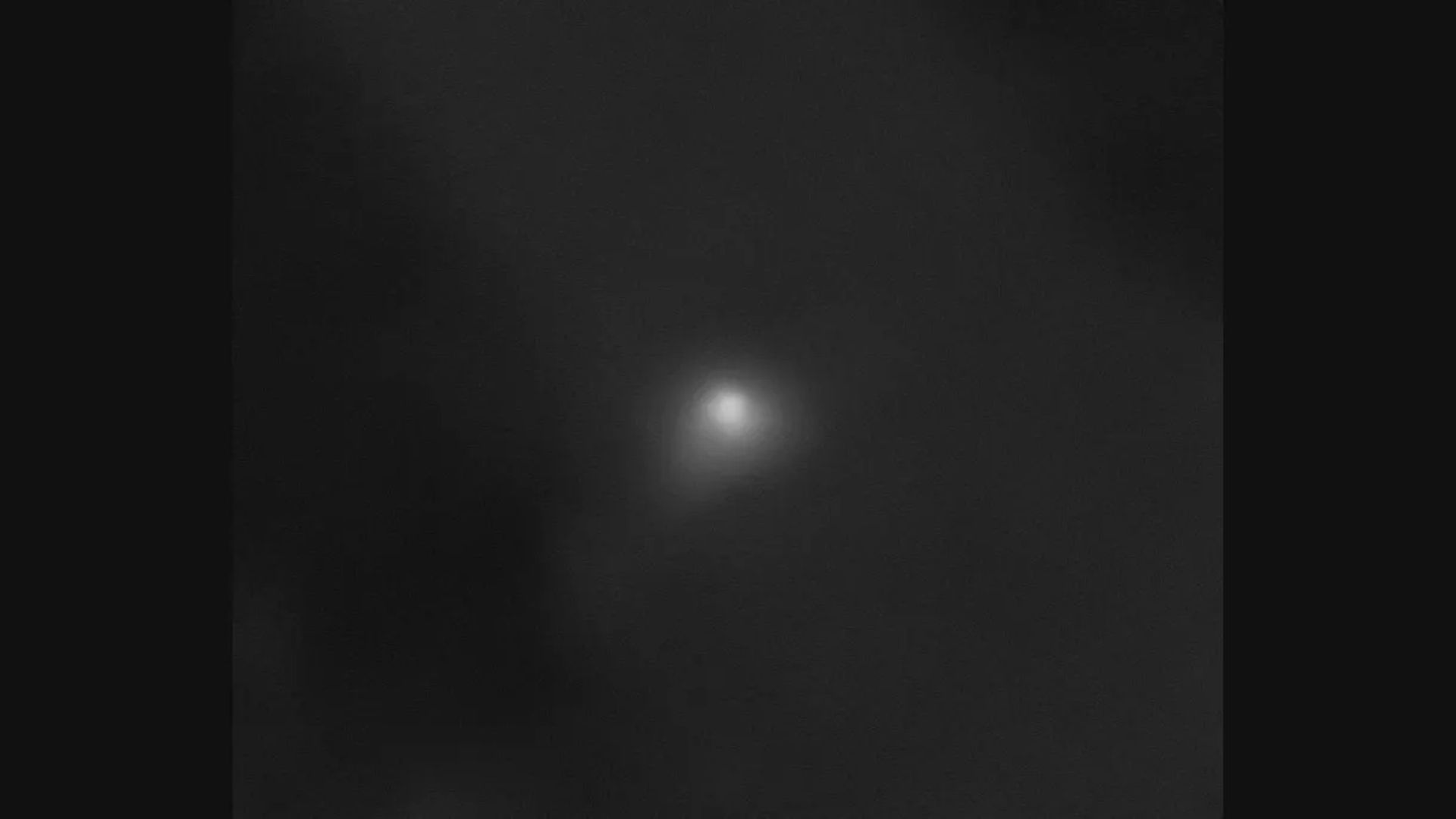
3I/ATLAS, captured in its closest approach by the Mars Reconnaissance Orbiter, displays a bright coma that revealed its organic-rich composition.
(Image credit: NASA/JPL-Caltech/University of Arizona)
Interstellar objects like 3I/ATLAS act as natural time capsules from the early universe, preserving the chemistry of their parent star systems. As they formed alongside planets in ancient disks of gas and dust, their chemical signatures provide unobstructed access to processes that shaped other planetary systems. Matthew Belyakov, a postdoctoral researcher at Caltech, emphasized that studying such objects can test whether organic molecules are universally distributed across the galaxy.
Simulations suggest that comets orbiting exoplanets could transfer prebiotic molecules to nascent worlds, but empirical evidence has been scarce. 3I/ATLAS offers a rare opportunity to gather such data, thanks to an extended observation window compared to previous interstellar visitors.
Key Organic Compounds Detected
Astronomers analyzed 3I/ATLAS’s coma—its glowing dust and gas envelope—using over a dozen instruments. ALMA detected hydrogen cyanide (HCN), a molecule critical for synthesizing amino acids, alongside vast quantities of formaldehyde and methanol. The James Webb Space Telescope observed methane, a greenhouse gas potentially indicative of warming processes in the comet’s home system.
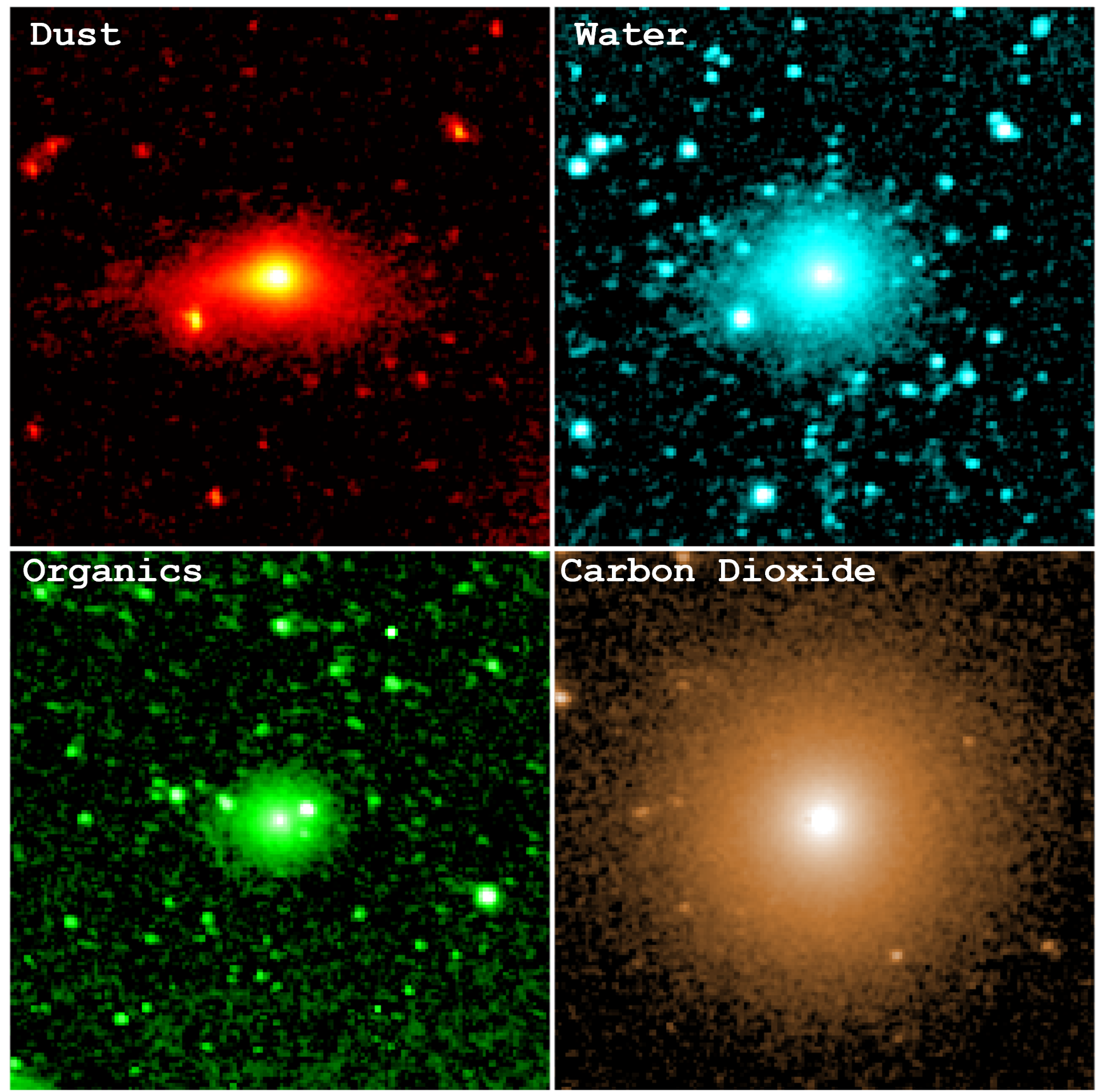
NASA’s SPHEREx telescope identified a dense concentration of organic compounds in 3I/ATLAS in early 2026.
(Image credit: NASA/JPL-Caltech)
These organic molecules—confirmed as key “feedstocks” for prebiotic chemistry—demonstrate that life’s potential ingredients exist beyond our solar system. Cordiner highlighted that such compounds are central to laboratory experiments simulating early Earth conditions, linking 3I/ATLAS’s chemistry to the origins of life on our planet. While the comet does not confirm life elsewhere, its composition confirms that the molecular ingredients for life are widespread in the cosmos.
The previous interstellar objects, 1I/’Oumuamua and 2I/Borisov, were less studied. ‘Oumuamua was briefly observable, while Borisov’s discovery coincided with pandemic-related observation disruptions. In contrast, 3I/ATLAS was tracked intensively for nearly a year, offering unprecedented insight into its chemistry. Cordiner noted that it stands out for its robust inventory of organic molecules.
No Direct Evidence of Life, But Abundant Precursors
While the organic molecules in 3I/ATLAS suggest prebiotic potential, they do not indicate life itself. Most detected compounds have simple structures, and more complex molecules have not been found despite millions of years of exposure to interstellar radiation. The observed chemistry may reflect surface material rather than the comet’s pristine core. However, continued analysis promises broader insights into galactic chemical distribution.
Future interstellar object discoveries, expected through the Vera C. Rubin Observatory, will refine our understanding of organic molecule distribution across cosmic history. Seligman and Cordiner emphasize that such studies will build a comprehensive map of life’s precursors throughout the Milky Way.
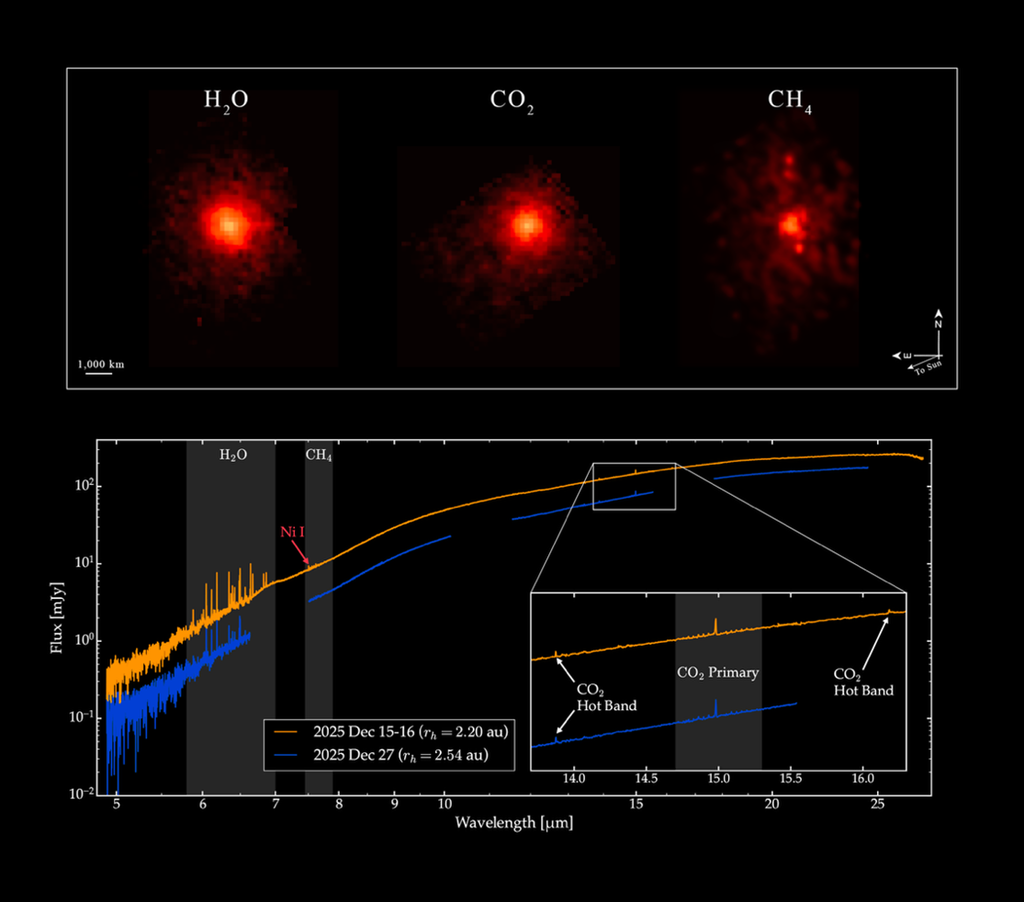
James Webb observations detected methane, suggesting potential warming processes in 3I/ATLAS’s origin system that could have supported liquid water.
(Image credit: NASA, ESA, CSA, STScI, M. Belyakov (Caltech), I. Wong (STScI), Image Processing: A. Pagan (STScI))
The organic-rich composition of 3I/ATLAS underscores the galaxy’s potential to supply prebiotic materials necessary for life. As telescopes refine our ability to analyze interstellar visitors, their studies promise to map the distribution of life’s building blocks across cosmic time and space.
TOPICS
news analyses
3I/ATLAS