



Czechia “must remain committed to increasing defense spending,” Matthew Whitaker, the US envoy to NATO, told officials in Prague last week. “We expect our allies to step up,” he said.
The message is not new. As concerns over the threat posed by Russia intensify and Washington urges European partners to assume greater responsibility for their own security, NATO has increased its defense-spending target from 2% to 3.5% of GDP. Countries falling short face mounting pressure to act.
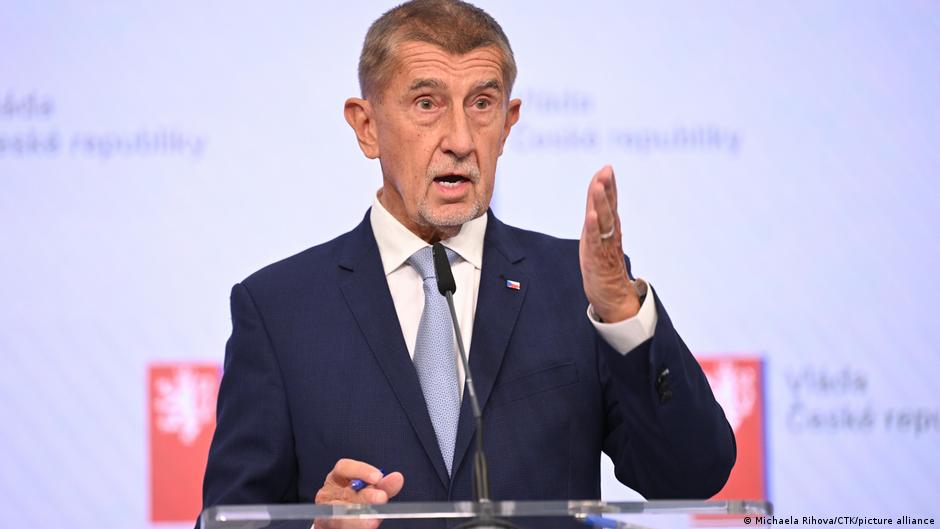
Czechia, along with Slovenia and Albania, has yet to reach the alliance’s former 2% benchmark. Prime Minister Andrej Babis, whose government reduced the 2026 defense budget to roughly 1.7% of GDP after taking office late last year, rejected Washington’s latest criticism.
While emphasizing that NATO membership remains vital to Czechia, the prime minister said the government cannot justify accelerating its spending plans. He has committed to reaching the 2% target in 2027 but does not plan any increases beyond that level.
The populist billionaire now appears to be relying on his personal relationship with US President Donald Trump to shield the country from the growing dispute.
Rising concerns over Russian threats
Whether Trump will protect Czechia from the threat of Russian hybrid warfare aimed at NATO countries in Central Europe remains uncertain.
A growing number of stray drones and suspected Russian intelligence operations—including bombings, sabotage and cyberattacks—have heightened anxiety across the region.
Germany and Poland, both important partners of Czechia, have reported prominent incidents that they have linked to efforts to intimidate countries supporting Ukraine.
Czechia has first-hand experience of such attacks and may understand the danger better than many of its neighbors.
In 2021, the country’s Security Information Service (BIS) reported that Russia’s Federal Security Service (FSB) had carried out the bombing of a depot storing weapons intended for Ukraine seven years earlier.
During his first premiership, Babis responded by expelling approximately 100 Russian diplomats and embassy personnel and freezing relations with Moscow.
The BIS continues to warn, alongside other regional intelligence agencies, that Russia’s threat is increasing.
Despite those warnings, defense spending under Babis has not kept pace with the ambitions of neighboring countries, as his government has struggled to raise the national military budget.
Prague devoted just 1.86% of GDP to defense last year. Poland and the Baltic states have already met NATO’s new target and plan to reach 5% next year.
Czechia’s competing priorities
Babis has made clear that the current strategy will not change. However, his assertion that Czechia cannot afford higher defense spending sits uneasily with the 2027 budget approved by his government on September 22.
The fiscal plan proposes substantial spending increases and projects a deficit of 386 billion Czech crowns—about €15.8 billion or $18 billion—making it the country’s second-largest ever.
Although reaching the former NATO target will contribute to the additional expenditure, most of the increased funding will support the ruling coalition’s domestic priorities.
The plan reflects the electoral commitments of Babis’s ANO party and its junior partners, the far-right Freedom and Direct Democracy party (SPD) and the radical-right Motorists for Themselves party. All three argue that defense spending must not crowd out urgent investment in pensions, education, healthcare and infrastructure.
“The claim that the country cannot spend more on defense is primarily rooted in domestic politics,” said Ales Michal, a political scientist at Prague’s Charles University. “The major priority is investment in the social system.”
The approach is likely to appeal to supporters of the governing parties, who tend to be older and less well off and have expressed resentment over support for roughly 300,000 Ukrainian refugees.
“None of the governing parties promised voters higher defense spending,” Michal noted during last year’s election campaign.
Critics, however, argue that the government is minimizing the threat posed by Russia. Its spokesperson did not respond to a request for comment.
Babis seeks peace without another world war
Resistance to increasing military expenditure also reflects broader political narratives surrounding the war in Ukraine.
Two days after Whitaker’s criticism, Babis appeared in a video wearing a T-shirt bearing the words “No War” in blue and yellow. Although he acknowledged the Russian threat, he called for stronger international efforts to secure a peace settlement.
“We don’t want World War III, do we?” he asked, repeating his argument that Europe must do more to end the conflict.
The performance echoed the position of Europe’s radical right and contributed to descriptions of the Czech prime minister as “pro-Russian” in some international media.
The underlying motivations are more complex. Babis is a pragmatist, and ANO’s populist, anti-Ukrainian but strongly pro-Western electorate also favors maintaining defense spending at 2% of GDP. Surveys indicate that the government’s plan closely reflects voters’ preferences.
Yet Babis’s polarizing personality has left his party dependent on extremist partners to maintain a parliamentary majority. He must therefore also use the anti-system, pro-Russian rhetoric associated with the SPD, which controls the defense ministry but advocated deeper spending cuts in the 2027 budget.
“A critical stance towards Ukraine also shapes the government’s position on spending,” Michal said. He argued that the government’s pro-peace messaging, which downplays Russian aggression, draws ANO closer to Europe’s radical right. At the same time, Babis is guided by opinion polls and must seek a “balance between two polarizing positions.”
A need for strategic clarity
The opposition sees this contradiction as a major weakness in the government’s defense policy.
Martin Kupka, leader of the center-right Civic Democrats (ODS), praised Babis for reaffirming Czechia’s commitment to NATO before asking: “When will you get rid of the Kremlin fifth column, which you took into the government and even entrusted with the Ministry of Defense?”
Nevertheless, the ODS-led government that governed from 2021 to 2025 also failed to meet NATO’s spending target, despite offering robust support to Ukraine.
“Our partners may be unhappy about the approach to spending, but it’s the reality of the political situation in our country,” Andor Sandor, a defense analyst and former commander of Czechia’s Military Intelligence Service, told DW.
Sandor added that although slower growth in defense spending is “not optimal,” the more serious problem is the country’s lack of strategic clarity regarding the size and role of its military.