



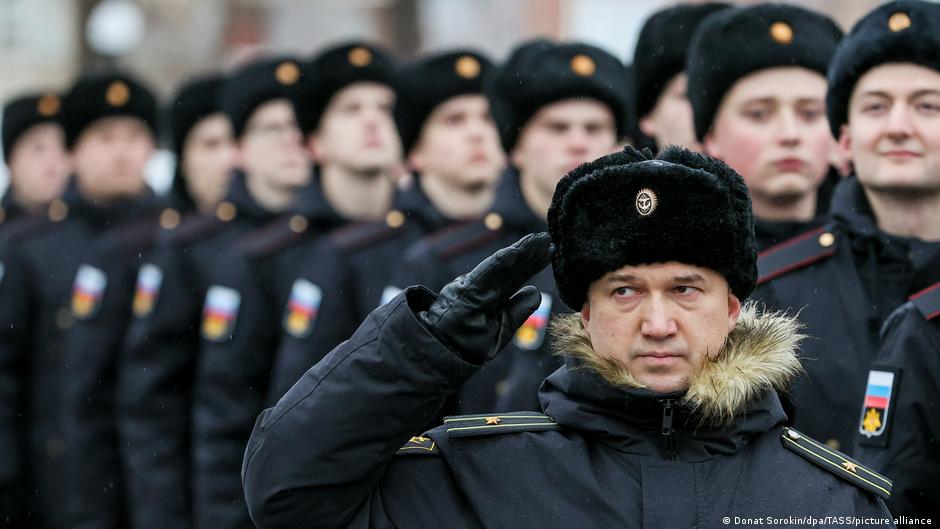
Russian President Vladimir Putin has signed a decree that cancels existing debts for new military conscripts, part of Moscow’s ongoing effort to reinforce its armed forces during the invasion of Ukraine.
The decree applies to individuals who signed a service contract after May 1 of this year, forgiving debts of up to 10 million rubles (approximately €119,646 or $139,273).
Key Provisions of the Debt‑Relief Decree
The measure also extends to the spouses of the recruits. To qualify, the service contract must last at least one year and be intended for “fulfilling the tasks of the special military operation,” the Kremlin’s term for its full‑scale invasion of Ukraine. Eligible debts must have been incurred before May 1.
According to the Russian Cian real‑estate database, 10 million rubles is roughly the price of a one‑room, 35‑square‑metre (377‑square‑foot) apartment in Moscow.
African recruits fighting in Ukraine: Where’s the AU?
To view this video please enable JavaScript, and consider upgrading to a web browser that supports HTML5 video
Additional Incentives for Recruits
For more than four years, Russia has offered attractive salaries to men who enlist to fight in the war against Ukraine. Putin has also pledged prestigious civilian positions for war veterans upon their return, as well as priority access to university and college programs.
With the Russian economy increasingly oriented toward wartime production, military requirements now dominate national policy.
Law Authorising Overseas Deployments to Protect Russian Citizens
On the same day, Putin signed legislation that permits the deployment of Russian armed forces abroad to safeguard Russian citizens who face legal actions in foreign jurisdictions, according to Spanish news agency EFE.
The law would enable Moscow to intervene militarily in third countries where Russian nationals are subjected to arrests or judicial proceedings without Russia’s consent or in contravention of international law.
Andrey Kartapolov, head of the Russian parliament’s defense committee, cited the case of architect Alexander Butyagin as an example. Butyagin was detained in December 2025 in Poland at Kyiv’s request over excavations in Crimea—territory Russia annexed from Ukraine in 2014. He was released in April as part of a prisoner exchange between Ukraine and Russia.
Also Read
- KP Chief Minister Unveils FY2026-27 Provincial Budget with Rs48bn Deficit
- Duke Energy Proposes Tech Partnerships to Fund Nuclear Projects, Driving SMR Growth
- Emerging Threats Impact Southern Ukraine Amid Ongoing Conflict
- Iran’s Hormuz Restrictions Emerge as Regional Tensions Intensify with Stalled US Negotiations