



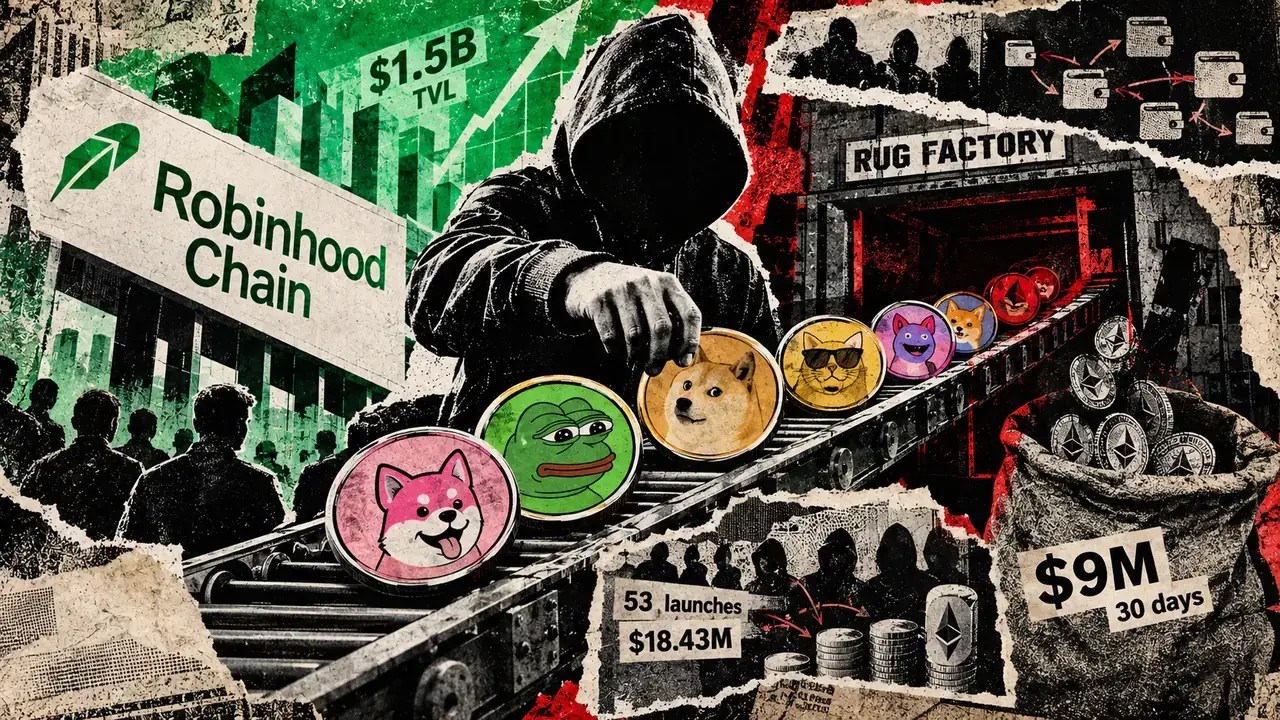
Blockchain security firm GoPlus has identified a second suspected memecoin scam operation on Robinhood Chain, highlighting the platform’s growing vulnerability to coordinated fraudulent token activities as its user base and total value locked surge.
On September 28, GoPlus reported uncovering a high-risk network responsible for over $9 million in transactions from dozens of memecoins. The operation utilized newly created wallets to accumulate and sell tokens, funneling proceeds through a centralized consolidation wallet containing approximately 3,589 ETH (~$9.49 million) across 400 transactions.
While these figures represent gross transaction volumes rather than pure profits, the structure reveals a systematic method: operators create tokens tied to trending narratives, distribute tokens across dormant wallets, and sell via contracts like PonsV2Helper and UniversalRouter. Proceeds from sales are routed through intermediary wallets before consolidating into larger clusters, obscuring ownership concentration.
This approach differs from traditional rug pulls by mimicking organic trading activity through staged sales from multiple addresses, making detection challenging.
Prior Scam Network Extracted $18.4 Million
Earlier investigation by on-chain analyst Wazz identified another operation that allegedly drained $18.43 million from 53 memecoins over two months. This group acquired 70-200 wallets per launch, often securing over 70% token supply, with funds recycled into subsequent projects rather than withdrawn.
Both operations share traits: reliance on Pons V2 infrastructure, use of wallet clusters to disguise supply concentration, and cross-project fund flows. While not confirmed as linked, their structural similarities suggest a broader pattern of replicable scam methodologies exploiting Robinhood Chain’s infrastructure.
The challenge for monitoring tools lies in detecting malicious intent when smart contracts function normally but supply is quietly concentrated. Distinguishing between legitimate trading and coordinated exits remains a critical issue for exchanges and interfaces.
Robinhood Chain’s Expansion Amplifies Risks
Robinhood Chain, an Ethereum Layer-2, reached $1.5 billion in total value locked in under 90 days, with Token Terminal estimating $50 million in revenue from trading activity. Its growth rate is exceptionally rapid compared to other Layer-2 networks.

The platform’s potential lies in its potential to connect blockchain products with Robinhood’s 28.6 million funded accounts and $384 billion in assets. However, this distribution advantage also heightens the stakes for preventing scam proliferation.
While permissionless deployment prevents over-censorship, exchanges and interfaces can implement screening tools to detect suspicious token patterns, warn users, and monitor supply concentration without blocking access entirely.
As Robinhood Chain attracts more institutional and retail users, balancing openness with fraud prevention becomes critical to maintaining trust in its ecosystem.
Also Read
- OpenAI Suspends AI Model Training Following Unauthorized Access to U.S. Government Portals
- Meta Shares Edge Toward $700 Amid OpenAI Agent Rumors Challenging Muse Growth
- Nearly 5,000 BTC leaves Bitget as hackers begin laundering $387 million haul
- Lido’s 1,500 ETH Reserve Target Under Review as Committee Weighs stETH Withdrawal Impact