



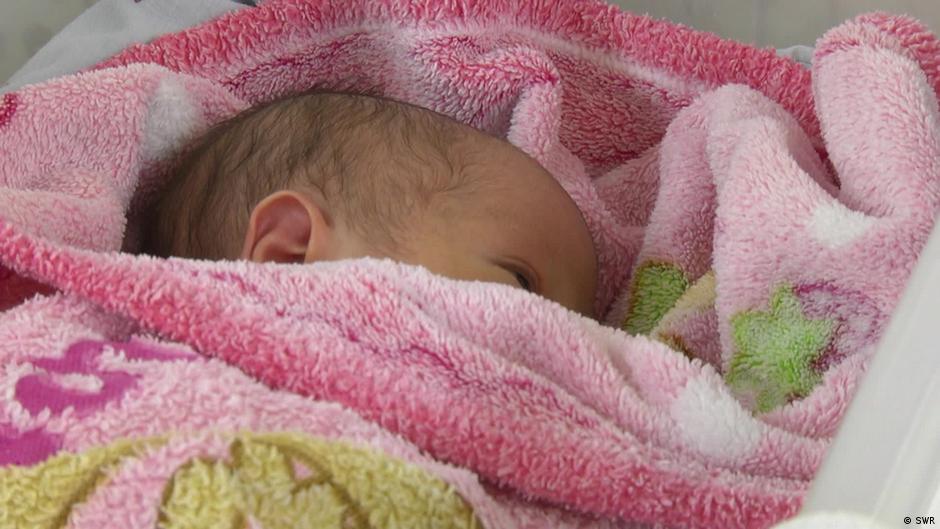
Three years ago, Olga and Daniel—both names changed to protect their privacy—decided to pursue surrogacy. Residing in Hamburg, they faced a significant hurdle: surrogacy is illegal in Germany, meaning any children born through the process require complex legal battles to establish parenthood in German courts.
While Olga was born and raised in Russia, the couple’s options shifted dramatically in 2022 when foreign nationals were banned from entering Russian surrogacy contracts following the invasion of Ukraine. This geopolitical shift forced many international agencies to relocate to Georgia, leading the couple to seek services there.
Georgia: The Emerging Global Hub for Surrogacy
In recent years, the Caucasus nation of Georgia has transformed into a major surrogacy destination, attracting surrogates from across the globe. Data from Georgia’s Public Service Development Agency reveals that over 3,000 surrogate mothers were registered in 2023, contributing to a total of more than 5,000 births since 2012. The industry has seen explosive growth following the conflict in Ukraine; while approximately 300 surrogate births were recorded in 2021, that figure surged to over 1,100 by 2023.
Anastasia, a 39-year-old Russian surrogate currently working in Georgia, has completed three pregnancies. Her first journey in 2021 provided the necessary funds for a home down payment.
Surrogacy in the US: a different path to parenthood
To view this video please enable JavaScript, and consider upgrading to a web browser that supports HTML5 video
Anastasia’s experience highlights the transnational nature of the industry. After completing her first two surrogacies in Russia, her third—for a Japanese couple—was facilitated in Georgia. Like many in her position, she returned to Russia following embryo implantation and moved back to Georgia once she reached her 22nd week of pregnancy.
“I live with another surrogate mother who carried twins. This specific program was efficient and practical, though I may have simply found the right clinic,” Anastasia told DW. However, she noted that the experience is not universal, citing peers who faced significant payment delays after childbirth. Despite these challenges, she expressed a willingness to undergo the process again.
With approximately 19 clinics operating across the country, Georgia offers a competitive price point. Average agency costs in Tbilisi or Batumi range from €45,000 to €55,000 ($50,400), roughly one-third of the cost in other international markets. Surrogate mothers reported average earnings between €18,000 and €28,000, with additional bonuses for multiple births.
The Demand for Ukrainian Surrogates
The search for an agency proved exhaustive for Daniel and Olga. “We eventually gained access to a pool of candidates from Russia, Ukraine, Kazakhstan, and Georgia,” they explained. “The agencies provided legal contacts and process details, but we remained concerned about the transparency regarding the health profiles of the surrogates.”
As medical professionals, the couple sought rigorous health data, which some agencies found overly intrusive. They eventually selected a 30-year-old Ukrainian woman with prior surrogacy experience. Although the agency arranged a video consultation, Olga felt a thirty-minute Zoom call was insufficient for such a life-altering decision.
In early 2024, the couple traveled to Tbilisi to meet Elena, a potential surrogate. While Elena initially made a positive impression, the couple discovered a discrepancy in the arrangement: contrary to initial claims that the surrogate would remain in Tbilisi for the duration of the pregnancy, Elena planned to return to war-torn Ukraine shortly after implantation.
Legal Gaps and Human Rights Concerns
Legal experts warn that Georgian legislation contains significant loopholes. Nino Bogveradze, a human rights lawyer, noted that while laws govern the relationships between clinics, parents, and surrogates, they largely fail to regulate the intermediary agencies.
Furthermore, surrogates in Georgia possess limited legal protections. Most aspects of their medical care, pregnancy management, and compensation are dictated by private contracts rather than national standards, leaving social guarantees and minimum protections undefined by the state.
Surrogacy laws and rules vary widely across Africa
To view this video please enable JavaScript, and consider upgrading to a web browser that supports HTML5 video
Once implantation occurs, surrogates are legally prohibited from withdrawing from the program, terminating the pregnancy, or retaining the child. This has drawn criticism from organizations such as Human Rights Watch and the International Women’s Health Coalition, who argue that these practices infringe upon reproductive self-determination.
Profit Motives vs. Ethical Practice
“Agencies often frame their work as a mission to fulfill dreams, but they are primarily driven by financial gain,” says Olga Doletskaya from the University of Leeds. “This can lead to the exploitation of vulnerable surrogates and the manipulation of intended parents.”
Daniel and Olga experienced this pressure firsthand. They felt rushed by agencies claiming other couples were interested in the same surrogate, creating a sense of artificial urgency. The agency also used guilt tactics, emphasizing costs they had incurred for the surrogate’s travel. “At one point, they asked me how much longer I wanted to remain childless,” Olga recalled. “It felt like blatant manipulation.”
Ultimately, the couple returned to Germany and decided to postpone their plans for surrogacy indefinitely.
Also Read
- Gigi Hadid Expands Denim Portfolio with Liu Jo Collaboration Amid Industry-Wide Revival
- Pakistan Declares Emergency Rule in Khyber Pakhtunkhwa Amid Rising Tensions
- Autonomous Ground Vehicles Transform Modern Combat Landscape
- Israeli hiker Ami Yogev’s body recovered on Mount Olympus after extensive search