



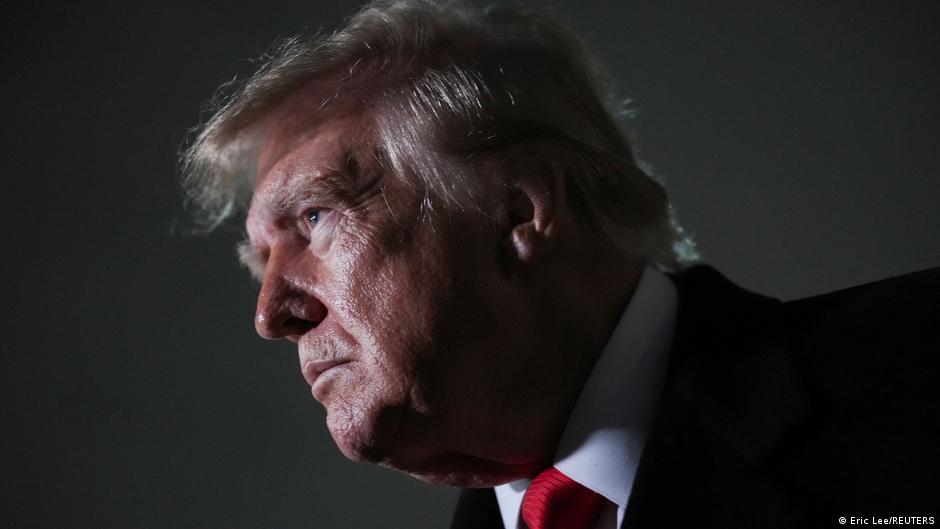
Trade Agreement Analysis: President Trump’s Russian Diesel Pact and Its Geopolitical Consequences
‘Trump is not interested in supporting Ukraine’
Security expert Carlo Masala of the Bundeswehr University Munich stated that these developments demonstrate that “Trump is not interested in supporting Ukraine at all, but that domestic U.S. politics and relations with Russia are far more important to him than supporting Ukraine.”
He further noted that the president seeks to influence the outcome of the November 3 u.s. midterm elections through an agreement with Moscow.
All seats in the House of Representatives and part of the Senate are subject to contestation in the midterm election cycle. Polls indicate that the Republican Party could lose its House majority and the Senate majority may also shift. Survey data reveal that American voters express dissatisfaction with elevated fuel costs, and the president appears to attempt to impact pricing through Russian diesel shipments.
Can Trump’s diesel deal bring down US fuel prices?
To view this video please enable JavaScript, and consider upgrading to a web browser that supports HTML5 video
However, observers question whether Trump’s ambitions regarding Russian diesel shipments to lower U.S. fuel prices are realistic.
“The volume involved is so minimal that it will have absolutely no impact on prices,” explained Thomas Jäger of the University of Cologne to ARD.
The analyst added that planned shipments preceding the midterm elections would not even meet U.S. daily diesel demand.
“Any subsequent deliveries, if realized, would similarly possess no effect on pricing,” he emphasized.
Jäger contends that Trump’s objective is simply “the story”—demonstrating to voters that he is addressing a matter of critical importance to them.
‘No concrete military benefits for Russia’
The principal critique from Kyiv and EU nations centers on the notion that revenue derived from diesel sales intended for this deal could facilitate funding for Russia’s war effort against Ukraine.
Masala does not anticipate that the agreement with the United States would confer any tangible military advantages upon Russia.
He highlighted that Washington had already temporarily lifted sanctions on Russian oil exports earlier this year, following U.S.-Israelian strikes on Iran.
“Despite the funds Russia possesses and has accumulated, there is no concrete military strategy enabling further advances in the Donbas. The situation primarily concerns political ramifications and the symbolic significance of Americans forming separate deals with Russians at Ukraine’s expense,” the expert observed.
Kyiv also worries that U.S. authorities might suspend intelligence-sharing partnerships with Ukraine and halt the Prioritized Ukraine Requirements List (PURL) initiative unless Kyiv ceases offensive actions against Russian oil refineries. Under the PURL framework, European partners procure U.S. weaponry for Ukraine.
Trump, Russia and Ukraine: Has the US changed sides again?
To view this video please enable JavaScript, and consider upgrading to a web browser that supports HTML5 video
European alternatives to US intelligence
If the United States were to terminate intelligence cooperation with Ukraine concerning strikes against Russian territory, the consequence for Kyiv could be “dramatic,” noted Masala. Nevertheless, European intelligence services—particularly those from France—might temper the situation.
While French intelligence lacks the comprehensiveness of American analytical capabilities, the Ukrainian military already leverages such assistance to conduct operations within Russian territories employing French weapon systems.
Regarding munitions supplied under the PURL program—weapons procured from the United States for Ukraine—Masala pointed out that the program’s primary element, interceptor missiles designed for air defense, has remained scarce for Ukraine since the initial phase of the conflict with Iran.
Support for Ukraine across both US parties
Ahead of the u.s. midterm elections, specialists emphasize that Ukraine commands extensive backing from both major political factions within Washington. As proof of concept, this summer witnessed the bipartisan enactment of legislation tightening sanctions against Russia—a measure termed the “Lindsey Graham Act” after its Republican congressional sponsor, now deceased.
Signed by Trump in September, the statute grants the president sweeping tools, including authority to penalize individual Russian officials, oligarchs, financial entities, and Moscow’s shadow maritime fleet utilized to evade oil export restrictions. It also empowers punitive tariffs on purchasers of Russian energy commodities.
figure class=”placeholder-image master_landscape big”>
“Trump may resist, yet political forces—particularly following the midterm elections—could pressure the administration toward achieving a peace settlement by utilizing the available instruments,” noted former U.S. diplomat Daniel Fried.
He characterized the Lindsey Graham Act and the 2022 prohibition on U.S. imports of Russian oil as non-absolute impediments—but robust safeguards against policies like a unilateral, unreciprocated diesel pact with Russia.
Multiple Democratic and Republican senators referenced this legislation in a joint declaration, labeling the diesel arrangement with Russia as illegal and urging immediate correction by u.s. governance.
This article was originally published in Ukrainian
Also Read
- Energy Markets Lead the Bull Run, Offering Distinct Investment Opportunities
- Meloni Calls Trump’s Russian Diesel Pact a Hazardous Move That Bolsters Moscow
- Kenya Reports Second Ebola Infection Linked to Initial Case’s Relative
- Chris Blumas Highlights North American Large‑Cap Picks: Stantec, Brookfield Corp, and Alcon