



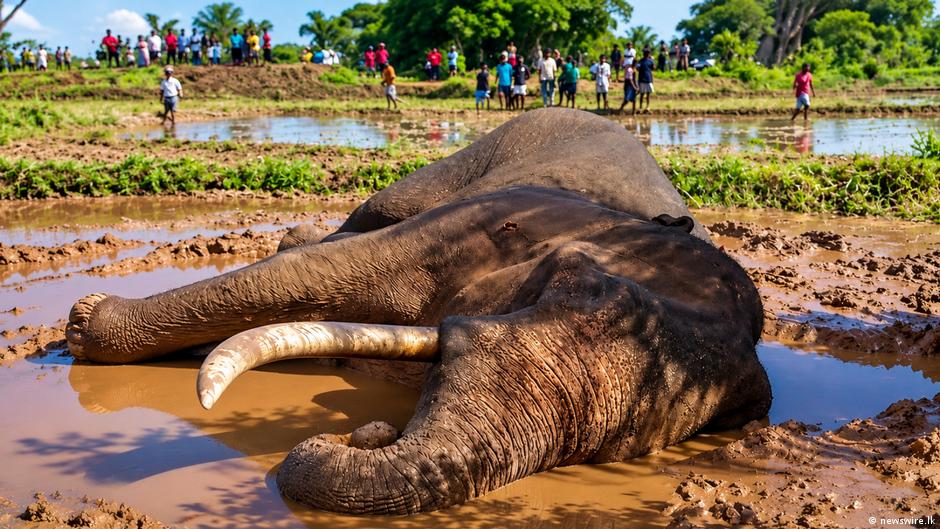
The recent death of an iconic male elephant in Sri Lanka has renewed concerns about reduced habitat and the growing frequency of human-elephant conflict.
The elephant known as “Kavantissa” had been considered the tallest living male elephant in Sri Lanka. Thought to be around 45 years old and measuring roughly 3.3 meters tall (11 feet), he roamed near the village of Galgamuwa in the northwest and was widely admired for his majestic stature.
In late September, villagers noticed that the 5.5-ton elephant (5,500 kg) was limping, and a closer look revealed a gunshot wound on his right leg. Despite the efforts of veterinary surgeons, the elephant died on October 16.
Sri Lanka records the highest number of elephant deaths annually and the second-highest number of human deaths globally from violent interactions between elephants and humans, which usually happen when crop-raiding elephants encroach on farmland.
According to official statistics, since 2019, an average of 370 elephants and 125 humans have died in human-elephant conflict incidents each year.
The situation affects the natural habitats of elephants and the livelihoods of rural communities.
Sri Lanka is home to about 10% of the global Asian elephant population and occupies about 2% of their total natural range, giving the country the highest density of Asian elephants in the world.
The Sri Lankan elephant is an endangered subspecies on the International Union for Conservation of Nature (IUCN) Red List of Threatened Species and is protected under Sri Lankan law, with fines and jail terms for wildlife-related offences.
A shrinking habitat for elephants
During recent decades, forest cover in Sri Lanka has shrunk as the population grew.
Statistics show the rural population of Sri Lanka increased from 8.25 million in 1960 to 17.8 million in 2020.
Agriculture remains the primary source of income for rural communities, and land is cleared for agricultural activity.
According to Department of Wildlife Conservation (DWC) statistics, in 2024, an estimated 7,451 wild elephants were recorded in Sri Lanka. About 70% of these wild elephants live outside protected areas.
Research shows that elephants have a massive daily dietary requirement of about 150 kilograms (330 lbs.) of green matter, which drives them into farmland.
“Driven primarily by habitat loss, agricultural expansion, fragmentation of elephant corridors, and increasing competition for land and resources, human-elephant conflict continues to cause hundreds of elephant deaths and more than 100 human fatalities annually,” said Ravi Corea, President of Sri Lanka Wildlife Conservation Society, a Sri Lankan non-profit conservation organization.
The conservationist told DW that rural communities are severely affected, and the agricultural losses caused by elephants can threaten a family’s primary source of food and income.
“This distinguishes human-elephant conflict from many human-wildlife conflicts in economically developed countries, where wildlife encounters, although sometimes serious, generally do not threaten household subsistence to the same extent,” he said.
Indian villages deter wild elephants with lemon trees
To view this video please enable JavaScript, and consider upgrading to a web browser that supports HTML5 video
Elephants and humans clash
“Despite the efforts by the government to mitigate HEC, the numbers are rising, demonstrating the continuing severity of the crisis,” Corea added.
Elephants are shot, poisoned, or killed by improvised explosives hidden in food and train collisions, experts say.
In view of the escalation of human-elephant conflict, the Sri Lankan government in 2020 drafted a national action plan to mitigate the problem.
“The 2020 Action Plan provides a valuable foundation for reducing human–elephant conflict, but its recommendations must be strengthened through a comprehensive national conservation strategy with enforceable habitat protection at its core,” Corea said.
“The ultimate measure of success must be not merely a reduction in human–elephant conflict, but the permanent protection of ecologically connected habitats, the survival of viable wild elephant populations and the ability of people and elephants to coexist sustainably for generations to come,” he added.
Community-level initiatives protect people and elephants
Meanwhile, community-based programs by non-government organizations have proven effective and sustainable. These initiatives are complemented by elephant monitoring, scientific research, habitat assessments, community education, and the development of locally appropriate deterrents, Corea said.
“Our flagship initiative Project Orange Elephant in Sri Lanka’s Wasgamuwa region promotes the cultivation of citrus, which elephants do not like to eat as a trophic deterrent. This reduces crop raiding while generating alternative income for farmers,” Corea added, pointing to things like electric fencing protecting settlements and agricultural lands while encouraging local responsibility.
Another issue is confrontations on elephant corridors, that in some cases have discouraged children from walking to school.
Elephant corridors are designated strips of land that connect larger forest and habitat patches, allowing elephants to move safely between them for food, water, breeding, and seasonal migration.
To address this, the “EleFriendly” bus service in Wasgamuwa, provides safe transportation for schoolchildren through elephant corridors and has reduced dangerous human-elephant encounters along its original route by over 90%.
“An ethically just solution must protect human lives, livelihoods, and elephant populations simultaneously,” said Kamal Shashendra, a Sri Lanka-based environmental ethics researcher.
He told DW that this required scientifically informed land-use planning, protection of elephant corridors, appropriate community-based fencing, effective early-warning systems, and fair compensation for affected families.
Also Read
- US-Iran Conflict Escalates: Regional Wars, Economic Strain, and Shifting Global Energy Dynamics Since February
- Meghan Markle ‘Deeply Distressed’ by Allegations Against Her Father
- Wales to Prohibit Traditional Steel Pylons and Seek Input on Undergrounding Strategy
- Ethnic Tensions Flare in Israeli Election Campaign After Racial Slur