



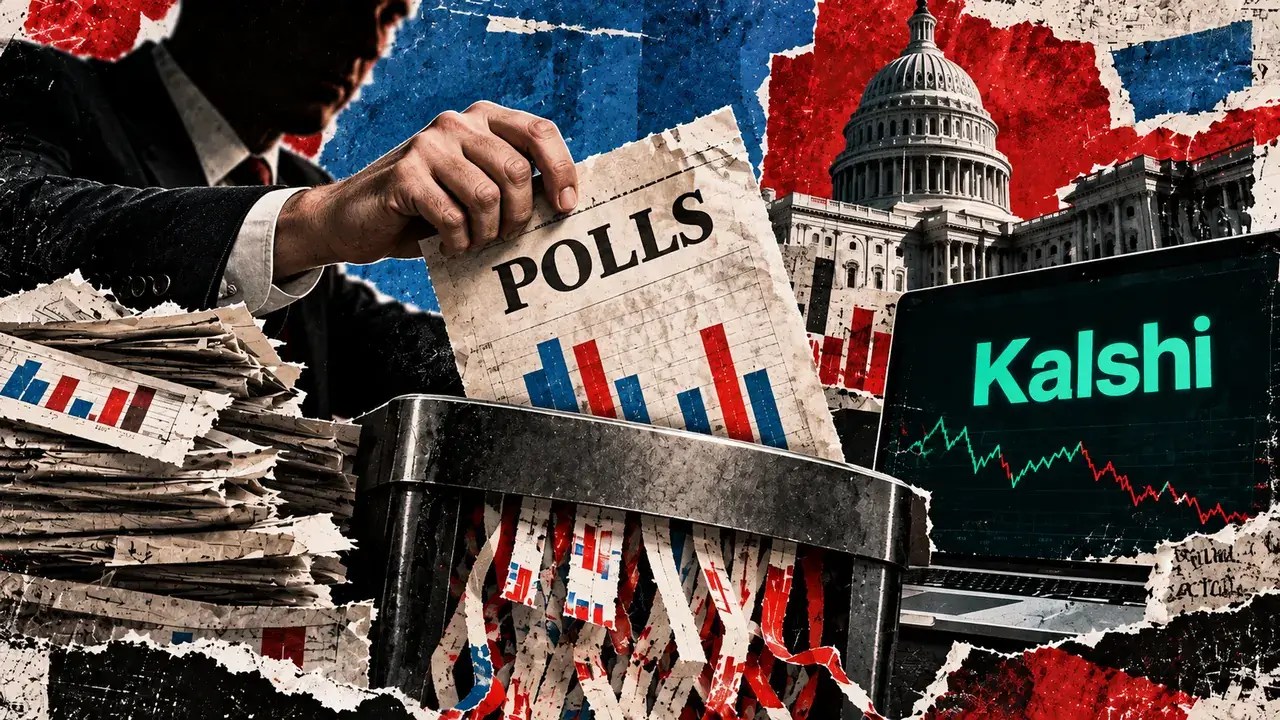
On October 20, polling firm Wedgewood admitted to fabricating the majority of its election surveys, raising concerns among traders on Kalshi, a prediction market platform. Wedgewood was one of the contributors to VoteHub, a polling aggregator whose data serves as the underlying source for Kalshi’s recurring event contracts.
A regulatory filing submitted by Kalshi in September 2025 explicitly names VoteHub as the designated data provider for its VOTEHUBAPPROVE contracts and clearly states: “Revisions to the Underlying made after Expiration will not be accounted for in determining the Expiration Value.” This clause raises critical questions about accountability—particularly in scenarios where a settling polling figure is later exposed as fraudulent or retracted.
Researchers from FiftyPlusOne sought raw data tied to Wedgewood’s Mississippi Senate survey and uncovered inconsistencies in respondent identifiers and transaction records. The team commissioned a parallel survey through Pollfish and observed significant discrepancies. Following scrutiny, Wedgewood acknowledged the widespread fabrication, though it maintained that a Nebraska poll remained legitimate.
VoteHub’s Head of Data Science, Zachary Donnini, confirmed that his team had reviewed Wedgewood’s credentials prior to incorporating its data into their polling averages. However, despite rating Wedgewood a D-grade, VoteHub still included the firm’s results—an oversight that underscores potential vulnerabilities in how third-party data is vetted within volatile event markets.
Kalshi’s September 12, 2025 certification for the VOTEHUBAPPROVE contracts anchors settlement values to VoteHub’s time-adjusted polling average captured at a fixed expiration point. While setting a static reference time ensures clarity for traders, it also means reliance on potentially flawed data if corrections occur post-settlement.
This becomes especially problematic when fabricated numbers are involved. For instance, if a contract resolves based on an 8% polling margin that is later revised to 7.8%, the current rule design would preserve the original settlement due to the exclusion of revisions after expiration. Although this guarantees certainty in outcomes, it risks rewarding traders who unknowingly acted on false premises.
In August, similar concerns emerged when a Kalshi contract linked to a fabricated Los Angeles mayoral poll briefly shifted by approximately two cents following its release. Though unrelated directly to settlement calculations against polling averages, the incident highlights how misinformation can ripple through prediction markets—and influence trading behavior—even before formal resolution mechanisms take effect.
Looking ahead, analysts emphasize three key areas needing clarification from Kalshi:
1. Which specific rulebook governs the October series contracts?
2. Has any contract already settled using now-retracted polling figures?
3. Can settlements be revisited upon confirmation of data fabrication?
Until such transparency materializes, Kalshi’s VoteHub-backed election markets continue to operate under rules that prioritize stability over accuracy—a setup that may leave traders exposed if future revelations expose further instances of deceptive sourcing.

As election cycles intensify ahead of November 3, the integrity of underlying datasets becomes ever more crucial—not only for Kalshi but for all platforms relying on polling inputs to settle real-time bets. Without robust safeguards or clear dispute protocols, the door remains open for manipulation and mistrust in increasingly influential prediction markets.
Also Read
- Brent Oil Surges to Multi-Month Highs Amid Escalating Middle East Tensions
- Bitcoin’s Key Support at $80,000 Under Pressure as Bond Market Dynamics Shift
- UK Private Sector Expands at Fastest Pace in Eight Months as Employment Recovers
- FTSE 100 Dips on Weak Retail Sales, Tech Selloff; Oil Gains Cushion Energy Stocks