




A new medical implant that extracts excess glucose from the bloodstream has demonstrated promising results in treating type 2 diabetes and obesity in laboratory mice.
When paired with a continuous glucose monitor, the compact device continuously adjusts blood‑sugar levels using an electricity‑driven chemical reaction. In mouse trials the implant prevented insulin spikes and promoted fat loss.
The device, described on October 22 in the journal Science, could provide a novel therapeutic approach for both conditions, according to study co‑author Martin Fussenegger, a professor of biotechnology and bioengineering at ETH Zurich. He told Live Science the team is moving toward testing the implant in larger animal models, with the ultimate goal of human trials.
Globally, roughly 790 million people live with type 2 diabetes and more than 1 billion struggle with obesity. Many individuals with obesity develop insulin resistance, where cells fail to respond to insulin and cannot effectively uptake glucose. The body initially compensates by producing more insulin, but eventually this compensation falters, leading to prediabetes and type 2 diabetes. About 90 % of type 2 diabetes patients are also overweight or obese.
Simultaneously, the liver converts surplus blood glucose into fat stores, further exacerbating weight gain.
Current management strategies for diabetes and obesity rely on lifestyle modifications such as diet and exercise, or on long‑term medications like metformin, which lowers blood glucose, and GLP‑1 receptor agonists, which curb appetite to aid weight loss. Dr. Fussenegger and his colleagues sought a method that would target glucose directly.
They engineered a one‑inch‑long reactor that transforms glucose into the harmless by‑product gluconate through a tightly controlled electrochemical process. The reaction occurs at an electrode coated with gold and platinum nanoparticles embedded in a graphite matrix.
Crucially, the conversion only proceeds when the implant receives a sufficient electrical charge, allowing the glucose‑removing activity to be switched on and off by adjusting the power supplied to the device.
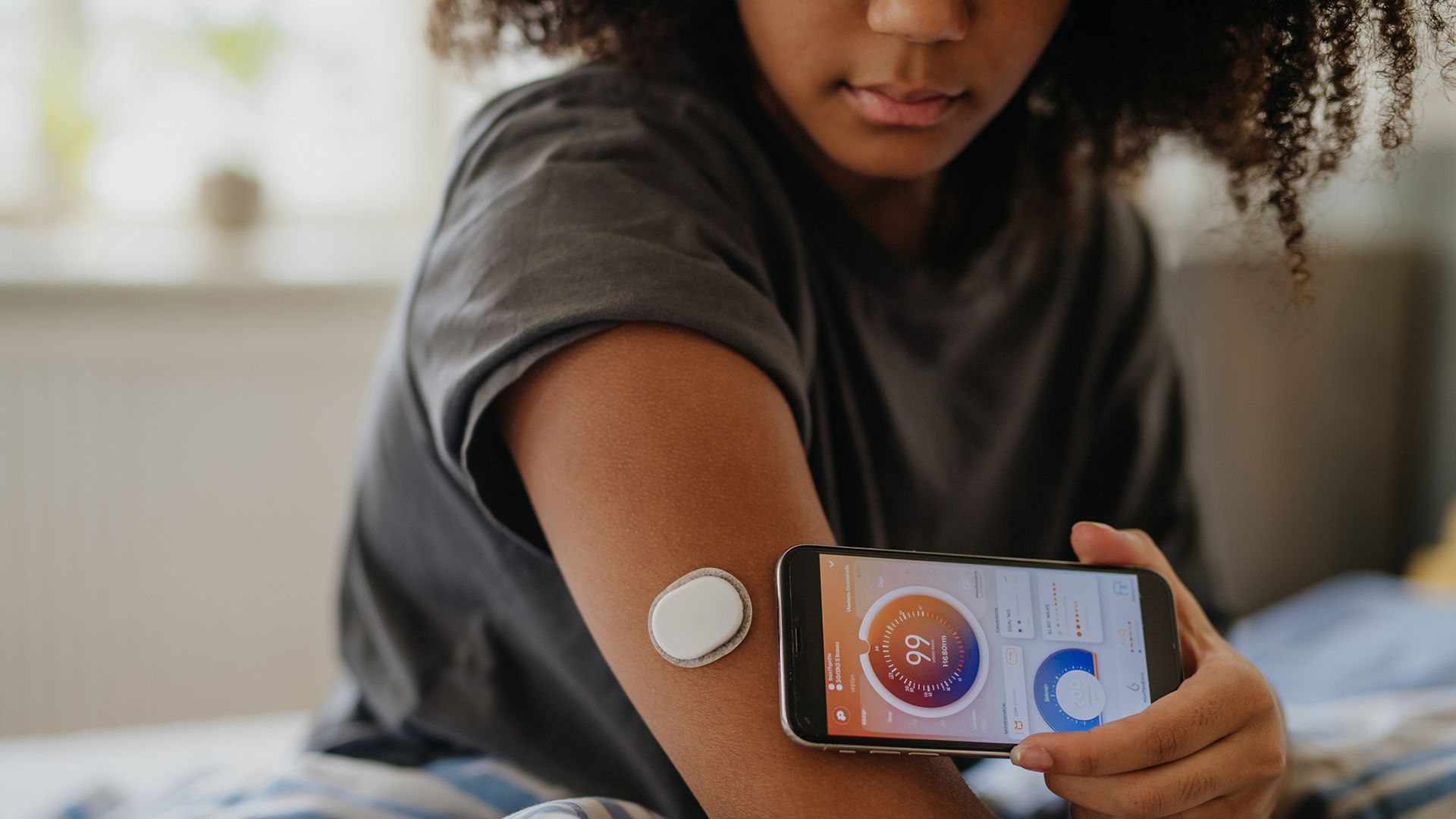
The implant operates wirelessly; a smartphone provides both power and control. The phone emits low‑level radio‑frequency energy that the implant’s electronics convert into a stable direct current to drive the reaction. Integrated with the glucose monitor, the system detects elevated blood‑sugar levels, sends data to the phone, and then modulates the power transferred to the implant accordingly.
“In principle, this enables the device to remove more glucose when blood‑sugar levels rise and to reduce its activity as glucose returns to the desired range,” Fussenegger explained. “Our aim is to create an autonomous system that continuously adapts to a patient’s metabolic needs.”
The self‑regulating device was tested in mice that suffered from both diabetes and obesity. Over a six‑week period, implanted mice exhibited far more stable blood‑sugar levels than untreated controls and lost an average of 10 % of their body weight.
By keeping glucose within a normal range, the animals’ metabolism shifted toward fat oxidation, while the on‑off control of the glucose‑removal reaction prevented hypoglycemia.
While the proof of concept is encouraging, Fussenegger notes that a major hurdle remains: demonstrating that the implant can process enough glucose in humans without compromising safety or catalytic efficiency. In other words, the reaction must function reliably at the scale required for a human patient.
To explore scalability, the researchers placed the device in a large beaker containing a sugary solution approximating 5 liters of blood. Even in this larger volume the implant effectively regulated sugar levels.
Fussenegger emphasized that this beaker experiment is not a substitute for studies in larger animals or humans, which are the team’s immediate priority.
He added that the device is not intended to replace healthy nutrition, physical activity, or preventive medicine in the treatment of diabetes and obesity.
“Obesity and type 2 diabetes are complex conditions that extend far beyond elevated glucose,” he continued. “We regard this technology as a potentially powerful addition to the therapeutic toolbox that could be combined with existing treatments and lifestyle interventions.”
This article is for informational purposes only and is not meant to offer medical advice.
Maity, D., Ray, P. G., Buchmann, P., Hamri, G. C., & Fussenegger, M. (2026). Wireless electrocatalytic closed‑loop system for drug‑free management of diabesity. Science, 394(6822), eady8560.