



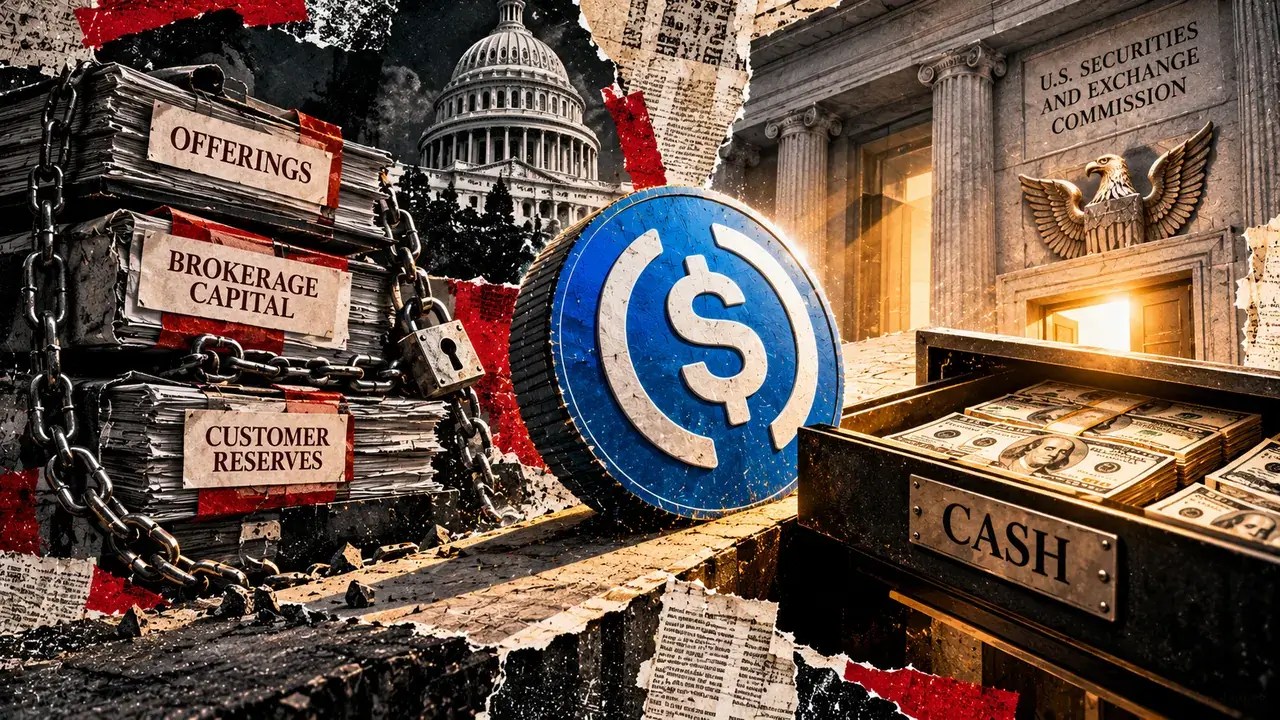
Circle is urging the U.S. Securities and Exchange Commission (SEC) to treat regulated stablecoins as equivalent to cash across securities markets, a move that could significantly expand the institutional adoption of USDC.
The issuer of USDC detailed its proposals in an Oct. 28 statement, building upon an Oct. 20 letter that requested changes to how qualifying stablecoins are treated in securities fundraising, brokerage capital calculations, and customer reserve accounts.
The proposed adjustments could broaden the role of stablecoins in traditional finance by allowing financial institutions to utilize them for activities currently governed by cash-specific regulations. This shift is poised to generate new demand for USDC as Circle seeks to deepen its footprint in institutional financial markets.
Circle seeks cash treatment
Circle’s letter is a response to the SEC’s proposed Regulation Crypto Assets, which aims to establish a new framework for companies raising capital through specific cryptocurrency offerings.
The proposal introduces two exemptions from traditional securities registration requirements. One would allow companies to raise up to $5 million over four years, while the other would permit offerings of up to $75 million annually, subject to disclosure and other requirements.
Circle supports the overall framework but is calling on regulators to clarify that payment stablecoins issued under the regulatory standards of the GENIUS Act qualify as cash when investors participate in these offerings.
While the current proposal already allows permitted stablecoins to count toward the total amount raised, Circle argues that the SEC should go further. Specifically, the agency should allow recipients of those tokens to use the same procedures available to investors contributing conventional cash.

Without such clarification, companies could face disparate regulatory requirements depending on whether investors pay via traditional bank transfers or blockchain-based dollar tokens.
Circle also wants qualifying dollar stablecoins that remain redeemable one-for-one to be valued at their corresponding dollar amount. This would prevent additional valuation requirements solely because the payments occur on a blockchain.
The company further argues that accepting stablecoins as payment should not automatically subject those tokens or their issuers to the securities obligations governing the assets being sold.
These requests build on the GENIUS Act, which established a federal framework covering stablecoin issuance, reserves, redemption, and supervision.
The Office of the Comptroller of the Currency (OCC) finalized its implementing rules, and the legislation and regulations are scheduled to take effect on Jan. 18, 2027. Circle believes these safeguards provide a solid basis for regulators to recognize compliant stablecoins as payment and settlement instruments across financial markets.
However, the law’s issuer requirements do not automatically establish how stablecoins should be treated under every securities rule. Circle is seeking additional SEC recognition to address those separate requirements.
Wall Street expansion
Beyond crypto fundraising, Circle is pursuing changes that could make stablecoins more attractive to Wall Street broker-dealers.
The most consequential proposal concerns how securities firms calculate their regulatory capital, which determines their financial capacity to support trading activities and absorb potential losses.
Under SEC staff guidance updated in February, broker-dealers can apply a 2% haircut to qualifying stablecoin positions held for their own accounts when calculating net capital.
That deduction reduces the value recognized for regulatory purposes. For example, a broker with a qualifying $1 billion proprietary position would face a $20 million reduction in calculated net capital under the 2% treatment.
Circle wants to eliminate the deduction for payment stablecoins that meet the GENIUS Act’s requirements.
The company argues that the law’s reserve, redemption, liquidity, and consumer protection standards justify treating compliant stablecoins more favorably than other digital assets.
Removing the haircut could free up regulatory capital for broker-dealers holding substantial stablecoin positions, potentially making those assets more attractive for institutional operations.
However, the existing 2% treatment comes from nonbinding SEC staff guidance rather than a Commission rule. A zero haircut would require further regulatory acceptance, and the actual benefits would depend on how much stablecoin inventory brokers hold.
Circle is also seeking a separate change to the SEC’s customer protection requirements.
Under Rule 15c3-3, broker-dealers must maintain qualifying assets in reserve accounts to protect customer funds. These requirements currently contemplate cash and qualified securities.
Circle wants the SEC to clarify whether compliant payment stablecoins can satisfy those obligations, potentially allowing firms to maintain part of their required customer reserves using digital dollars.
Such recognition could create another institutional use for USDC, although it would require separate regulatory action and safeguards.