



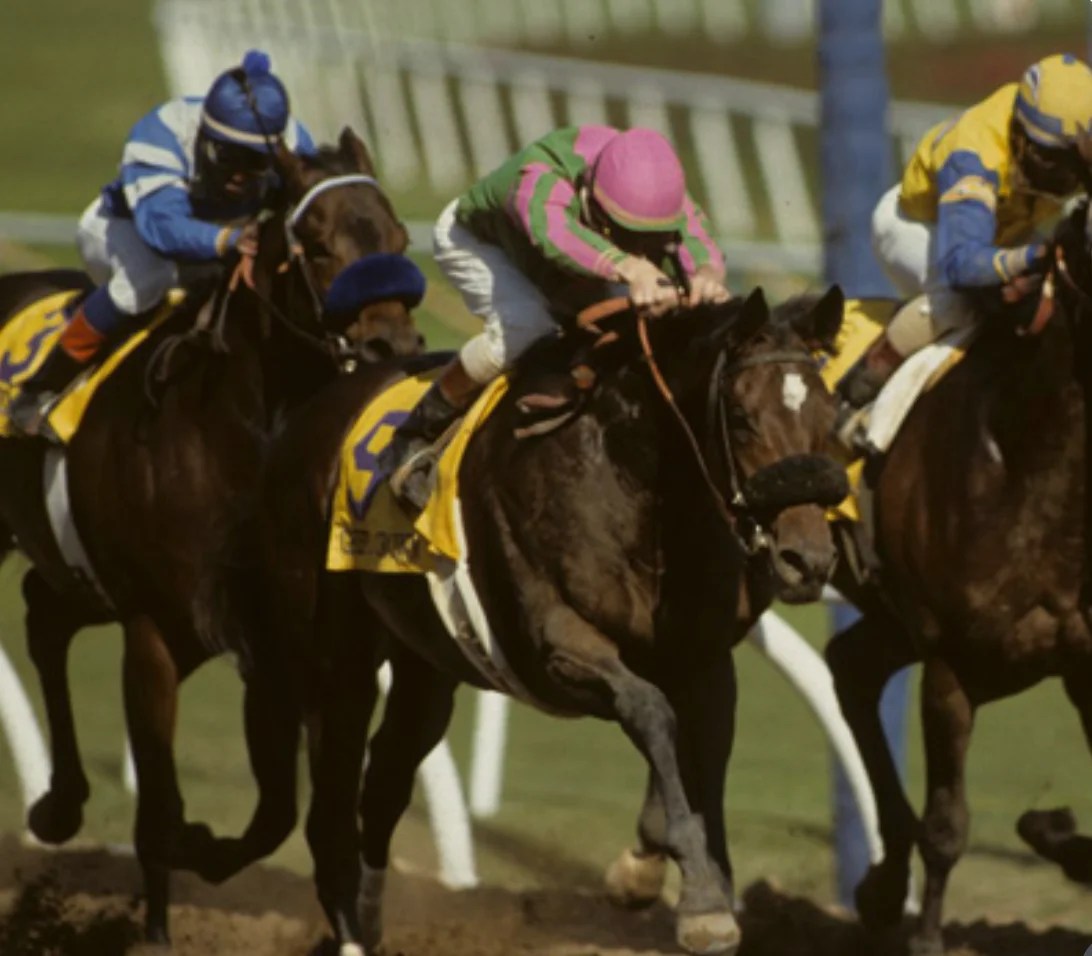
The Breeders’ Cup Juvenile (G1), again carrying a $2 million purse, is one of the seven original races from the inaugural Breeders’ Cup World Championships in 1984.

Run over 1 1/16 miles on dirt, this stakes event often identifies the Eclipse Award champion for the division and typically establishes the early favorite for the following year’s Kentucky Derby (G1).
Breeders’ Cup Juvenile History and Betting Insights
- Chief’s Crown, trained by Roger Laurin—son of Secretariat’s trainer Lucien—won the first Breeders’ Cup Juvenile at Hollywood Park under jockey Don Macbeth. He was the first race winner to be named champion 2-year-old; since then, 33 additional winners from 41 runnings have earned the honor.
- Hall of Fame trainer Todd Pletcher saddled Ted Noffey to victory in the most recent running, marking his fifth Juvenile winner. That total equals his mentor, D. Wayne Lukas, and trails only fellow Hall of Famer Bob Baffert, the race’s leading trainer.
- Retired riders Laffit Pincay, Jr. and Jerry Bailey, along with active jockeys Mike Smith and John Velazquez, have each ridden three winners, more than any other riders.
- Favorite Trick remains the last Juvenile winner named Horse of the Year and the first since Secretariat in 1972. Unbeaten in eight starts as a two-year-old for owner Joseph LaCombe and trainer Patrick Byrne, he won the 1997 edition at Hollywood Park before claiming year-end honors.
- Only two Juvenile winners have gone on to win the Kentucky Derby the following year: Street Sense (2006, 2007) and Nyquist (2014, 2015).
- The fastest 1 1/16-mile running is Midshipman’s 1:40.94, clocked when he won at Santa Anita in 2008.
Notable Winners, Records, and Key Moments
1991 – Arazi delivered one of the most famous performances in Breeders’ Cup Juvenile history. Ridden by Patrick Valenzuela, he rallied from last in a 14-horse field with an extraordinary burst around the far turn and won by five lengths for trainer Francois Boutin over Bertrando. The race is often described as the most spectacular performance in Breeders’ Cup history.
1986 – Capote, ridden by Laffit Pincay, Jr. and trained by D. Wayne Lukas, led from the gate and held off Qualify’s furious late bid to win by 2¼ lengths in 1:43.40. His rivals included future champions Alysheba, Bet Twice, and Gulch.
2006 – Street Sense stormed from 13th in sloppy conditions, demolishing the field by 10 lengths under jockey Calvin Borel and trainer Carl Nafzger—the largest margin in race history. The victory ended the “Juvenile Jinx” by producing the first winner to complete the Breeders’ Cup Juvenile–Kentucky Derby double.
1994 – Favorite Timber Country ground out a neck victory in a blanket finish, getting past European import Eltish by two lengths. It was the first Juvenile win to produce a Triple Crown race winner, as Timber Country returned to capture the 1995 Preakness Stakes.
2015 – Despite a poor start and early contact with rivals, Nyquist pressed the pace and kicked away by 1¾ lengths, remaining perfect in his first eight starts. Under jockey Mario Gutierrez, he finished in 1:43.79 over a fast track at Keeneland, becoming the second Juvenile winner to win the Kentucky Derby.
2025 – Ted Noffey remained undefeated by winning the 2025 Breeders’ Cup Juvenile at Del Mar. The Into Mischief colt, trained by Todd Pletcher and ridden by John Velazquez, tracked the pacesetter before taking the lead in the stretch and holding off a late challenge to win by a length. Sent off as the odds-on favorite at $3.60, the victory gave Pletcher his fifth Juvenile win and stamped Ted Noffey as the clear early favorite for the 2026 Kentucky Derby. He has not started since.
Payouts and Trends
Fourteen of 42 editions through 2025 have been won by the betting favorite, a 33% win rate. When favorites do not win, they frequently contribute to exactas and trifectas.
However, half of the winners over the past 20 years went off at double-digit odds (10-1 or higher).
This aligns with the race’s reputation for upsets, particularly at Southern California tracks such as Santa Anita and Del Mar, where eight of those 10 longshot victories occurred. The Juvenile is notoriously unpredictable, with only five favorites winning in the same period.
Breeders’ Cup Juvenile Exactas Pay Well
Exactas have frequently returned more than $100 for a $2 bet in recent years. In 2024, the average exacta in the Juvenile was nearly $220.
Some notable upsets:
2019 – Storm the Court won at 45-1, delivering $93.80 on a $2 win bet.
2023 – Fierceness won at $35 for a $2 bet. Exacta and trifecta payoffs were $101.30 on a $1 exacta and $171.80 on a $0.50 trifecta.
2024 – Citizen Bull won, paying $33.80 for a $2 win bet.
Pace Scenario, Trends, Tips
Do not dismiss longshots, as upsets happen regularly. If the favorite appears vulnerable because of prep-race form or pace dynamics, value may lie elsewhere.
Prep races matter. Strong performances in key two-year-old stakes leading up to the Juvenile—the American Pharoah Stakes, Breeders’ Futurity, and Champagne Stakes—are often seen among winners.
A fast early pace often creates opportunities for closers or horses positioned off the pace. Conversely, a horse that dictates a reasonable pace may hold that advantage to the wire.
Speed and early-pace horses have generally held an advantage. Gate-to-wire or pressing types are most often successful. Several recent winners were on or near the lead early or pressed the pace. In 2024, Citizen Bull went to the front. In 2023, Fierceness pressed pace and prevailed, as did Ted Noffey the previous year.
Inside posts can be helpful, though not always determinative. Weather, track bias, and surface also matter.
Also Read
- Packers Lead Panthers 20‑10 at Halftime After Strong Defensive Display
- Packers Extend Two-Posession Lead as Matthew Golden Scores Fourth Touchdown
- Miami vs. North Carolina prediction, odds, pick for college football Week 9
- Everton Omits Jack Grealish from Carabao Cup Match Due to Disciplinary Breach