



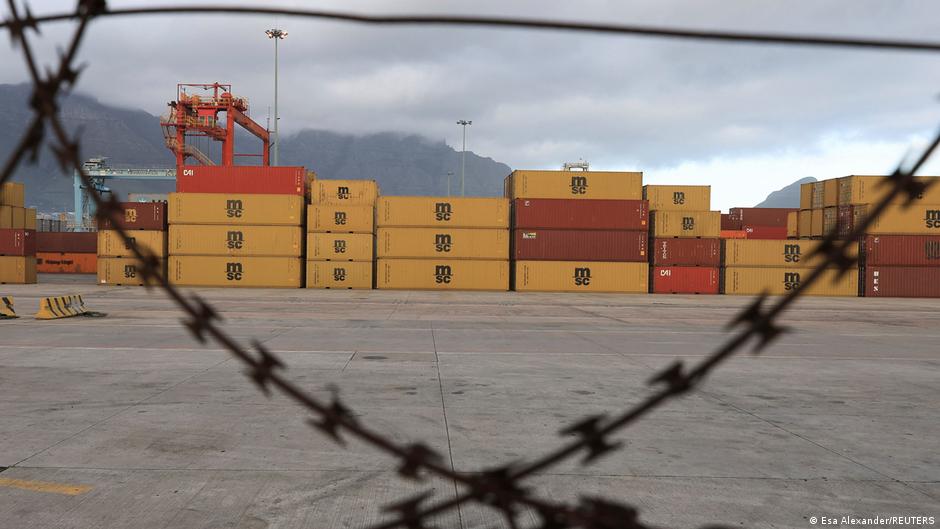
The United States will terminate South Africa and Rwanda’s participation in the African Growth and Opportunity Act (AGOA), ending a 26‑year‑old duty‑free trade scheme that has benefitted thousands of sub‑Saharan African products.
US Trade Representative Jamieson Greer announced on Monday that President Donald Trump plans to end the countries’ AGOA benefits from January 2027 onward.
The program, subject to annual review, was most recently extended by President Trump in February.
Greer stated that the governments of Rwanda and South Africa are engaging in practices that do not meet AGOA eligibility requirements.
These practices, he explained, include barriers that undermine US trade and investment as well as actions that threaten American national security and foreign‑policy interests in the region.
No specific examples of the alleged barriers or security concerns were provided.
AGOA has expired — what’s next for African trade and jobs?
To view this video please enable JavaScript, and consider upgrading to a web browser that supports HTML5 video
What is AGOA?
Launched in 2000 by President Bill Clinton, AGOA has become a cornerstone of US economic engagement with sub‑Saharan Africa.
Duty‑free access to the US market is viewed as a vital economic engine for the more than 30 participating countries, covering over 1,800 specific product categories.
Eligibility requires members to remove barriers to US trade and investment, uphold an open market economy, and respect democratic principles such as the rule of law, human rights, and labor protections.
South Africa largest AGOA partner
South Africa has been AGOA’s largest beneficiary, shipping $1.7 billion (≈€1.5 billion) of goods—including vehicle parts, citrus fruit, and wine—to the United States in 2025.
South Africa’s Ministry of Trade said last week it was prepared for the decision, noting that AGOA‑eligible exports account for roughly 10 % of its total shipments to the US and only 1 % of its global exports.
The ministry stated that AGOA remains important to South Africa, but it does not constitute the totality of the economic relationship between the two countries.
President Cyril Ramaphosa has recently urged South Africa to seek new markets and trade agreements, including with China, in anticipation of its removal from AGOA.
On Monday, the South African government reiterated that the United States remains a key trade partner and pledged support for sectors impacted by the decision.
South Africa’s citrus industry, which depends heavily on AGOA, warned that its entire value chain “on both sides of the Atlantic, is now under threat,” jeopardizing jobs and the economic security of communities.
Rwanda sanctioned for alleged M23 ties
The United States has increased economic pressure on Rwanda, alleging that the country supports the M23 rebel group in the Democratic Republic of Congo.
Washington imposed sanctions on Rwanda’s Ministry of Defense last week, a move the ministry denies, alongside several individuals, institutions, and a gold refinery.
Key Rwandan exports to the United States are coffee and minerals.
Edited by: Dmytro Hubenko
What is the AGOA US-Africa trade program?
To view this video please enable JavaScript, and consider upgrading to a web browser that supports HTML5 video
Also Read
- Oklahoma Man Charged with Mailing Over 700 Hoax Letters Containing White Powder to U.S. Officials
- Sierra Nevada Corp. Withdraws from Navy Trainer Jet Competition
- Trump Rules Out Immediate U.S. Military Strike on Iran
- Three Indonesian Police Generals Arrested Over Alleged Illegal Surveillance of President Prabowo