



Senior officials in the Trump administration have urged China to “fully and immediately” honor its obligations under a 2025 bilateral trade accord, specifically regarding rare earth elements and other critical minerals.
U.S. Treasury Secretary Scott Bessent and Trade Representative Jamieson Greer held a video conference on Friday with Chinese Vice Premier He Lifeng to discuss the economic relationship between Washington and Beijing, according to a statement from Greer’s office.
Greer “emphasized the critical importance of China taking concrete actions to fully implement its past commitments, particularly as they relate to agricultural purchases, rare earths, and other critical minerals,” the statement noted.
The US-China Trade Agreement
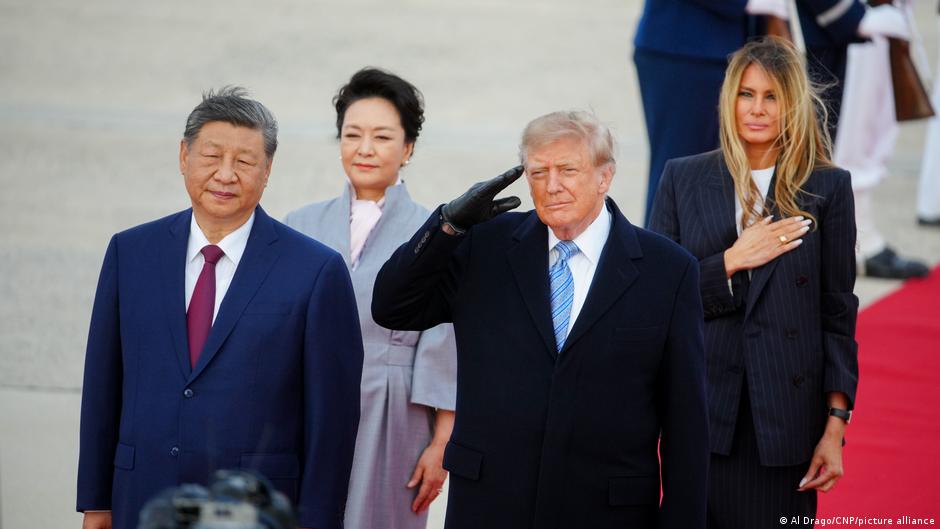
The officials referenced an accord struck by the world’s two largest economies in 2025 during a meeting between President Trump and Chinese President Xi Jinping in Busan, South Korea, on the sidelines of an Asia-Pacific Economic Cooperation (APEC) summit.
The agreement followed a period of escalating tariffs driven by Trump’s broader trade policy, which heavily targeted China.
The deal capped U.S. tariffs on Chinese goods—imposed during Trump’s second term—at approximately 20%.
In return, China committed to purchasing 25 million metric tons of U.S. soybeans over three years.
Beijing also pledged to maintain the flow of rare earth exports, suspending new export restrictions.
These minerals are vital for the technology sector, and the Trump administration has previously accused Beijing of failing to meet its supply commitments.
“The Trump Administration will continue pursuing policies that benefit American workers, farmers, and businesses and strengthen our economic and national security,” Bessent posted on X following the high-level call.
China Voices Concern Over U.S. Trade Restrictions
He, Beijing’s lead negotiator on trade, expressed “serious concern” during Friday’s talks over recent U.S. trade restrictions targeting China, according to state news agency Xinhua.
The report did not specify which measures the vice premier referenced.
Both sides agreed to “continuously strengthen cooperation” and “properly manage differences” to foster a “stable” U.S.-China trade relationship, Xinhua reported.
The Busan trade deal, initially covering one year, was extended until January 10 of next year after Trump hosted Xi at the White House in September.
The two leaders are expected to meet again at the upcoming APEC forum in Shenzhen, China, scheduled for November 18–19.
Separately, China confirmed for the first time that it is discussing a historic trilateral summit involving Xi, Trump, and Russian President Vladimir Putin on the sidelines of the APEC gathering.
“China is in communication with relevant parties regarding a meeting between the three heads of state,” Chinese Foreign Ministry spokesperson Mao Ning told a media briefing in Beijing this week.
Also Read
- Stablecoins Shift to Financial Core as U.S. Legislation Mandates Full Reserve Backing
- Pakistani astronaut to board Shenzhou 24 and become the first foreigner on China’s space station
- U.S. Announces $20 Million Reward for Intelligence on Iran’s Nuclear Activities, CENTCOM Says
- Pakistan Lowers Fuel Prices for Fifth Consecutive Week Amid Shifting US-Iran Dynamics