



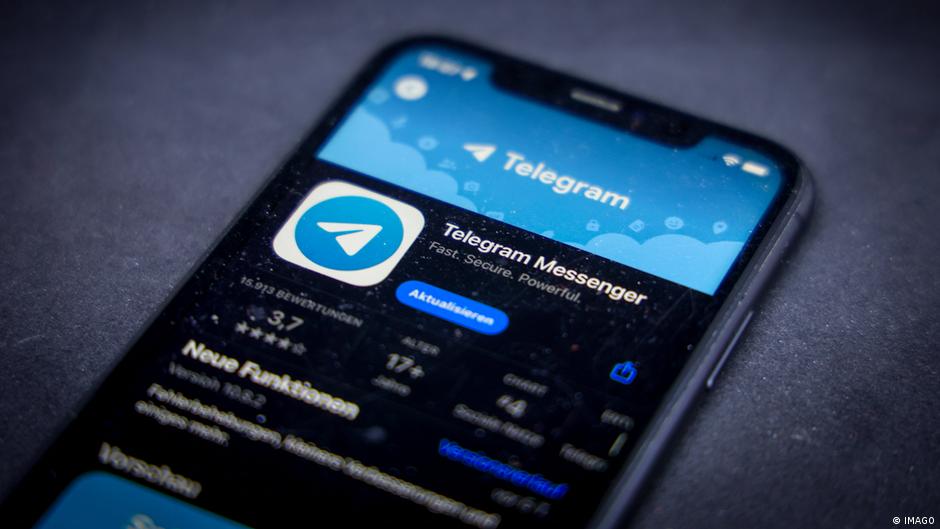
Jordan announced on Monday that it would ban the instant messaging service Telegram, following a deadly attack on a church last month.
Jordan’s Public Security Directorate said the measure was intended to protect society from “attempts to spread extremism and radicalisation,” which it described as a “threat to societal security and national interests.”
In December 2022, Jordan also banned TikTok over videos that authorities said “promoted killing and chaos.”
What prompted the ban?
The Telegram ban follows an October 23 shooting at a Greek Orthodox church in the southern Karak governorate that left seven people dead and 34 others wounded.
In response, Jordan carried out airstrikes on neighbouring Syria and said it had killed 20 so-called “Islamic State” militants. The government also acknowledged that a number of civilians had been killed in the strikes.
A Jordanian court sentenced three men to death by hanging on Sunday in connection with the attack. Authorities identified them as “followers of a hardline Islamist ideology.”
Attacks on Christian minorities are very rare in Jordan, a relatively stable Middle Eastern state and close ally of the United States that maintains diplomatic and military relations with neighbouring Israel.
Christians make up around 3% of Jordan’s population of 10 million. The Levantine country is home to one of the oldest Christian communities in the world.
Telegram and ‘IS’
Over the years, so-called “Islamic State” militants have used Telegram for propaganda and communication purposes.
The Russian-born billionaire Pavel Durov, now based in Dubai, built the Telegram messaging app with his brother Nikolai and launched it in 2013.
Middle East conflicts take toll on Jordan’s tourism sector
To view this video please enable JavaScript, and consider upgrading to a web browser that supports HTML5 video
In July, Russia said it had charged Durov with “aiding terrorist activities,” accusing the platform of hosting tools used to coordinate deadly attacks and sabotage across Russia.
Durov rejects the allegations, arguing that Telegram has gone “beyond its obligations in moderating content and assisting authorities in tackling crime.”
He describes himself as a libertarian and has repeatedly clashed with governments seeking greater access to the platform.
Also Read
- Federal Reserve Governor Michael Barr Warns of AI-Driven Risks to Market Stability and Banking Security
- Leigh Ross Charged After Leeds Police Pursuit Crash Kills Two
- Lebanon’s New Northern Airport: An Economic Lifeline and a Strategic Hedge
- Prince and Princess of Wales Land in India for Earthshot Prize Ceremony and Talks with Narendra Modi