



Rafael Grossi, head of the United Nations nuclear watchdog, said on Wednesday that North Korea has built an extension to its original uranium-enrichment plant at the Yongbyon nuclear complex.
The International Atomic Energy Agency (IAEA) has been shut out of North Korea since Pyongyang expelled its inspectors in 2009. In the absence of on-site access, the agency now relies largely on satellite imagery to track the country’s nuclear activity.
Grossi raised the continued operation of enrichment facilities at Yongbyon and Kangson during a quarterly meeting of the IAEA’s Board of Governors.
Kangson sits just southwest of Pyongyang, while the considerably larger Yongbyon complex lies farther north of the capital.
“Since mid-September 2026, a further extension to the original Yongbyon enrichment facility has been under construction, with the new extension externally complete by late October 2026,” Grossi said, offering no additional detail.
He described the ongoing expansion of North Korea’s uranium enrichment program as “a cause for serious concern.”
Enriched uranium serves as fuel for nuclear power plants and for the reactors that power naval ships and submarines. It can also be used to build nuclear weapons.
US President Donald Trump raised the prospect of a meeting with North Korean leader Kim Jong Un as he traveled to China to sit down with Chinese President Xi Jinping and Russian President Vladimir Putin.
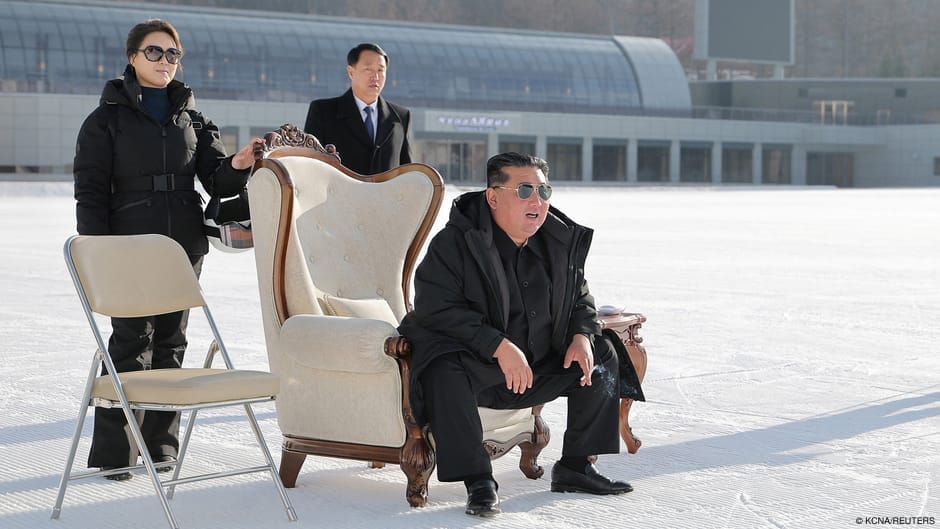
North Korean state media, which typically trails the global news cycle, has so far released only images of Kim visiting a ski resort and Mount Paektu, with no mention of any possible trip to Shenzhen.
Building a nuclear force
Kim has stated that he intends to equip the country with a far-reaching nuclear arsenal to counter the United States and South Korea.
In March, shortly after the US and Israel launched strikes on Iran, Kim accused Washington of “global terrorism and aggression.”
The war with Iran reinforced North Korea’s longstanding conviction that it needs a nuclear arsenal to defend itself against what it regards as its two principal adversaries: South Korea and the United States.
North Korea has faced a range of international sanctions over its development of nuclear weapons and its use of ballistic missile technology. Pyongyang, however, has repeatedly ignored those restrictions.
In September 2024, North Korea unveiled its first covert uranium-enrichment plant. Kim used the occasion to call for an “exponential” expansion of the country’s nuclear arsenal.
In April, Grossi told reporters that his agency had confirmed “a rapid increase” in activity at nuclear facilities across North Korea.
In September, the IAEA adopted resolutions at its annual conference expressing concern over the North Korean nuclear program.
Kim Yo Jong, the influential sister of Kim Jong Un, responded that the country’s status as a nuclear-armed state was “absolute.”
She dismissed those who still hoped for denuclearization as “idiots.”
What lessons is North Korea learning from the Iran war?
To view this video please enable JavaScript, and consider upgrading to a web browser that supports HTML5 video