



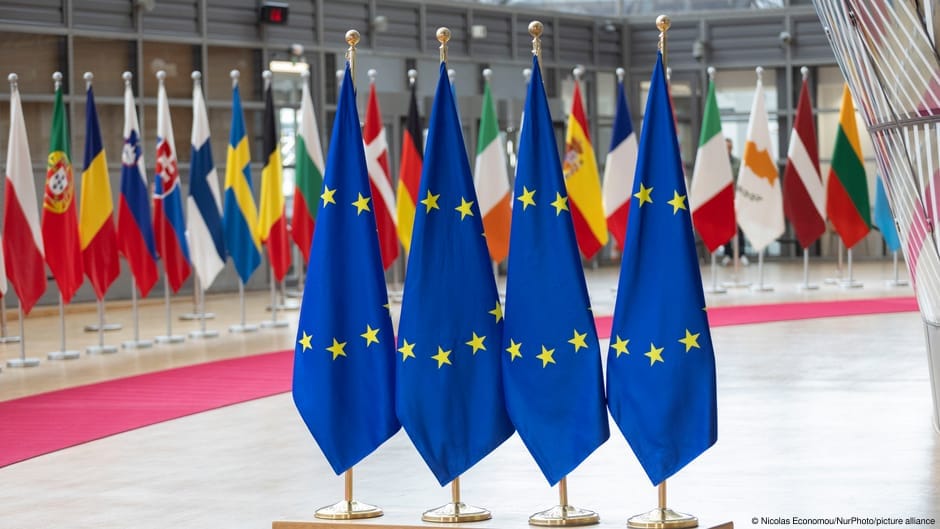
The European Union’s most recent enlargement occurred in 2013 when Croatia became its latest member.
Should current trajectories hold, Montenegro — a nation of roughly 620,000 inhabitants — may finalize its accession talks within months and become an EU member in early 2028.
Immediately after EU Enlargement Commissioner Marta Kos announced in October that Montenegro could join the Union in 2028, reports surfaced that Croatia could block the accession unless Montenegro satisfies a set of demands.
EU officials and Members of the European Parliament expressed dismay.
This situation is not unprecedented; the veto power held by individual member states has increasingly been employed as a bargaining tool and political lever, often stalling EU decision‑making.
Montenegro: Croatia’s eight demands
Montenegro is the EU candidate most advanced in the accession process, with a provisional opening date of 2028, and has already provisionally closed several of the EU’s 33 negotiation chapters.
Nevertheless, as of 23 November, Croatia is obstructing the closure of three already‑negotiated chapters.
Zagreb is seeking compensation for former prisoners detained in Montenegrin camps during the 1990s Yugoslav wars, clarification regarding missing Croatians, and more robust prosecution of war crimes.
The two countries also dispute the exact maritime boundary, and Croatia is requesting roughly €2.4 billion (about $2.6 billion) for assets that previously belonged to the Yugoslav People’s Army.
Montenegro has addressed some of Croatia’s requests, notably compensation for former prisoners, but disputes remain over other issues, such as the assets of the Yugoslav People’s Army.
Croatia’s demand list is also shaped by domestic politics; any perceived softness on the Croatian War of Independence (1991‑1995) would be politically untenable for the Zagreb government.
Prime Minister Andrej Plenković, a moderate conservative often labeled as overly pro‑EU, can leverage the dispute to present himself as a defender of national interests.
Ukraine: Hungarian domestic politics in the name of a minority
Following Russia’s full‑scale invasion of Ukraine, the EU granted candidate status to Ukraine and the Republic of Moldova in June 2022 via an accelerated procedure, as a gesture of solidarity.
While many EU members have voiced reservations about rapid accession for Ukraine, only Hungary, under former Prime Minister Viktor Orban, has taken an obstructive stance.
Formally, Hungary’s obstruction concerned improving rights for the Hungarian minority in Transcarpathia, but Orban ultimately used the issue for domestic political gain and election campaigning, casting Ukraine as a “mafia state.”
To tap into prevalent anti‑Ukrainian sentiment, Hungary’s new Prime Minister Peter Magyar has also adopted a hardline position toward Ukraine.
Nevertheless, the Magyar administration lifted several temporary blocks on opening new negotiation chapters, including after Ukraine’s parliament enacted an early‑October law enhancing educational rights for national minorities.
North Macedonia: The never-ending blockade
No EU candidate country has endured as prolonged or as heavily weighted veto politics as North Macedonia, which obtained candidate status in 2005 yet only began accession negotiations in July 2022.
Greece blocked the launch of negotiations for 13 years, contesting the name “Republic of Macedonia” and accusing its neighbour of territorial claims over northern Greece’s Macedonia region.
The dispute was resolved in 2018 through a compromise that renamed the country the Republic of North Macedonia in 2019.
However, as the accession path appeared clear, Bulgaria halted the start of talks in November 2020.
Bulgaria views the Macedonian language as a Bulgarian dialect and disputes the notion of a separate Macedonian nation.
Again, domestic Bulgarian politics play a decisive role.
Former Bulgarian President and current Prime Minister Rumen Radev, for instance, amplified the dispute with North Macedonia to bolster his political profile.
Serbia: Croatia is not the only country obstructing progress
Serbia has been negotiating EU accession since 2014, but progress has been limited.
In July, amid President Aleksandar Vučić’s tenure, eight EU member states — including Croatia — opposed advancing further negotiation chapters with Serbia.
The primary concerns involve democratic deficits, rule‑of‑law weaknesses, and corruption in Serbia, while Croatia also has its own disputes with its eastern neighbour.
These issues concern the 1991‑1995 war, missing persons, war crimes, minority rights, and divergent historical narratives, with nationalist rhetoric inflaming relations on both sides.
EU enlargement: Montenegro on track to join bloc by 2028
To view this video please enable JavaScript, and consider upgrading to a web browser that supports HTML5 video
Whether the recent electoral victory of the Student List in Belgrade, following nearly two years of anti‑government and anti‑corruption protests, will alter the situation remains uncertain.
Albania: Greece threatens to use minority rights as leverage
The EU launched accession negotiations with Albania — a candidate since 2014 — in July 2022.
Albania may become the EU’s next member after Montenegro, but Greece has repeatedly threatened — most recently in June — to block the accession unless it adequately safeguards the rights of its minority, especially property rights.
An end to the veto system?
In light of these developments, Brussels has long debated reforms to the accession process and the EU’s veto system.
In early October, the European Commission proposed that opening negotiations with candidate countries be decided by qualified majority instead of unanimity, and that new members relinquish their veto rights in specific policy areas for a set period.
The challenge is that these reforms themselves require unanimous approval, meaning any member state could block them.
Also Read
- Israeli Strike in Gaza City Kills Hamas Internal Security Chief, Officials Say
- South Korea Corrects Alert: Russian Jets, Not North Korean, Enter Air Defense Zone
- Bank of America CEO Says Cyber Patching, Not Hackers, Is Driving Recent Banking Disruptions
- Britain Imposes Sanctions on Houthis, Citing Atrocities and Red Sea Attacks