



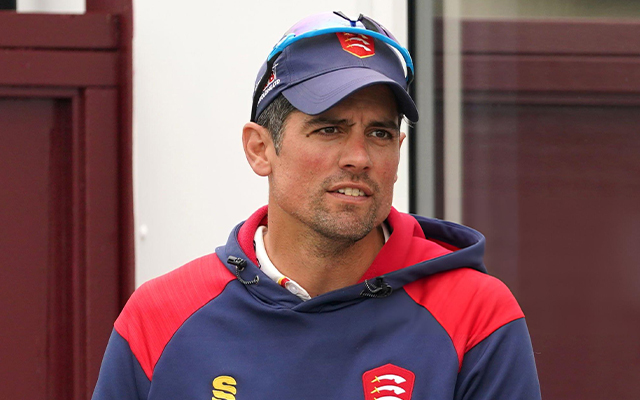
Former England captain Alastair Cook has thrown his weight behind India captain Shubman Gill’s campaign to overturn the ICC’s ban on using saliva to shine the ball. Cook, a veteran of 161 Tests who debuted against India, also insisted that the Sandpapergate controversy be laid to rest, arguing the matter has long since run its course.
Gill reignited the saliva debate after the drawn Wellington Test against New Zealand on November 23, 2026. The match ended in a stalemate on a lifeless pitch, where Glenn Phillips and Daryl Mitchell occupied the crease for 312 deliveries combined to secure the draw, leaving India’s bowlers with scant assistance. Speaking in Gurugram, Cook addressed the Sandpapergate issue directly, stating:
“I have absolutely no problem with it. I’ll be happy to have it back. It won’t do anyone any harm. Looking at pitches is also very important. Drop-in pitches are another area that requires investment in the game. Because if you’re preparing the wickets and generating excitement, that’s where you have an agreement,” Cook said, in an exclusive interview with Hindustan Times.
Why Sandpapergate Resurfaced in 2026 and Cook’s View on the Revival
The controversy flared anew following the release of Usman Khawaja’s book, Sabr, which alleged that the entire Australian squad possessed prior knowledge of the ball-tampering plot during the 2018 tour of South Africa. Cameron Bancroft was caught using sandpaper during that series, resulting in sanctions for him, David Warner, and Steve Smith. Khawaja’s account, supported by a lengthy statement from former fast bowler Chadd Sayers, suggested complicity extended far beyond the three punished players.
Current Australia captain Pat Cummins, alongside fellow 2018 bowlers Josh Hazlewood and Mitchell Starc, maintained they had no knowledge of the plan. The revelations have fractured Australian cricket, with former teammates openly contradicting each other. While English media and former players have weighed in on their Ashes rivals, Cook adopted a measured stance, insisting the sport must look forward rather than relitigate an eight-year-old saga.
“Our reaction is the same as every other country now. Everyone’s bored of talking about Sandpapergate. It’s happened; they’ve got their system in place to look at it. I genuinely don’t want any more bad or ill to come of it. Three people (Smith, Warner and Bancroft) in particular have served their punishment. The game of cricket needs to move forward from it and look ahead to what cricket has to offer,” Cook said.
Cook also highlighted Australia’s resurgence since 2018, including World Cup triumphs across formats, and argued that the governance structures now in place should be trusted to manage such issues.
Cook on Pitch Quality and the Saliva Ban
Cook was equally forthright on pitch quality, lamenting the lifeless surfaces that contributed to the Wellington draw. He also cited poor attendances during Australia’s recent Test series in South Africa as a concern, viewing improved pitches and the reinstatement of saliva use as linked solutions to Test cricket’s struggles. The saliva ban, initially a COVID-19 precaution, has remained permanent for nearly four years.
“I want to see good, lively pitches such as the ones we used to have back in the day. That’s harder to achieve now. That’s what England does well, right? We need it not just in England but across world cricket. You can look at it and invest the money needed to make the pitches better. That’s what will make Test cricket more solid,” Cook elaborated.