



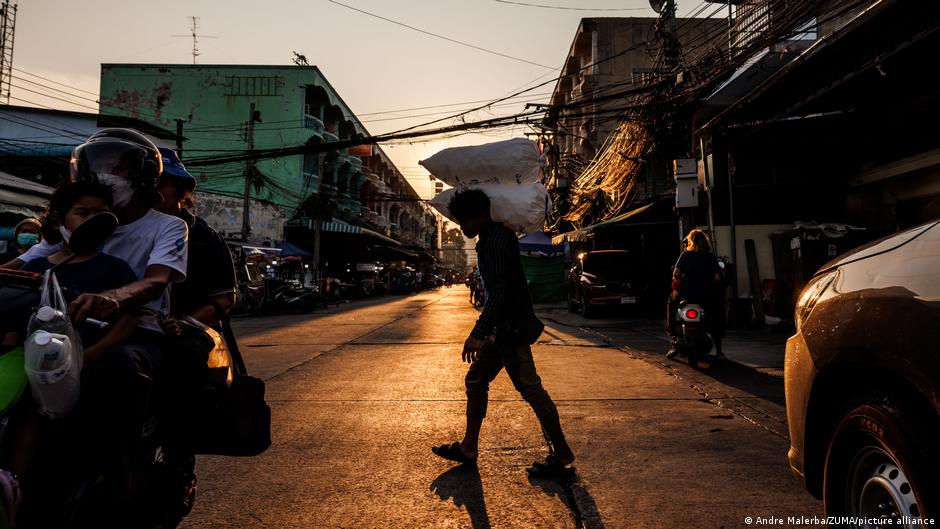
Southeast Asia is preparing for the arrival of an extreme El Niño weather pattern, coinciding with a period where governments and households are already struggling with rising costs for energy, transportation, and food driven by conflicts in Iran.
The World Meteorological Organization (WMO) anticipates that El Niño conditions will emerge by August and persist through at least November. This phenomenon involves an abnormal warming of surface waters across the Pacific Ocean and a disruption of typical wind patterns, which is expected to bring intense heat to the central and eastern Pacific.
The timing is particularly critical as the region enters its monsoon season, which typically replenishes reservoirs, cools urban centers, and prepares fields for planting. Delayed or insufficient rainfall could force farmers to postpone planting, reduce their cultivated acreage, or pivot away from water-intensive crops.
“Southeast Asia’s agricultural sector is exceptionally vulnerable to a new El Niño shock, given that its two primary commodities, rice and palm oil, are highly concentrated and uniquely sensitive to climate anomalies,” Jason Lee, chair of the Global Heat Health Information Network’s Southeast Asia Hub, told DW.
“This extreme exposure means that what begins as a localized, farm-level shock can rapidly spill over into a broader, systemic food-price and inflation crisis across the region.”
Agricultural Vulnerabilities and Inflationary Risks
Rice crops represent the most significant political risk for Southeast Asian nations. As the region’s primary staple food, rice is central to rural livelihoods, and any price spikes often trigger widespread public discontent.
UN predicts record-breaking heat
To view this video please enable JavaScript, and consider upgrading to a web browser that supports HTML5 video
Paul Teng, a visiting senior fellow in the ISEAS–Yusof Ishak Institute’s Climate Change in Southeast Asia Programme, told DW that rice is likely to suffer the most due to heat stress and reduced rainfall.
“In rain-fed rice areas, we will likely see a higher incidence of localized droughts, while irrigated areas will face water stress due to declining reservoir levels,” Teng stated, identifying Thailand, the Philippines, Indonesia, and Cambodia as the most vulnerable nations.
He added that the region could experience a 2% to 8% reduction in total rice output compared to a typical year, with more severe losses in drought-prone zones.
Palm oil is another major concern, particularly for Indonesia and Malaysia, which produce approximately 85% of the global supply. “Palm oil is sensitive to rising temperatures, but unlike rice, the impacts may manifest 6–12 months later through reduced oil extraction rates and fresh fruit bunch formation,” Teng explained.
Analysts warn that the combination of an extreme El Niño and the sharply rising costs of gas and fertilizer—exacerbated by the war in Iran—could drive food prices even higher.
Lee noted that markets often react to the fear of shortages before actual losses are realized, pushing prices up prematurely. “This leaves central banks on high alert, forcing them to maintain elevated interest rates to combat food-driven inflation at the same time that regional businesses face higher borrowing costs and government budgets are strained by soaring energy bills and necessary subsidies,” he added.
El Nino threatens to make the world even hotter
To view this video please enable JavaScript, and consider upgrading to a web browser that supports HTML5 video
Economic and Environmental Pressures
Several regional governments have already increased coal usage to address energy shortages and implemented subsidies for basic services and food. Meanwhile, the Asian Development Bank has lowered its 2026 growth forecast for developing Asia and the Pacific from 5.1% to 4.7%, citing the conflict in Iran as a primary cause.
Inflation remains a challenge: the Philippines reported a May inflation rate of 6.8%, while Vietnam’s annual rate reached 5.6%. In Indonesia, while the headline rate is lower, a 32% increase in some non-subsidized fuels has intensified cost-of-living pressures.
The impact extends beyond agriculture. Temperatures exceeding 40 degrees Celsius (104 Fahrenheit) could damage the vital tourism sector. Furthermore, prolonged dry spells may ignite agricultural and peatland fires in hotspots such as northern Thailand and the Indonesian provinces of Sumatra and Kalimantan.
“A strong El Niño increases the likelihood of serious transboundary haze, which heightens public health risks and creates broader societal hardship,” Helena Varkkey, associate professor of Political Ecology at Universiti Malaya, told DW.
Such environmental crises often strain regional diplomacy, as governments struggle to balance plantation restrictions with the economic pressures facing farmers and companies. “Similar to the overlap of the COVID-19 pandemic and haze events, governments may struggle to balance economic and social priorities,” Varkkey added.
The Path from Climate Shock to Political Instability
Lee emphasizes that for governments already fighting inflation, the convergence of a climate shock and geopolitical conflict “destroys their fiscal breathing room.”
“Historically, across Southeast Asia, when the price of rice and fuel rises past a certain threshold, public desperation rapidly turns into political volatility,” Lee cautioned.
This warning follows a year marked by youth-led unrest and anti-corruption protests across the region. In Indonesia, students recently rallied in Jakarta against fuel price hikes and President Prabowo Subianto’s spending plans, demanding more affordable food and energy.
In the Philippines, political tensions between major factions have been exacerbated by public anger over corruption scandals. Meanwhile, in Malaysia, Prime Minister Anwar Ibrahim has hinted at a snap general election should tensions within his ruling coalition worsen.
“Governments face the very real threat of mass protests, labor strikes in manufacturing hubs, and intense domestic unrest that can destabilize administrations and disrupt regional trade agreements,” Lee said.
While governments still have a window of opportunity to secure water supplies, manage stocks, and guide farmers’ planting decisions, the margin for error is shrinking. A severe El Niño, arriving amidst high input costs, could transform a cost-of-living squeeze into a major political crisis for Southeast Asia.
Also Read
- Bowen: Iran deal ends Trump’s war that revealed limit of US dominance
- ICAEW Criticizes HMRC Reporting Requirements as Overburdening Small Businesses
- Iran and US Negotiations: UN Calls for Reopening Hormuz Strait to Prevent Escalating Food and Energy Crises
- Trump Arrives for Group of 7 as Allies Rethink Their Relationship With U.S.