



Has the fragile US-Iran ceasefire collapsed?
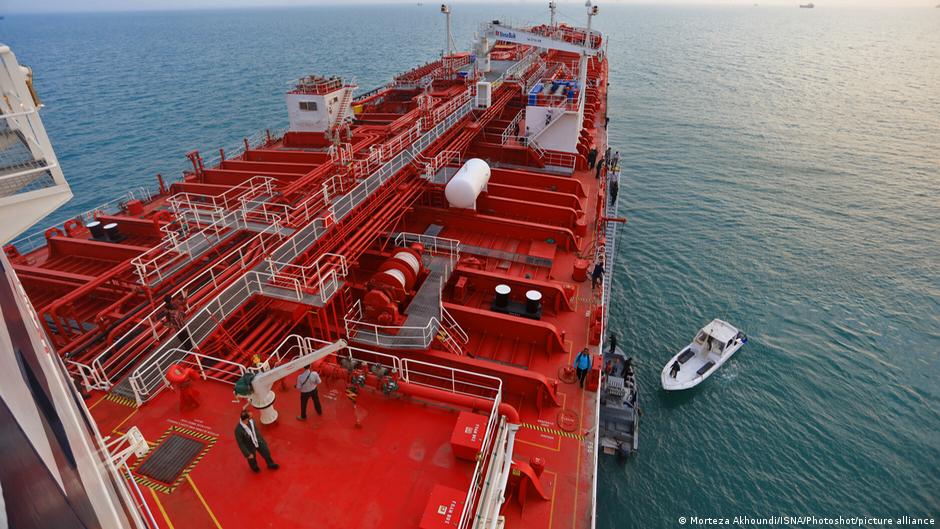
Tensions have escalated as Iran launched attacks on at least three commercial vessels in the Strait of Hormuz on Tuesday, according to U.S. and maritime officials. The strikes targeted a Saudi oil tanker and a Qatari liquefied natural gas (LNG) carrier, prompting the United States to revoke the temporary sanctions waiver on Iranian oil exports.
The waiver, a key component of the memorandum of understanding (MOU) between the U.S. and Iran reached last month, had enabled Tehran to resume oil exports following a U.S. Navy blockade. In retaliation, U.S. Central Command (CENTCOM) announced Wednesday it had struck over 80 targets in Iran, including air defense systems, radars, and more than 60 small boats operated by Iran’s Islamic Revolutionary Guard Corps (IRGC) to disrupt shipping. A second wave of strikes hit approximately 90 targets on Thursday.
CENTCOM stated the operations aimed to “impose heavy costs for targeting and attacking commercial shipping crewed by innocent civilians in an international waterway.” Iran responded with missile strikes on Gulf states on Wednesday, with air raid sirens and explosions reported in Bahrain and Kuwait, followed by additional attacks on Thursday. Shipping traffic through the strait, which had resumed after the ceasefire, ground to a halt again, according to Bloomberg, citing maritime tracking data.
Maritime security firm MARISKS warned on Wednesday that the exchange “marks a return to direct military confrontation.” Speaking ahead of a NATO summit in Turkey, U.S. President Donald Trump declared the MOU “over,” stating, “It’s just a waste of time dealing with them [Tehran].” China and Qatar called for de-escalation, while German Defense Minister Boris Pistorius urged Iran to halt provocations against the U.S.
Why is Iran again targeting ships in Hormuz?
Iran seeks to maintain control over the Strait of Hormuz, a critical waterway that historically facilitated roughly one-fifth of global oil and gas exports. After U.S.-Israeli airstrikes killed senior Iranian officials, including Supreme Leader Ali Khamenei, on February 28, Iran effectively closed the strait, attacking around a dozen vessels before a tentative ceasefire was brokered. Progress in recent peace talks, however, had stalled on unresolved issues such as long-term sanctions relief and Iran’s nuclear program.
Iran has historically leveraged Hormuz as a negotiation tool during diplomatic deadlocks, alongside strikes on Gulf states like Saudi Arabia, the UAE, and Qatar. Targeting these key oil producers and U.S. allies serves Tehran’s goal of pressuring Washington while destabilizing the region. Iran does not legally control the strait but holds strategic positions along its northern shore, islands, and coastline, enabling the IRGC to monitor and threaten vessels. The country employs fast-attack boats, coastal missiles, mines, and drones to disrupt shipping without engaging in full-scale naval combat.
Reports indicate Iran has begun demanding tolls of up to $2 million per vessel for safe passage through Hormuz, a practice criticized as illegal and unenforceable by maritime experts. Tehran insists ships use its designated lane through northern territorial waters, while the U.S. advocates for routes closer to Omani territorial waters. However, Iran’s leverage is constrained: the U.S. Navy blockade has restricted Iranian oil exports, slashing a critical revenue stream. Iran previously exported oil to China at below-market rates via a shadow fleet using evasive tactics. With the sanctions waiver revoked and a blockade looming, the Iranian regime risks economic collapse.
What leverage does Iran really have?
U.S.-Israeli strikes have severely degraded Iran’s military capabilities. Unable to match U.S. forces conventionally, Tehran relies on asymmetric tactics. Despite controlling strategic terrain near Hormuz, the U.S. has imposed a naval blockade, cutting off Iranian oil exports. Iran has incurred $144 billion in economic losses from the conflict, plus further losses from blocked oil sales. The rial has plummeted to 1.7 million to the dollar, with inflation exceeding 88%.
The maritime intelligence firm MARISKS warned that the sanctions waiver revocation “undermines the political foundation” of the peace deal and increases the risk of further escalation. While Trump acknowledged negotiations will continue, he dismissed Iran’s leadership as “sick people” and expressed reluctance to engage. An unidentified U.S. official stated Tehran must act responsibly to benefit from the MOU, though negotiations remain ongoing. Iran’s Parliament Speaker Mohammad Bagher Qalibaf defiantly posted on X, “The era of bullying and extortion is over. It leads nowhere. We don’t fold.”
As oil prices rose 5% due to the escalation, experts cautioned that additional U.S. strikes may fail to alter Tehran’s strategy. “Instead, they risk pushing both sides further away from the negotiated outcome that both Washington and Tehran still appear to prefer,” wrote Dennis Citrinowicz, a visiting fellow at the Atlantic Council think tank, on X.
Also Read
- Markets Mixed as Middle East Tensions Drive Oil Surge, Bond Yields Higher
- UK Armed Forces and Civilian Personnel Location Statistics Released for 2026
- Minnesota COVID‑19 Fraud Case Stalls as Extradition from Somalia Faces Legal Hurdles
- CEMAC Member States Raise Regional Debt by 18.7% as Funding Pressures Intensify