



The board of the Fund for Responding to Loss and Damage (FRLD) has deferred funding decisions until December, leaving Pakistan and other climate-vulnerable nations facing a longer wait for critical financial support. The delay comes as the Fund grapples with 176 proposals from 119 developing countries requesting a combined $2.8 billion—more than eleven times the $250 million currently allocated for disbursement.
The ninth FRLD Board meeting, held in Manila from July 8 to 10, concluded without approving any grants, drawing sharp criticism from civil society groups who argue the Fund is failing communities on the front lines of climate disaster. Established at COP27 in 2022 and fully operationalized at COP29 in Azerbaijan, the Fund launched its first call for proposals at COP30 in Brazil.
The overwhelming response saw the average request hover around $15.9 million. At the Manila session, the board had been expected to review initial proposals from Haiti, Jamaica, Nigeria, and Ivory Coast to establish procedural precedents. However, with the four requests alone accounting for roughly 30 percent of the initial $250 million allocation, members opted to pause until a broader assessment of the full proposal basket could be completed.
According to Ali Tauqeer Sheikh, Pakistan’s representative on the FRLD Board, the secretariat received nearly 100 submissions on the June 15 deadline day alone. Only a handful have undergone preliminary review thus far; the board aims to evaluate roughly two-thirds of the submissions by December, with hopes of approving around a dozen projects at the next meeting—contingent on an additional $100 million entering the funding pool.
The projects fall under the two-year Barbados Implementation Mechanism (BIM) pilot phase. However, less than $500 million has actually been received to date, according to Brandon Wu of ActionAid USA. The Fill the Fund campaign notes that even the $342 million currently earmarked for the BIM would cover only 12 percent of the requested total, funding approximately 22 proposals at average value.
Three Pakistani Proposals Submitted
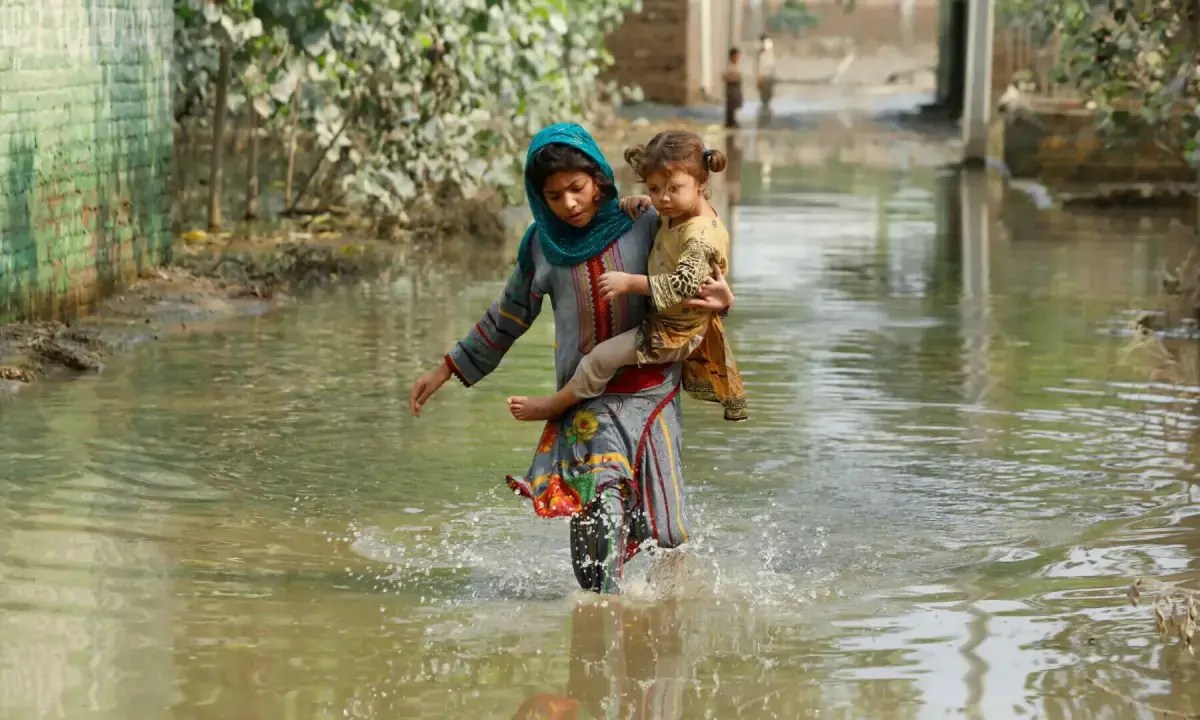
Pakistan, frequently battered by catastrophic floods and heatwaves, has submitted three proposals. Official sources indicate one has cleared peer review with encouraging feedback, while a second—focused on climate-resilient health systems in Balochistan—awaits further comment.
According to FRLD documents, the three-year projects include a $20 million initiative for recovery and systems strengthening implemented via the UNDP, and an $18 million grant for the Balochistan health project through the WHO.
A third proposal seeks $20 million for the compensation and rehabilitation of private fish farms and public hatcheries damaged by recent flash floods in Khyber Pakhtunkhwa. While sources acknowledge the Fund’s severe resource constraints, they express hope that Pakistan will secure financing for at least one project.
Civil society critics highlighted additional structural concerns beyond the approval delay. The Fill the Fund campaign noted that a crucial Resource Mobilisation Strategy—essential for raising the estimated $400 billion needed annually—was also pushed to December. Unresolved issues regarding the World Bank’s hosting arrangements continue to impede operational efficiency, described by one board member as “teething problems.” Observers also condemned restrictions on participation, reporting exclusion from several closed-door sessions.
Harjeet Singh, a campaign member, warned that the board “must urgently break free from institutional roadblocks and immediately mobilise the hundreds of billions of dollars”; otherwise, the Fund risks remaining “nothing more than an empty, broken promise.”
Also Read
- Gadani Ship Breaking Yard Resumes Operations After Eight-Year Pause
- Pakistan’s Immunization Crisis Declared a National Emergency as Over 650,000 Infants Miss Life-Saving Vaccines
- Apple Reaches Record High Amid AI Integration and China Market Expansion
- Maine Democrats Navigate Urgent Senate Nomination Search Amid Unexpected Withdrawal