



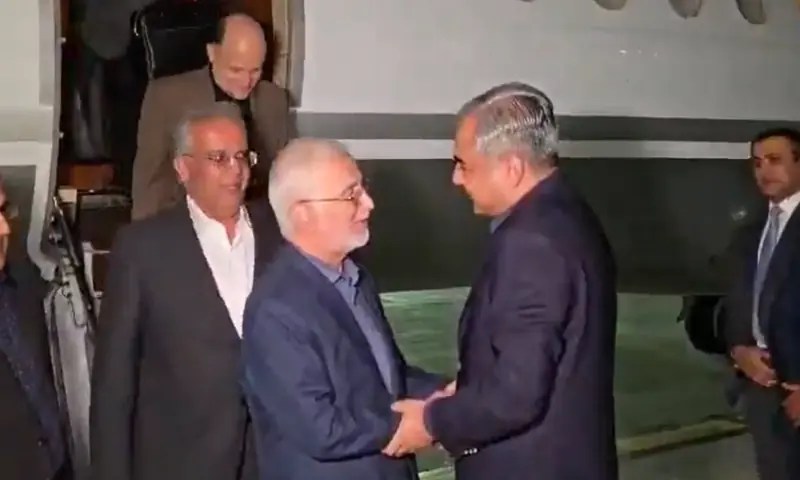
Iran’s Interior Minister, Eskandar Momeni, arrived in Islamabad on Monday night for an official visit, where he was received by his Pakistani counterpart, Mohsin Naqvi. Momeni is accompanied by a high-level delegation and is scheduled to meet Prime Minister Shehbaz Sharif and Chief of Army Staff Field Marshal Syed Asim Munir, according to state-run Pakistan TV.
The visit comes at a critical juncture as Pakistan attempts to salvage the Islamabad Memorandum of Understanding (MoU)—a 14-point interim ceasefire agreement signed between the U.S. and Iran on June 18—which has since collapsed. Earlier reports indicated Momeni would engage with officials who previously mediated the truce.
Hostilities resumed in earnest on Monday, marking the ninth consecutive night of exchanges. Washington expanded its strikes across Iran, targeting a city hosting a nuclear power plant, while Tehran responded with attacks across the region. The Islamic Revolutionary Guard Corps (IRGC) claimed hits on targets in Bahrain, Jordan, and Syria; Bahrain accused Iran of targeting its air navigation systems.
Following U.S. President Donald Trump’s declaration that the ceasefire was “over,” Iranian President Masoud Pezeshkian stated on Monday that the nations were engaged in a “full-scale war,” with Tehran blaming Washington for breaching the MoU. Despite the escalation, Iranian Foreign Ministry spokesman Esmaeil Baqaei confirmed that diplomatic exchanges via mediators remain ongoing.
The renewed conflict has roiled global energy markets, driving oil prices to a one-month high as both sides vie for control of the Strait of Hormuz. Following the truce’s collapse, Tehran reimposed its blockade of the vital waterway, prompting Washington to blockade Iranian ports in retaliation. Pakistan has spearheaded peace efforts since the U.S. and Israel launched strikes on Iran on February 28, triggering a wider war and a global fuel crisis sparked by Iranian measures to disrupt traffic through the strait.