



Modern military operations demand immediate access to accurate mission data. Commanders require real-time intelligence to make time-sensitive decisions, where delays directly impact operational outcomes. The challenge lies not in data collection but in validating its reliability and rapidly translating it into actionable strategies. The next era of security will favor forces capable of converting validated intelligence into strategic advantages ahead of adversaries.
This advantage stems from integrated systems rather than isolated platforms. Lockheed Martin designs decision-making excellence across the entire mission spectrum—from space-based assets to ground-level operations. By unifying capabilities across orbital layers, the company ensures cohesive threat detection, information sharing, and coordinated responses.
GEO-Based Threat Awareness for Real-Time Decision-Making
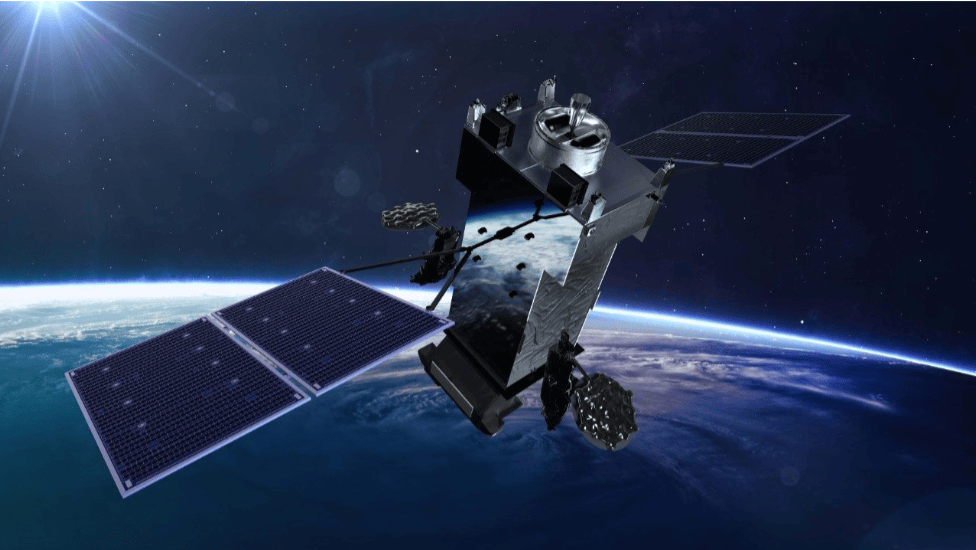
Effective operations begin with comprehensive situational understanding. In missile defense, this requires continuous, reliable monitoring. The Space-Based Infrared System (SBIRS) has provided decades of critical missile warning capabilities, leveraging Lockheed Martin’s expertise in space-based tracking systems.
Building on this foundation, the Next-Generation OPIR GEO (NGG) platform enhances satellites with advanced sensors to counter hypersonic and other emerging threats. Developed around the LM2100 Combat Bus, NGG prioritizes survivability against sophisticated attacks while maintaining critical awareness in geosynchronous orbit.
These systems enable early threat detection, allowing decision-makers to act before adversaries can react.
Secure, Multi-Orbit Information Relay Systems
Efficient data distribution is crucial for operational speed. Lockheed Martin’s Transport Layer satellites, built on the LM50 bus, ensure secure, low-latency communication across the force. These systems rapidly share validated intelligence between sensors, analysts, and mission-critical platforms.
Resilience requires redundancy across orbital regimes. The U.S. Space Force is implementing a layered missile warning architecture in Medium Earth Orbit (MEO), complementing GEO surveillance and LEO tracking systems. This multi-layered approach provides greater coverage and redundancy for evolving threats.
Lockheed Martin is competing for the Epoch 2 MEO contract, demonstrating its role in advancing this critical architecture.
Instead of single-orbit solutions, the company develops interconnected systems that span LEO, GEO, and MEO. This proliferation strategy strengthens overall system resilience and data continuity.
Integrated Missile Defense Architectures
Each component of the defense chain must be optimized to enhance subsequent capabilities. From initial threat detection in GEO to rapid data transmission in LEO and emerging MEO capabilities, Lockheed Martin designs systems that collectively accelerate threat response.
As part of a full-spectrum integration partner, Lockheed Martin’s solutions form a unified missile warning architecture. In compressed decision timelines, this integrated approach—combining awareness, data integrity, and coordinated action—creates unmatched military advantage. This layered, interconnected system represents the future of strategic defense operations.