Over the past few decades, online health-seeking behavior has surged. Search engines process hundreds of millions of health-related queries daily, and roughly half of U.S. adults under the age of 50 now turn to podcasts or social media influencers for wellness information.
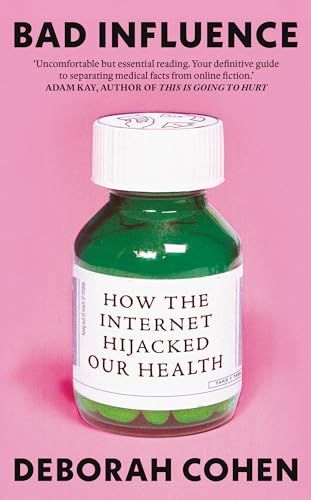
In her book, Bad Influence: How the Internet Hijacked Our Health (Oneworld Publications, 2026), author and journalist Dr. Deborah Cohen examines how social media, influencers, health trends, and technology are reshaping our well-being. She investigates how algorithmic recommendation systems often amplify health anxieties, potentially driving individuals away from seeking traditional medical care.
In this excerpt, Cohen focuses on the portrayal of attention-deficit/hyperactivity disorder (ADHD) on platforms like TikTok. On these platforms, self-diagnosis and the entertainment-focused proliferation of “lesser-known symptoms” run rampant, even though the clinical reality of the condition is often far more challenging.
“Despite it All” has been short-listed for the 2026 Royal Society Trivedi Science Book Prize.
ADHD symptoms exist on a spectrum within the general population, and determining whether they meet the frequency and impairment criteria outlined in the Diagnostic and Statistical Manual of Mental Disorders (DSM) requires careful clinical judgment. These symptoms frequently overlap with anxiety, depression, and learning disabilities. Responsible clinicians must rule out alternative explanations before making an ADHD diagnosis or prescribing medication.
This clinical nuance is frequently discarded in online spaces. Viral videos on platforms like Instagram and TikTok present “common signs” of ADHD and describe their everyday impacts. For instance, Megan McHugh, a UK DJ and radio host, went viral on TikTok by listing “lesser-known” traits of the condition in a video titled “Six ADHD behaviour traits you might not have known about.” She highlights issues like overpromising and wondering, “Why the fuck can I not just say no?” and notes, “Your long-term memory is fucking shocking… You have some sort of subconscious tic, usually, whether it’s pressing your lips or scrunching your nose.”
McHugh is far from alone in sharing such experiences. Other creators point to indicators like difficulty waking up in the morning, trouble deciding what to eat at a restaurant, missing deadlines, or being unable to finish a book.
A study led by Vasileia Karasavva at the University of British Columbia questions the scientific reliability of how symptoms are depicted on social media. When researchers analyzed the top 100 ADHD-related TikTok videos on a single day in January 2023, clinical psychologists found that only 48.7 percent of the claims accurately reflected DSM-5 criteria.
Of the inaccurate claims, nearly 70 percent depicted experiences that many individuals without ADHD would commonly have. About 50 percent presented symptoms shared across multiple disorders as uniquely indicative of ADHD, and almost 20 percent matched alternative conditions more closely. Videos frequently misrepresented everyday behaviors—such as bumping into furniture, repeatedly playing the same songs, or craving sweets—as specific ADHD symptoms. Furthermore, the content rarely included necessary caveats; only 4 percent of videos acknowledged that their claims might not apply universally, and less than 2 percent noted that these experiences can occur in people without ADHD.
Among creators who shared their credentials, 84 percent claimed “lived experience” as their qualification, while 13 percent identified as life coaches. Not a single top video was produced by a clinical psychologist or psychiatrist. When researchers showed these videos to 843 psychology students—though this may limit the generalizability of the findings to the broader public—the students generally rated scientifically inaccurate videos more favorably than experts did, while slightly downgrading expert-approved content.
The student participants fell into three categories: those without ADHD, those with a formal diagnosis, and those who had self-diagnosed. Overall, students who had self-diagnosed gave the highest ratings to all videos, even awarding expert-rejected content higher marks than those with formal diagnoses. Researchers suggest this indicates that young people often prioritize relatability over clinical accuracy when evaluating health content online.
For individuals who have self-diagnosed, previous frustrating experiences of being dismissed by conventional healthcare systems can make validating TikTok content particularly appealing. Consider the case of Alyssa Brown, who found that online ADHD descriptions matched many of her documented symptoms. She speaks warmly about discovering an ADHD community on social media after feeling ignored by traditional healthcare providers. “I always assumed everyone experienced the world like I did. Finding out that’s not true was eye-opening. It’s deeply reassuring to connect with people who share similar experiences,” she explains.
One of Alyssa’s favorite accounts features humorous, quirky conversations between a husband and his wife with ADHD. She and her fiancé enjoy bonding over these videos. Some of these creators also sell merchandise, including T-shirts with slogans like “What if you’re not a lazy useless loser” and “Caution: mid hyperfocus.” “We both just laugh about it because it’s super-relatable,” she says.
Mental health specialists remain divided on the impact of viral ADHD content. While some value its role in destigmatization, others worry that it trivializes a serious condition and blurs essential diagnostic boundaries. Celebrity advocates have further shaped public perception. For instance, Simone Biles, the most decorated gymnast in history, announced her ADHD diagnosis on X in 2016, stating, “Having ADHD, and taking medicine for it is nothing to be ashamed of nothing that I’m afraid to let people know.”

Similarly, UK singer Jessie J shared in a July 2024 Instagram post what her diagnosis evoked, describing it as both “empowering” and “overwhelming.” Like other public figures, she characterized her condition as a “superpower” when provided with appropriate support. She wrote, “If there is one thing social media has given me, it’s the chance to relate, connect and heal with strangers that have kind hearts and are going through a similar thing.”
However, this celebrity endorsement sits uncomfortably with some researchers. Oxford University psychologists Drs. Lucy Foulkes and Jack Andrews caution that, despite positive intentions, high-profile disclosures might inadvertently elevate certain conditions into “prestige items.” This social value can make diagnoses seem highly desirable, particularly on visual social media platforms. The resulting glamorization tends to focus attention on high-profile cases while overlooking those suffering in less privileged circumstances.
This concern aligns with the views of Professor Susan Young, a clinical psychologist who established the first national adult ADHD service at London’s Maudsley Hospital in 1994 and co-authored the 2008 National Institute for Health and Care Excellence (NICE) guidelines. She criticizes the “glib” tone of some online content. “If you look at TikTok in particular, it’s all about entertainment. I feel uncomfortable with having a condition that people can really struggle with being used for entertainment purposes,” she explains.
Having worked extensively within the correctional system, Young understands that the reality of ADHD for many does not involve Olympic gold medals, multi-million-dollar record deals, or television stardom. Her 2015 study revealed that the prevalence of ADHD in prison populations is significantly higher than in the general global population; specifically, in youth detention centers, five times as many young people (30.1 percent) have ADHD, and in adult prisons, ten times as many individuals (26.2 percent) meet the criteria. The outlook is particularly bleak for prisoners with ADHD, who are more likely to be involved in violent incidents, engage in self-harm, and struggle with substance abuse disorders.
Yet within correctional environments—far removed from the glamorous portrayals of TikTok—the condition remains heavily under-diagnosed, and suffers are unlikely to receive appropriate support, which makes rehabilitation significantly more difficult. “People talk about, ‘ADHD is my superpower! I love having ADHD! I’m zany and I’m fun.’ It can undermine the condition,” Young notes. This glosses over the reality for those, predominantly from marginalized backgrounds, for whom the condition has already caused severe disruption to their fragile lives.
US research, which has been replicated in other countries, shows that children from low-income backgrounds are more likely to meet the criteria for ADHD but are less likely to receive treatment. David agrees that the “ADHD is a superpower” narrative is deeply problematic. “I honestly can’t see any true advantages to having ADHD itself. For someone to be diagnosed as having ADHD, it has to actually cause problems or impairment in your life—that’s a medical requirement—but we rarely talk about what ‘causing problems’ really means,” he points out.
This is not to say that individuals cannot adapt to their challenges or develop strengths in spite of their difficulties. However, the condition itself is not inherently beneficial. Social media awareness campaigns regarding mental health walk a fine line between reducing stigma and trivializing conditions to the point where they lose clinical credibility. This dynamic can lead individuals with formal diagnoses to question the validity of their own experiences.
Excerpted from “Bad Influence: How the Internet Hijacked Our Health,” Oneworld Publications, 2026