



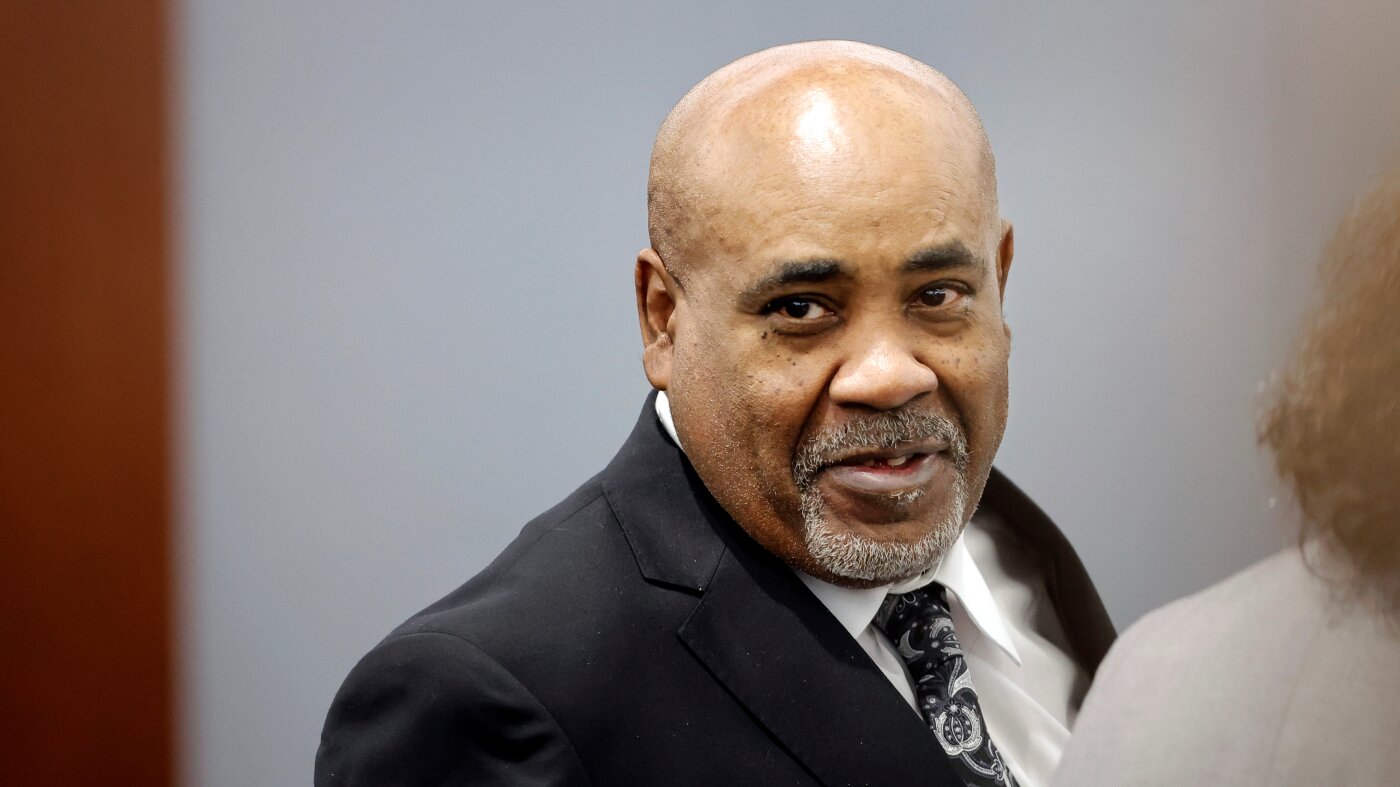
Duane “Keffe D” Davis appears in court during his murder trial connected to the 1996 killing of rapper Tupac Shakur in Clark County District Court at the Regional Justice Center in Las Vegas on August 20, 2026.
Steve Marcus/POOL Las Vegas Sun/ AP
Jurors heard Davis, via a 2008 investigative interview, acknowledge that his nephew, Orlando “Baby Lane” Anderson, was responsible for firing the fatal shots that killed Tupac Shakur. Davis, now 63, faces charges for allegedly orchestrating the drive-by shooting. At the time of the interview, his nephew had been deceased for over a decade.
Davis described the incident in a white Cadillac he and Anderson rode in, accompanied by two other individuals. The group allegedly pulled alongside a vehicle occupied by Shakur and Marion “Suge” Knight, a key figure in Death Row Records.
“If we had been on my side, I would have fired,” Davis recalled. However, Knight’s car was positioned on the opposite side, so Davis passed the gun to Deandre “Big Dre” Smith, who declined to use it. Anderson, seated in the back, then retrieved the weapon and began shooting, Davis stated.
The audio transcript of the interview played in court. The room remained silent as Davis detailed his actions. Shakur’s family sat quietly, occasionally glancing at the screen or away. This was Davis’s first direct admission of involvement in the killing, making his statements critical to the prosecution’s case.
Prosecutors emphasized Davis’s prior inconsistent accounts, including a 1997 claim that his nephew was not involved in Shakur’s death and speculation implicating Knight or Sean “Diddy” Combs instead. Davis has pleaded not guilty, with his defense attorney dismissing the prosecution’s narrative as “fiction” and accusing authorities of failing to corroborate his statements.
Interestingly, Davis was initially brought in to discuss the 1997 killing of Shakur’s rival, The Notorious B.I.G., but was later cleared. FBI detective Garyn Dupree confirmed that Davis was brought in under the assumption he might have information about the B.I.G.’s murder, which remains unsolved.
Davis also claims he was a victim of Shakur’s entourage earlier that night at the MGM Grand Hotel following a Mike Tyson fight, though he was not present during the altercation. Prosecutors argue this context, combined with Davis’s later admissions, supports the theory that Shakur’s death was retaliatory.
Over decades, Tupac Shakur’s legacy has solidified as one of hip-hop’s most influential figures. His untimely death occurred during a peak in his popularity and film career, further cementing his status as a cultural icon.