




Franklin Templeton is extending its tokenized asset initiative in Asia via a collaboration with Hong Kong-based cryptocurrency exchange HashKey, making available its flagship tokenized money market fund, the Franklin OnChain U.S. Government Liquidity Fund (grBENJI), to digital asset investors across the region.
The fund concentrates its investments in U.S. government money market instruments and U.S. dollar cash holdings, utilizing blockchain-based infrastructure for operations.
Access Restricted to Professional Investors
This offering is available solely to professional investors and is not accessible to the general retail public in Hong Kong.
Chetan Karkhanis, Senior Vice President of Digital Assets Client Engagement at Franklin Templeton, stated that the company plans to broaden the collaboration beyond money market products to include additional tokenized offerings, capitalizing on HashKey’s footprint in Hong Kong, Singapore, Tokyo, Dubai, and Bermuda.
This launch represents Franklin Templeton’s second tokenized fund offering in Hong Kong. The firm initially introduced its first tokenized fund in the region in November 2025, operating under the Hong Kong Monetary Authority’s Fintech 2030 initiative.
Tokenized U.S. Treasury Securities Gain Momentum
The launch coincides with growing interest from investors and financial institutions in blockchain-based representations of traditional assets, where U.S. government debt has become one of the most significant segments of the tokenized-asset market.
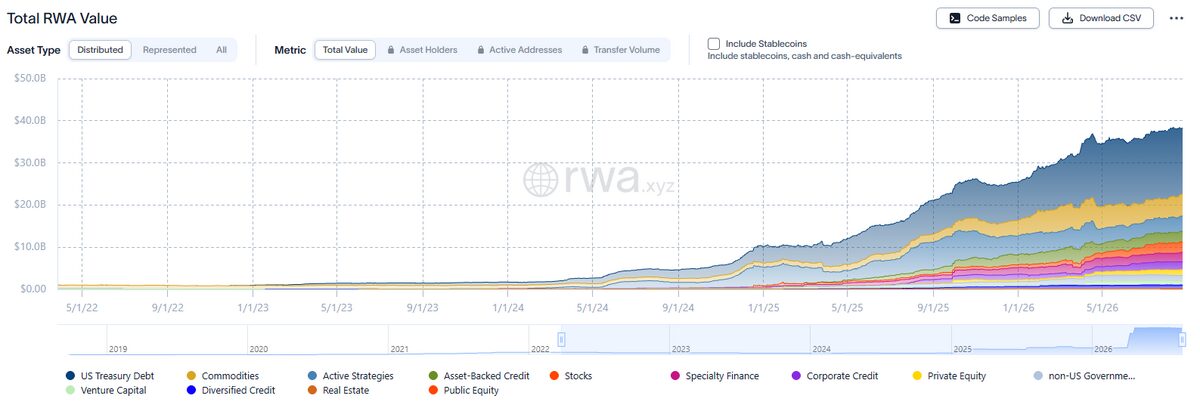
According to RWA.xyz data, the total value of tokenized real-world assets reached $38.18 billion as of August 2026, representing an 85% increase from $20.6 billion recorded a year earlier. Within this total, tokenized U.S. Treasury debt accounted for $15.6 billion, which more than doubled from the $6.4 billion reported a year prior, reflecting a 144% year-over-year increase.
Why This Development Matters
For Franklin Templeton, this partnership with HashKey advances its tokenization strategy, evolving from initial experiments to products delivered via regulated digital-asset infrastructure.
The restriction to professional investors further underscores the ongoing regulatory constraints influencing the deployment of tokenized financial products across Asian markets.
Future expansion will hinge on both investor demand and the manner in which regulators and financial institutions approach blockchain-based representations of traditional securities.