



This week, Syria’s Kurdish minority voted to end its nearly 14‑year experiment with self‑rule.
During the Syrian civil war that started in 2011, the Kurds established control over much of northeastern Syria and hoped to retain it after the conflict. As Kurdish leader Mazloum Abdi noted this week, “circumstances have changed.”
The Kurdish armed groups, known as the Syrian Democratic Forces (SDF), are set to merge into the national Syrian army, and the oil‑rich territory they administered will fall under central government control.
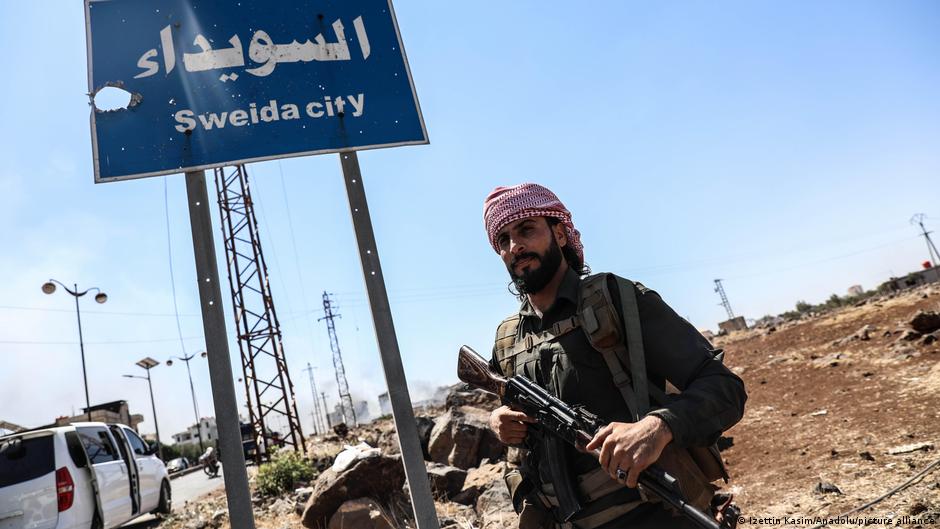
Consequently, Sweida province—where most of Syria’s Druze reside—remains the sole region that has not submitted to the central government’s authority.
End of idea of ‘decentralized Syria’
Experts agree that the shift in Kurdish policy will have repercussions for developments in Sweida.
In early 2025, Omer Ozkizilcik, a nonresident senior fellow at the Atlantic Council’s Syria Project, met with Sheikh Hikmat al‑Hijri, who told him that he had been speaking daily with Kurdish leader Mazloum Abdi.
He explained that they were coordinating their efforts and shared a vision of a decentralized Syria with autonomous regions. He added that this mirrored Israel’s preferred model—an autonomous Alawite zone on the coast, an SDF‑controlled northeast, and a Druze‑held south—indicating that al‑Hijri’s stance relied heavily on his alliance with the SDF.
That notion is no longer viable. As the Ankara‑based analyst put it, “this ends the dream of a fragmented, weak, decentralized Syria.”
This likely explains why, earlier this week, al‑Hijri reiterated the Druze’s ties to Israel, according to Ozkizilcik.
On Monday in Sweida, al‑Hijri proclaimed that the Druze are an “inseparable part of the state of Israel.”
“Even in terms of our beliefs, we find common ground,” he said.
It is evident that Israel annexing Sweida would face significant obstacles, ranging from geography to demography. Sweida remains reliant on the central Syrian government for public services, salaries, pensions, electricity, and water, even though Damascus cannot station troops there.
What caused the rift?
The standoff began after communal violence erupted in Sweida in July 2025, pitting Druze residents against Bedouin neighbors. When government forces entered to restore order, they were also accused of attacking Druze villages.
A United Nations report documented more than 1,700 fatalities stemming from the clashes.
The incident sowed deep distrust among the Druze toward the new Syrian authorities, prompting even those who once favored a united Syria to consider whether a semi‑autonomous Druze entity might be preferable.
“There has been a total breakdown of trust,” Sweida activist Lubna al‑Basit told DW. “Before any solutions can be discussed, the government must be held responsible for the massacres in Sweida.”
Another Druze, now living in the United States and requesting anonymity for security reasons, contends that the current Syrian government is more radical than its outward appearance suggests.
“They are attempting to appear conciliatory toward the West,” he told DW. “As the saying goes, they signal left while turning right. For the Druze, the priorities are security, dignity, and economic opportunity—goals that seem unattainable under the present administration.”
In September, Jordanian and American mediators drafted a roadmap to mend relations, but the Druze faction loyal to al‑Hijri rejected it. The central government has taken little action to prosecute those responsible for the July 2025 violence, and the UN’s special envoy for Syria reported in June that no headway had been achieved on the plan.
Researchers at the Syrian Center for Security and Defense Studies (MISDAD) noted last month that, since the previous year, Damascus has approached the Sweida issue assuming that a large‑scale military showdown would not settle the crisis.
They warned that such a confrontation would exacerbate the divide with local residents and invite external interference. Consequently, the Syrian government chose a cautious strategy, aiming to calm tensions while employing its security, administrative, and economic levers.
MISDAD analysts added that Damascus is essentially biding its time, anticipating that growing prosperity elsewhere in Syria and the administrative difficulties faced by al‑Hijri’s faction in managing Sweida’s services will eventually draw the province back under central authority.
A ‘small authoritarian regime in Sweida’
Ozkizilcik said that a popular uprising is unlikely.
“Al‑Hijri commands armed forces, receives Israeli funding, and hosts Israeli military advisers from the Druze community,” he continued. “This has created a small authoritarian enclave in Sweida under his control, making internal opposition extremely difficult.”
Opponents of al‑Hijri have been expelled, abducted, or killed; clashes have erupted between rival Druze militias, and sporadic civilian protests have occurred. Loyalists have also barred Druze civil servants from cooperating with Damascus ministries.
Ozkizilcik and other analysts contend that any settlement in Sweida will not hinge solely on al‑Hijri’s preferences.
Just as the withdrawal of U.S. backing for Kurdish forces helped shape the recent agreement between Damascus and the SDF, the future of the Druze community will likewise be determined largely by external actors.
Some observers argue that Israel has used the Sweida standoff as leverage to pressure Syria during negotiations over a new security pact. Throughout 2025, senior Syrian and Israeli officials held U.S.–mediated talks aimed at reviving the 1974 disengagement accord, but those efforts collapsed toward the end of the year.
Following the ouster of the Assad regime in late December 2024, the United States has voiced support for a unified Syria, whereas Israel seems to prefer a divided Syria, contending that a fragmented neighbor would not threaten its security.
“The ultimate arbiter over Sweida will be Israel, not al‑Hijri,” Ozkizilcik stated. “If a security agreement between Syria and Israel materializes, a political resolution for Sweida and its Druze population is likely to follow.”
What needs to happen for the Druze to feel secure in Syria?
To view this video please enable JavaScript, and consider upgrading to a web browser that supports HTML5 video
Also Read
- U.S. Poised to End Military Aid to Kurdish Forces as Iraq Withdrawal Nears
- WHO Unveils Continental Data Platform to Harmonize Health Information Across 47 African Nations
- Conservative commentator Milo Yiannopoulos taken into ICE custody
- UK Prime Minister Confers Intent Not to Vote on Assisted Dying Legislation, Marking Sharp Contrast With Predecessor