






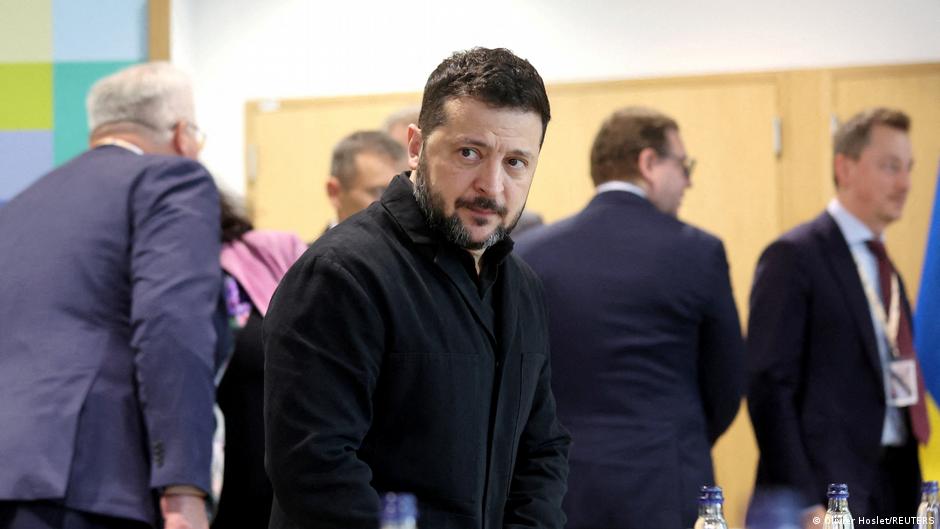
European leaders face pressure to nominate a representative for upcoming Ukraine peace negotiations, following statements by US envoy Steve Witkoff that Europe will attend the next round of talks.
Asked by DW at the European Political Community summit in Dublin why Europe should have a single seat while the United States holds two, EU foreign policy chief Kaja Kallas answered with a wry, ironic laugh, underscoring the frustration European leaders feel at being sidelined.
The Dublin summit of 47 European leaders follows a diplomatic tour by two members of the Trump administration—son‑in‑law Jared Kushner and special envoy Steve Witkoff—first to Abu Dhabi for talks and then to Moscow for a meeting with President Vladimir Putin.
Kaja Kallas is widely seen as the most probable EU representative for future negotiations to end Russia’s war against Ukraine, alongside EU Council President Antonio Costa. To date, the EU has not settled on a single envoy, as many member‑state leaders prefer to attend themselves.
German Chancellor Friedrich Merz asserted that Europe must be present.
“Ukraine, Europe, the United States and Russia must all sit at the table,” he told reporters in Dublin.
However, like many other leaders, he downplayed the notion of appointing a dedicated special envoy for the negotiations.
A Fractured Europe
President Zelenskyy insists that Europe must be actively involved in the peace talks.
“Not directly yet, and not while Russia remains at the table,” he told fellow leaders at the Dublin meetings. “However, Europe is already involved, and we must ensure it plays a regular role in the negotiations.”
European Security on the Line
Leaders in Dublin fear that the United States may accept Russia’s demands to alter Europe’s security architecture—particularly within NATO—in return for a seat at the negotiating table.
Putin indicated that a commitment that Ukraine will never join NATO, and possibly a rollback of NATO to exclude recent members such as Finland and Sweden, could be part of his demands.
“What are we hearing from you, Europeans?” Putin asked during his meeting with Kushner and Witkoff in Moscow. “You claim that once a peace deal is signed you will immediately deploy troops into Ukraine. That is a legitimate target for us, so the war would resume immediately.”
This rhetoric is precisely what European leaders—especially those in countries bordering Russia—find most concerning.
“We are currently trapped,” Estonian Prime Minister Kristen Michal said. “If a threat exists, will you discuss your defense with the threat itself?”
Latvia Calls for Russian Sanctions to Secure Peace in Ukraine
To view this video please enable JavaScript, and consider upgrading to a web browser that supports HTML5 video
US President Donald Trump publicly expressed hope for a “very big, beautiful” agreement that could involve all of Europe.
Zelensky described the US approach as “somewhat strange.”
Numerous European leaders speaking in Dublin cited earlier agreements with Russia—such as the 1975 Helsinki Accords, the 1990 Paris Charter, the 1997 NATO‑Russia Founding Act, and the 1994 Budapest Memorandum—that they claim Moscow has violated.
Funding Ukraine’s War Effort
The rancor over the seat at the peace talks is drawing focus away from arguably the bigger battle in the EU now—how to fund Ukraine as the war continues.
Back in October, the European Commission identified a €70 billion hole in the EU’s promised funding for Ukraine’s economy.
Slovakia’s Prime Minister Robert Fico has opposed any further financial and military support for Ukraine.
German Chancellor Friedrich Merz warned he could block the EU’s next seven‑year budget unless member states agree to contribute to Ukraine’s financing.
Merz Accused of ‘Blackmail’ Regarding Ukraine Funding
To view this video please enable JavaScript, and consider upgrading to a web browser that supports HTML5 video
Also Read
- U.S. Army Officer Detained in U.K. on Russia Espionage Suspicion Expected to Face British Charges
- Saudi Foreign Minister and Chinese Envoy Meet to Address Houthi Threats and Regional Security
- The Economics of Enterprise AI: Why the Benefits Far Outweigh the Costs
- Prioritizing Savings, Affordable Wellness and Grocery Savings: Three Money Questions Answered


