







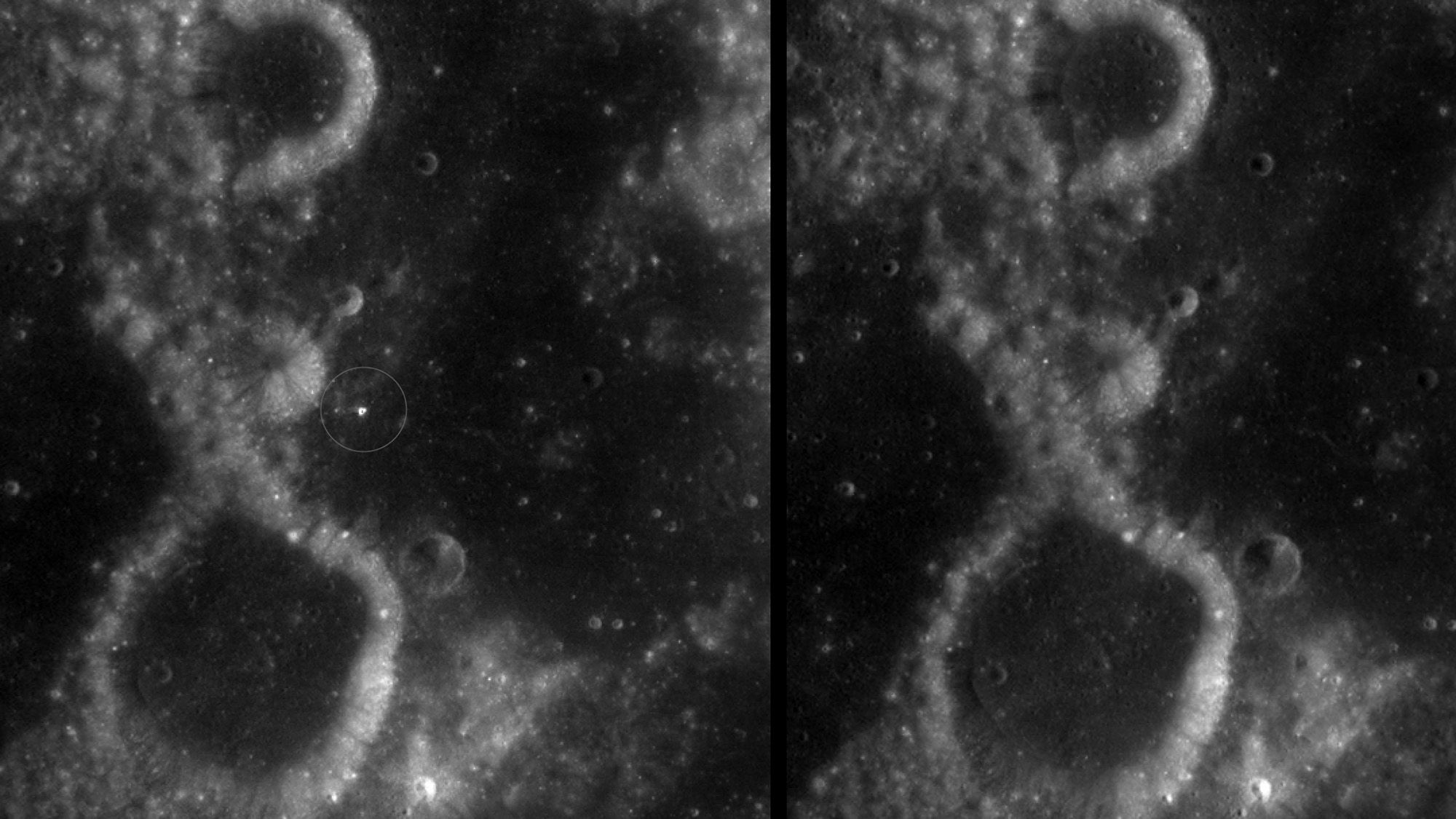
Since launching in 2009, NASA’s Lunar Reconnaissance Orbiter (LRO) — a robotic satellite roughly the size of a minivan — has captured more than 3 million images of the lunar surface. This week, researchers analyzing a subset of those images announced what they describe as a once-in-a-century finding: the largest and freshest impact crater ever observed in the solar system. The crater was formed by a building-sized meteorite that struck the moon just two years ago.
The newly identified depression, named McGetchin crater after the late geologist and lunar scientist Tom McGetchin, spans approximately 728 feet (222 meters) in width and drops roughly 141 feet (43 meters) deep — comparable in length to two American football fields and deep enough to contain a 14-story building.
“We know generally that there are more small things in space than large things, so that means we tend to get a lot of small craters on the moon and very few large ones,” said Julie Stopar, a senior scientist at the Lunar and Planetary Institute and deputy principal investigator on the LRO camera team. “Something the size of this crater, we only expect to encounter once every 130 years, approximately.”
McGetchin is hardly the moon’s largest crater — that distinction belongs to the South Pole-Aitken basin, a vast feature roughly 10,000 times wider than the newly discovered one. However, McGetchin is the largest new crater to appear during the LRO mission. Showing up seemingly out of nowhere in images from spring 2024, it is the biggest fresh crater scientists have observed in the 17 years the orbiter has been operational. Now that its existence is public, some dedicated skywatchers believe they have identified its bright, white debris ring from Earth.
The team detailed their findings in two papers published Sept. 16 in the journal Science Advances. Live Science spoke with Stopar to learn what this pristine crater could reveal about lunar geology, impact rates, and potential hazards for future human visitors to the moon.
BS: The moon is riddled with craters. What’s so interesting about this new one?
JS: On one hand, it’s an exceptional crater because it is so fresh and untouched. It hasn’t been weathered. On Earth, we see remnants of impact craters, but much of the original detail is lost through weathering, degradation, and the passage of time. The moon, by contrast, preserves those details far better.
This crater, in particular, is remarkably young — only about 2.5 years old — and is in superb condition. We can study it to understand how impact cratering occurs and the many processes associated with it.
Another remarkable aspect is that it struck the boundary between two distinct types of terrain on the moon. There are the volcanic mare deposits — dark patches visible from Earth — and the highlands, which are ancient crustal material. The highlands are brighter and tend to be hillier and more mountainous, while the mare are flat plains and very dark. This impact appears to have occurred right on the boundary between those two regions, which is reflected in the materials excavated by the crater.
BS: The meteorite that made this crater was the size of a three-to-six-story building, according to your team’s estimates. Could we have seen this impact from Earth?
JS: Yes. This was a relatively large impact, and from Earth we have observed flashes associated with smaller impacts. So I think it’s possible that, under good conditions, this one may have produced a visible flash. We don’t know if anyone was watching, though — so if somebody out there has videos they can dig through, they could go back and look for it.

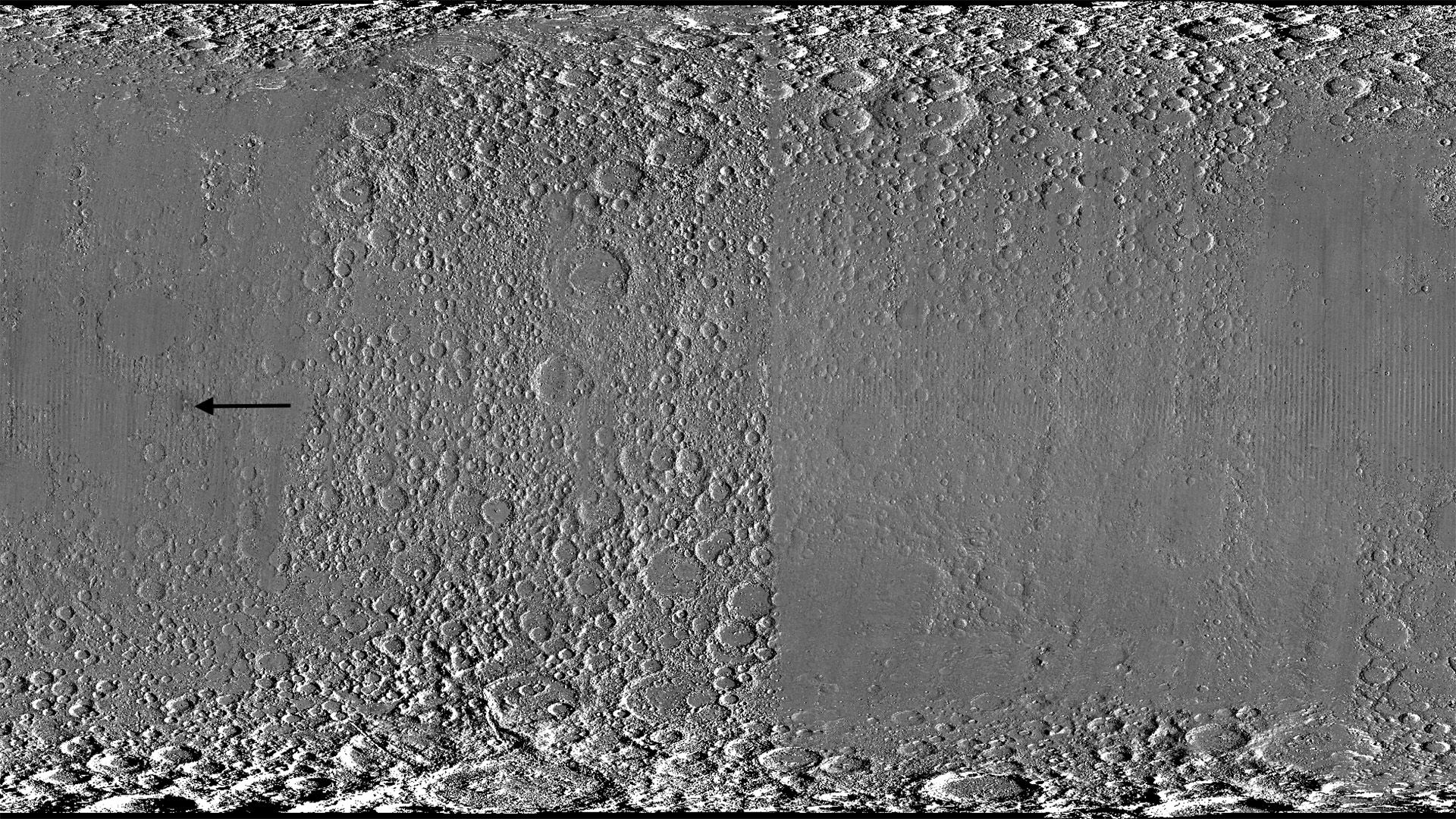
BS: This impact happened in April or May 2024. One of your colleagues discovered the crater in LRO data in October 2025. Why did it take so long?
JS: LRO orbits the moon about 12 times each day. While doing so, we can only image a small portion of the surface on each pass. You can imagine it takes many, many orbits to cover the entire moon and reimage each area. When we don’t have an impact flash to guide us, finding craters is essentially a random search.
Over time, we do eventually get repeat imaging of the same area, but it takes years. On top of that, the processing required to create before-and-after comparisons is labor-intensive — you’re essentially reviewing all the images taken of the moon under the right conditions, and it demands a significant amount of time and effort.
BS: Your colleague, Robert Wagner, says he “stopped and dropped everything” when he discovered the crater in LRO’s data. What was your reaction when he first showed it to you?
JS: I was surprised that it was so large! But I’ve seen a lot of similar craters on the moon, so my actual first thought was, “Oh my gosh — this crater might actually help me constrain how old all of these other craters are!”
BS: So because you know this crater is so fresh, it’s helping you date other craters you’ve seen too?
JS: Yes, I’ve been looking at a number of craters that I think look morphologically — in shape — and albedo-wise — in how much light they reflect — very fresh. They have bright ejecta, the material blasted out from the meteor impact, and crisp rims. But I don’t know how old they are, because they existed before the LRO era. I think they’re young, but I don’t have proof. So my first thought was: “This makes me feel much better if all these other craters I’m studying are still in really good condition like this one.”
BS: What, specifically, do you hope to learn about the moon from this crater?
JS: There’s hope that we can use this to help understand the current impact cratering rate — how much and how often different sizes of debris in the solar system strike the moon.
That’s important because people want to go to the lunar surface for exploration, send landers, and eventually build moon bases. There is concern that impactors could pose a hazard. It would be helpful to have a better sense of whether that is a frequent concern or only a once-in-a-while one. We can also study factors like how the impact angle, target materials, velocity, and type of impactor play a role in crater formation.
This crater will also help us better interpret all other craters as well. I think this would be an excellent candidate for a sample return mission, because we know exactly when it formed and there are many questions we can answer with that knowledge.
BS: How do you see human-made impacts fitting into this picture? In recent years, several spacecraft have crashed into the moon. Do you see any risks there, or more opportunities to study craters?
JS: At this point, it’s not a major concern to me regarding human-made objects destroying natural features on the moon. Other spacecraft impacts, like the boosters from the Apollo program, created craters a long time ago. But I think that as more people, countries, and even companies head to the moon, they’ll need to coordinate so as not to interfere with each other’s activities — because that would be a problem. It’s a reminder that everyone needs to communicate, stay coordinated, and keep track of impacts and debris, working together.
Otherwise, those man-made craters are interesting because we know the impactor’s mass and shape in advance. They give us new insight into how craters form when you have irregularly shaped masses, like hollow cylinders. They also tell us about the moon’s surface, since it’s a different type of impact with a different kind of energy and shape. So we learn a great deal about the cratering process in general from them.
This interview has been condensed and edited lightly for clarity.


