






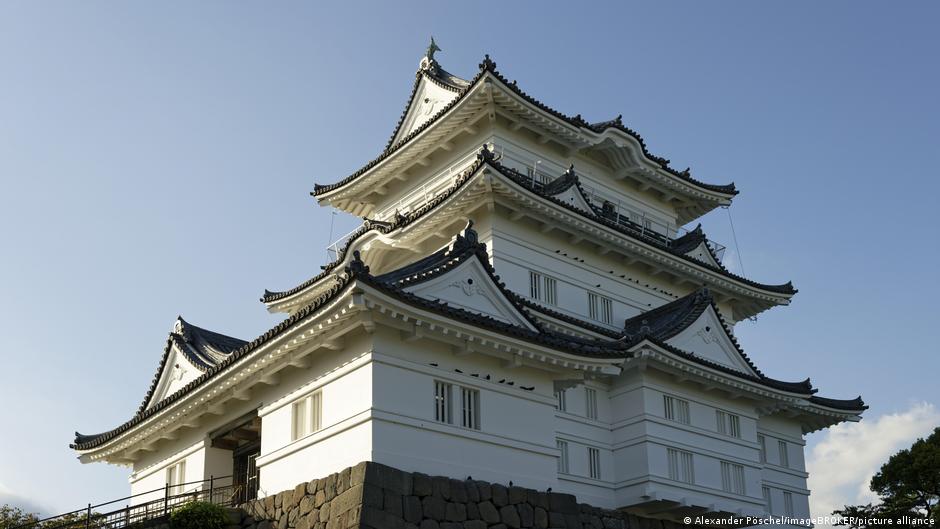
The centuries-old structure embodies the classic aesthetics of Japanese temple architecture, featuring curved roofs, timber-frame walls, spacious tatami-mat prayer halls, and elaborately decorated altars.
Situated within meticulously maintained gardens on the Chita Peninsula in central Japan, this 350-square-meter (3,767-square-foot) estate is listed for 482 million yen (€2.66 million, US$3.01 million). According to the listing, the price covers dismantling by “expert heritage craftsmen” and delivery anywhere in Japan, where the structure would be fully restored into a “stunning” two- or three-bedroom residence.
While the sale and removal of this temple signify the end of its role in the local community above the Nagasawacho district, this fate is preferable to that of many other places of worship across Japan.
Although the country boasts roughly 77,000 temples, as many as 17,000 lack a full-time resident priest. Congregations have dwindled—particularly in rural districts facing rapid depopulation—and financial pressures have severely impacted their operations.
Consequently, many temples are being sold off or simply closed off, left to deteriorate in quiet obscurity.

A temple brought back to life
Tomomi Iwayama assumed stewardship of the abandoned Ganshu-ji temple in Odawara, a coastal town approximately 80 kilometers (50 miles) southwest of Tokyo, a decade ago. Today, he serves as the abbot of a growing congregation.
“The temple had been without an abbot for 70 years when I arrived because it was incredibly difficult to operate, and it has taken me until now to restore it financially,” he told DW.
“Even in a relatively large urban area like Odawara, which has around 200,000 residents, sustaining the temple has been very challenging,” he noted. “In the countryside, it is far more difficult.”
Iwayama’s primary obstacle is Japan’s shrinking population; fewer worshippers and declining demand for funerals and traditional rites make it increasingly hard to fund the temple’s upkeep. He has actively engaged the local community and found success selling plots in the temple graveyard.
One notable innovation that has drawn attention is the temple’s “smart graveyard,” where families scan a card and a robotic system retrieves a relative’s ashes from the columbarium.
He noted that temples in rural areas face far greater challenges.
“Young people in villages typically leave for university and subsequently find employment in major cities, so they rarely return,” he explained. “They might return once a year to honor their ancestors at the village temple, but that is insufficient for the temple to survive.”
Similarly, when the head priest of a rural temple retires, his children are unlikely to assume the role due to these difficulties. Iwayama stated that all too often, the result is the temple closing its doors.
However, he rejects the notion that religion in Japan is following the same trajectory as the West, where Christian congregation numbers have plummeted over the decades.
Faith in the Digital Age
To view this video please enable JavaScript, and consider upgrading to a web browser that supports HTML5 video
Demand for Buddhism remains
“I sense there is still significant demand for Buddhism in Japan,” he said, contrasting the fast-paced, technology-focused lives people typically lead with the serenity they often seek.
“Buddhism is a style of living, of an enlightened person,” he stated. “Many are looking for that. While traditional rituals like funerals and anniversaries are declining—and the associated revenue is shrinking—we are finding that more people want to participate in traditional temple cuisine cooking classes, meditation, and other offerings.”
Temples unable to pivot to offer experiences more aligned with modern Japan are at risk of closing, said Joey Stockermans, a founder of the Mokomoko online real estate service.
“We have had a temple listed on our site before and were approached by a foreign potential buyer, so there is certainly interest when these properties become available,” he noted.
Other long-term foreign residents are striving to protect Japan’s religious heritage for future generations. American journalist and author Jake Adelstein is currently a Zen priest at Zenshoin Temple in Tokyo’s Toshima Ward and is training to become an abbot.
“I do not believe that the Japanese are becoming less religious; rather, I believe they are becoming fewer due to population decline, and less wealthy because of the economic situation,” he explained.
Meet Japan’s AI Buddhist Robot
To view this video please enable JavaScript, and consider upgrading to a web browser that supports HTML5 video
“Families want to preserve the grave plot they have maintained for generations, but for many, the maintenance costs are prohibitive, and they often live far away, making regular visits to pay their respects difficult,” he said.
Adelstein explained that the annual fee for a grave can reach up to 100,000 yen, while memorials and other rites impose an additional financial burden.
Young people shun religious careers
“Young people are uninterested in a career as a priest because temples earn so little money, leaving many positions unfilled—a problem that is especially acute in the countryside,” he said.
Adelstein noted that some temples have amalgamated their operations and shared a priest, but this approach will become increasingly difficult in the future.
Like many others, Zenshoin Temple has introduced vegetarian cooking classes and Zen meditation sessions to appeal to the local community, and Adelstein hopes this will be enough to keep the temple open.
“The training to become an abbot is rigorous, and the economics of a temple today often do not add up, but I view it as a critical part of this society and this nation,” he said.
Young people in Japan are leaving large cities
To view this video please enable JavaScript, and consider upgrading to a web browser that supports HTML5 video
Also Read
- Lindsay Clancy’s attorney makes public plea for Trump pardon
- Tamarack Valley Energy and Headwater Exploration to Merge in $7.25 Billion All-Stock Deal
- Qualcomm Surges on Multi-Generation Amazon AI Silicon Deal; Broadcom Gains, Amazon Flat
- Cagnes-sur-Mer Renoir Museum Reports Theft of Two Masterpieces, Two Recovered


