



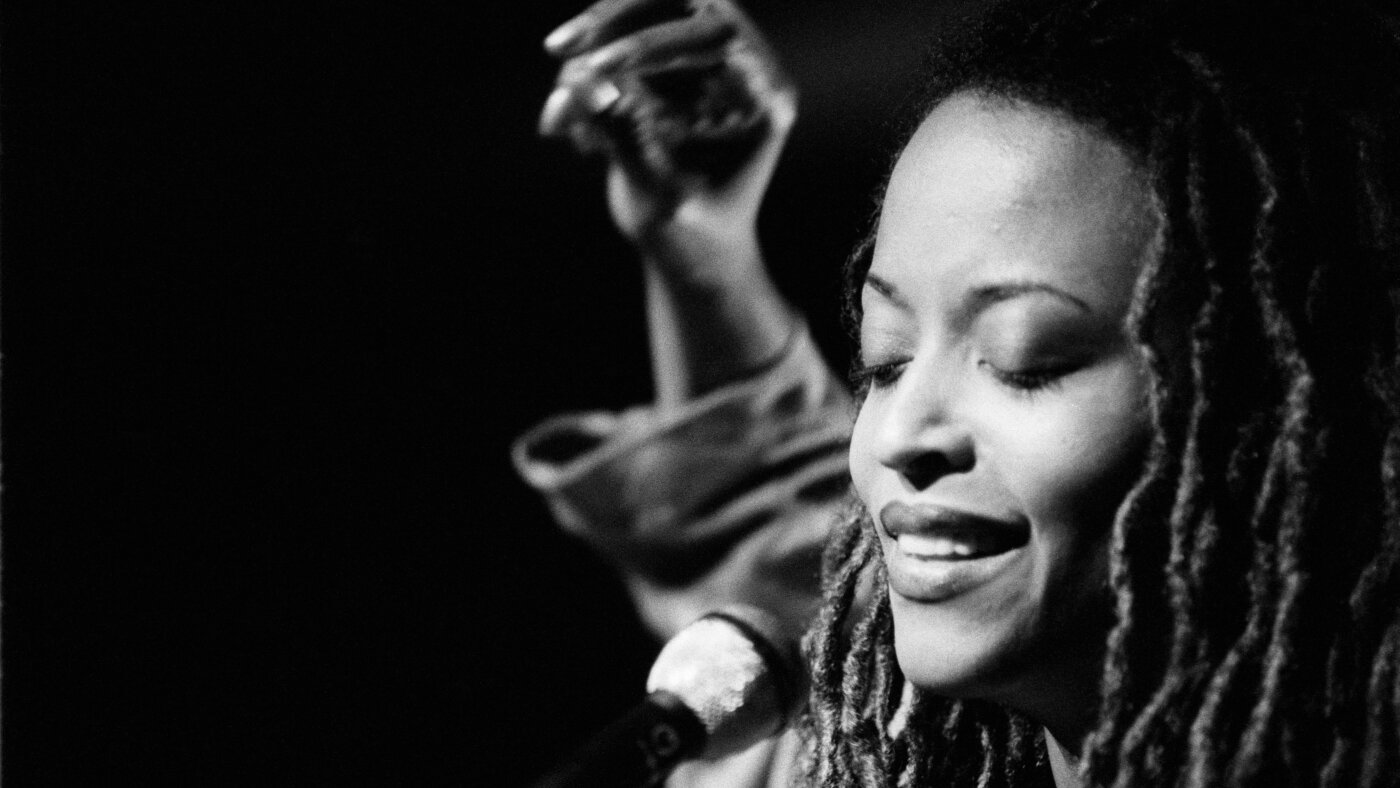
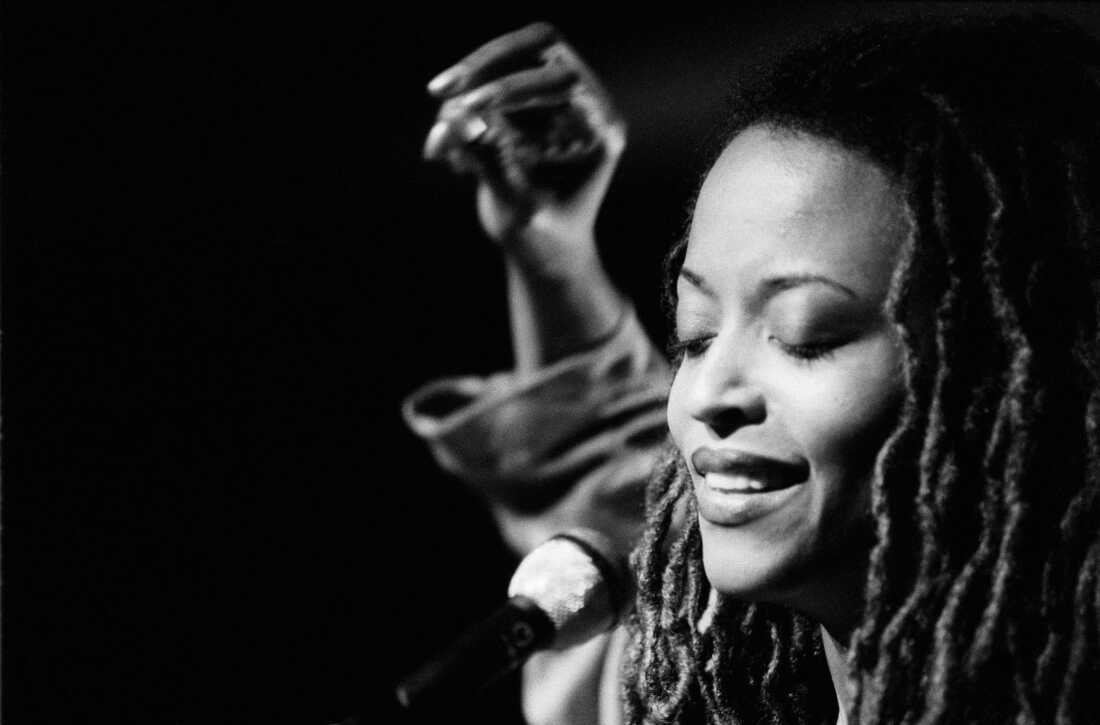
Cassandra Wilson performs in the Netherlands in 1994.
Frans Schellekens/Redferns/Get…
hide caption
toggle caption
Frans Schellekens/Redferns/Get…
Acclaimed jazz singer Cassandra Wilson, celebrated for her rich, dusky contralto and genre‑defying artistry, passed away on Wednesday in Jackson, Mississippi, at the age of 70.
Her longtime manager, Robert Torry, confirmed her death in a statement, declining to disclose the cause.
Wilson was named a 2022 National Endowment for the Arts Jazz Master and won two Grammy Awards for Best Jazz Vocal Album: the genre‑blending 1996 landmark release New Moon Daughter and the 2008 standards collection Loverly. She also played a central role in Wynton Marsalis’s oratorio Blood on the Fields, which, in 1997, became the first jazz composition to receive the Pulitzer Prize for Music.
A hallmark of Wilson’s artistry was her captivating voice—its tone evoking images of smoldering maplewood or sweet wildflower honey. Equally distinctive was the enigmatic quality she brought to both original compositions and an eclectic mix of material spanning the jazz canon, Delta blues, Laurel Canyon folk‑rock, and even contemporary pop. On New Moon Daughter, she wove together tracks by Neil Young and U2 with works by Hank Williams and Son House, and offered her own rendition of the 1966 Monkees classic “Last Train to Clarksville.”
For her 2002 album Belly of the Sun, Wilson recorded in Clarksville, Mississippi, inside a repurposed train station, seeking a deeper connection to her roots. Throughout her career, her music retained a rustic, wandering spirit, enriched by collaborations with top‑tier musicians. In a New York Times review of her early‑’90s to mid‑2000s output, critic Ben Ratliff observed, “In essence, they have fed the history of New World popular music, white and black, rural and urban, through a filter of prewar Southern roots music as reimagined by New York jazz musicians.” He added, “What a complicated routing system! But it worked, and it didn’t sound like anything else.”
Born Cassandra Fowlkes in Jackson, Mississippi, on December 4, 1955, Wilson was the daughter of educators Herman B. Fowlkes and Dr. Mary Fowlkes. Her father, also a performing musician who specialized in bass and guitar, maintained an extensive jazz record collection. “He had a huge jazz collection, and that’s what I remember listening to when I was a little girl,” Wilson reflected in a 2022 interview with the National Endowment for the Arts.
In that interview, Wilson recounted how she first picked up the guitar, fascinated by her father’s archtop Gibson. As a child, she would pluck its dangling strings, producing what she described as “harmonics” that sounded “angelic” and “heavenly.” Inspired by those resonances, she asked her father for guitar lessons after seven years of piano study.
Early in her career, Wilson accompanied herself on acoustic guitar, citing Robert Johnson and Joni Mitchell as primary inspirations. Her journey into music was unconventional; she earned a bachelor’s degree in mass communications from Jackson State University while privately studying jazz with drummer Alvin Fielder, a founding member of the Association for the Advancement of Creative Musicians. In the early 1980s, she relocated to New Orleans, where she worked as assistant public‑affairs director at a local television station and married local radio DJ Anthony Wilson.
After moving to New York, Wilson soon joined a forward‑thinking circle of improvisers centered on alto saxophonist Steve Coleman and his M‑BASE Collective. In 1985, she contributed to Coleman’s debut album Motherland Pulse and released her own debut Point of View, working alongside Coleman, trombonist Grachan Moncur III, and guitarist Jean‑Paul Bourelly. Over the following years, she collaborated with saxophonists Henry Threadgill and Greg Osby while continuing to develop her own exploratory albums.
The lone deviation from this approach was the 1988 release Blue Skies, a crisp acoustic session featuring pianist Mulgrew Miller, bassist Lonnie Plaxico, and drummer Terri Lyne Carrington. Wilson delivered standards such as “I’m Old Fashioned” and “I Didn’t Know What Time It Was” in a style reminiscent of Betty Carter. Although Billboard honored the album as the year’s top jazz record, Wilson was uneasy with its commercial reception and quickly followed it with the futuristic funk project Jumpworld, whose opening track, “Woman on the Edge,” declared her artistic ambitions.
During the early‑to‑mid‑1990s, Wilson continued blending styles, contributing to The Roots’ second album Do You Want More?!!!??! and eventually signing with Blue Note Records. A relatively unknown young producer, Craig Street, who had moved into her Manhattan apartment building, found a musical kindred spirit. After they recorded the standards “You Don’t Know What Love Is” and Van Morrison’s “Tupelo Honey” together, Blue Note hired Street to produce her 1993 album Blue Light ’til Dawn, a pivotal artistic breakthrough.
During her celebrated tenure with Blue Note, Wilson delved into her Mississippi heritage and honored a major influence, Miles Davis. Her 1999 album Traveling Miles followed an characteristically unconventional route, weaving original compositions with pieces like “Miles Runs the Voodoo Down” and even including Cyndi Lauper’s “Time After Time”—a song Davis famously covered. In 2006, she released Thunderbird, embracing pop production and collaborating with non‑jazz producers such as Keefus Ciancia and T Bone Burnett.
Wilson departed from Blue Note after the 2010 release Silver Pony, a hybrid of live and studio tracks that featured guest appearances by John Legend and saxophonist Ravi Coltrane. In 2012, she produced Another Country with Fabrizio Sotti, emphasizing original material and often performing acoustically with her guitar.
Her final album, Coming Forth by Day (2015), was a tribute to Billie Holiday—a figure Wilson regarded as a spiritual touchstone. The album featured a reinterpretation of “Strange Fruit,” the stark protest ballad that opened New Moon Daughter, presented here in a more atmospheric, less folk‑inflected arrangement. Wilson delivered the lyrics—depicting a Southern lynching—with profound gravitas, advancing at a measured, ceremonial cadence.
Wilson is survived by her son, Jeris, to whom she dedicated the song “Out Loud (Jeris’ Blues)” from her 1991 album She Who Weeps.
Also Read
- Discover Your Ideal Dancing With The Stars Partner Through a Modern Playlist
- Tupac’s Killer Convicted Nearly Thirty Years Later, but Biggie’s Murder Remains Unresolved
- Trump’s Push for Federal Film Incentives Could Mark a Turning Point for Domestic Production
- Wine Substitutes: A Professional Guide to Cooking Without Alcohol