






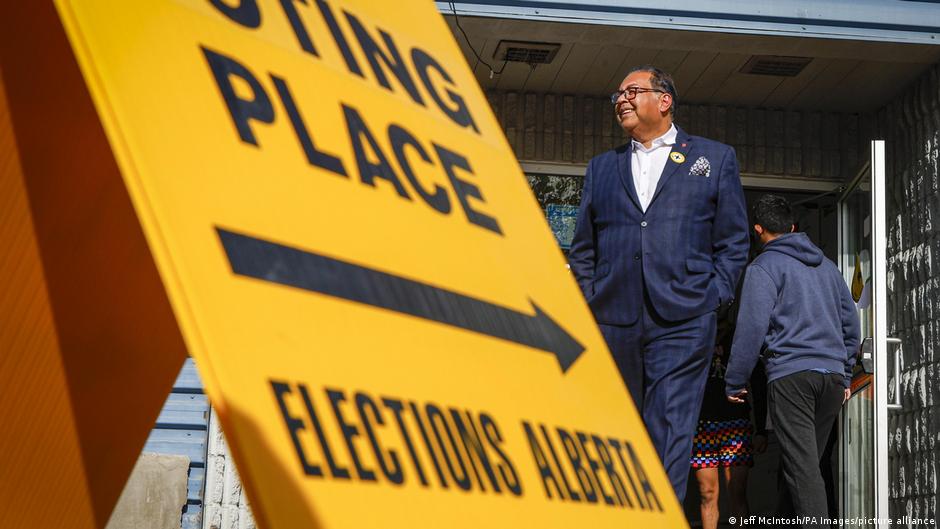
Residents across Alberta are casting their ballots in a pivotal referendum on whether the province should initiate steps toward potential independence from Canada.
While the motion faces long odds of success, the very occurrence of the vote reflects mounting economic and political frustrations in one of Canada’s most influential regions.
Pro-independence advocates remain hopeful that a strong showing—polls suggest up to one in three voters may support the measure—could compel Prime Minister Mark Carney’s federal government to engage more seriously with Alberta’s demands.
Voting Underway Across Alberta
Polls opened at 9 a.m. local time in Edmonton (1500 GMT/UTC) on Monday and will close at 8 p.m. the same day (Tuesday, 0200 GMT/UTC).
Officials expect results to be released incrementally as they become available throughout the evening.
Early polling indicates a clear lead for the “no” side, though independence supporters are aiming for a robust turnout and vote share to demonstrate momentum.
Roots of Discontent in Western Canada
This marks the first province-wide referendum on separation outside of Quebec, Canada’s historically separatist French-speaking province.
Alberta, nearly twice the size of Germany in land area but home to roughly 5 million people—most concentrated in Edmonton and Calgary—is rich in natural resources but sparsely populated.
The provincial government, led by Danielle Smith of the United Conservative Party, opposes independence. However, Smith authorized the referendum, reportedly to address growing dissent within her own political base.
Independence advocates criticize federal policies they claim hinder Alberta’s energy sector, particularly environmental regulations, and argue the province contributes more to Ottawa than it receives in return.
“Canada has an imbalanced system which feeds the central population and government at the expense of the outlying producing provinces such as Alberta,” said Cory Morgan, founder of the pro-separation group Pathway to Independence.
National Unity Tested Amid External Pressures
Carney, a native of Alberta, has actively supported the “stay” campaign, emphasizing national unity and encouraging high voter turnout regardless of the expected outcome.
The former central bank governor argues that framing Confederation as merely a fiscal arrangement overlooks broader national values.
“Canada is not a transaction between provinces. It’s not about gross and net, gives and gets,” Carney remarked during a recent stop in Red Deer.
Meanwhile, separatist sentiment in Quebec remains subdued under Carney’s leadership, despite recent gains by the Parti Québécois in local elections—a reminder that the independence debate persists.
On the international front, Carney continues to defend Canadian sovereignty as U.S. President Donald Trump escalates trade tensions, at times suggesting Canada should join the United States as its 51st state and even proposing changes to iconic geographic names.
Why Canada’s trust in the US may not recover anytime soon
To view this video please enable JavaScript, and consider upgrading to a web browser that supports HTML5 video
Reporting by Wesley Dockery
Also Read
- Police investigate Reform UK mayor over alleged sharing of nude self-images
- West Bank on verge of ‘explosion’: senior Palestinian official
- Pakistan Vows Continued Military Support for Saudi Arabia Amid Escalating Houthi Attacks
- Elina Svitolina Announces Split from Gaël Monfils Amid War’s Emotional Toll


