




Ancient German Gold Hoard Unearthed: 3,300-Year-Old Treasure Reveals Bronze Age Wealth
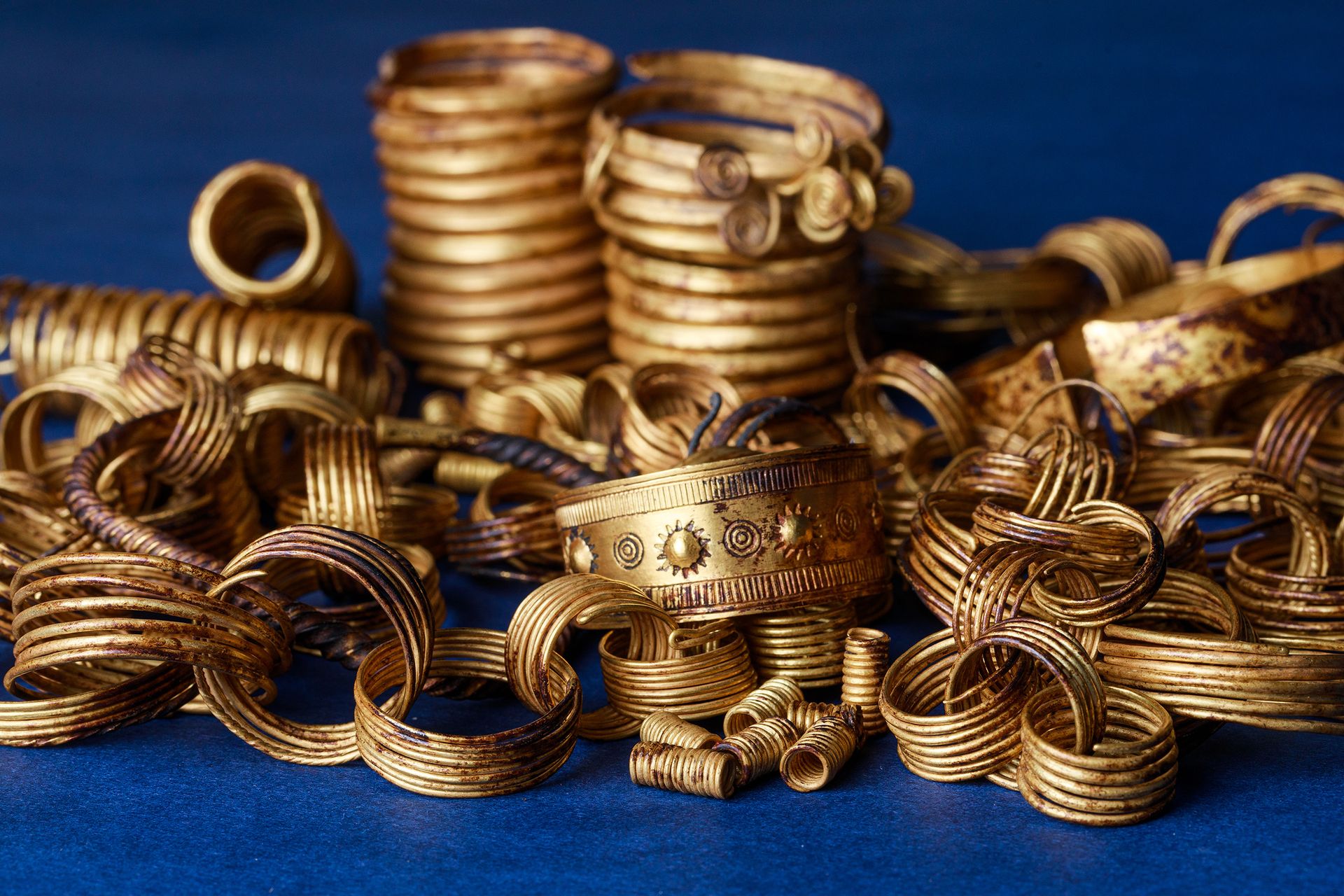
(Image credit: © Forum Gesseler Goldhort)
In April 2011, excavators working on a natural gas pipeline in northern Germany unearthed one of the largest gold hoards from prehistoric Europe. Dated to approximately 1300 B.C., the Gessel gold hoard consists of 117 artifacts weighing over 3.7 pounds (1.7 kilograms).
The hoard was discovered in the village of Gessel near the town of Syke and is now the centerpiece of the Forum Gesseler Goldhort museum. Roughly 3,300 years ago, an unknown individual placed the gold objects in a linen bag, secured it with six bronze pins, and buried it in the ground—but the reason for this burial remains unknown to archaeologists.
The collection includes 82 spiral rings that form eight chains of ten rings each, plus one chain containing two rings, along with an additional 32 loose spirals of varying sizes. Unlike personal jewelry, these spirals likely served as a form of currency during the Middle Bronze Age and were manufactured from recycled gold, according to prehistoric archaeologist Babette Ludowici.
Only three items in the hoard were personal accessories: a large gold bracelet, a twisted armband, and an elaborate brooch. While two of the armbands appear to have been works in progress, the brooch was intricately decorated. Originally measuring about 6.3 inches (16 centimeters) in length, the brooch was bent and had its pin removed before burial. Artisans crafted a ladder-pattern band around the top and bottom of the clasp, with the central area featuring five raised sun symbols and six sets of concentric rings stamped into the metal. According to a 2012 study, this brooch represents the only solid gold artifact of its kind discovered in Central Europe.
Although the Gessel gold hoard marks the first scientifically excavated prehistoric treasure from Germany, its original purpose remains a mystery. Archaeologist Stefan Winghart notes that the objects’ careful arrangement and evidence of bending prior to burial suggest they were intentionally collected into a hoard rather than hastily concealed.
Initial excavations found no evidence of a contemporary settlement or burial site, leading experts to theorize that the hoard may represent either personal wealth or a metalsmith’s collection. A new research initiative announced in spring 2026 aims to trace the gold’s origin, with early analysis suggesting a possible Central Asian source, while also investigating the identity of the hoard’s original owners and the motivations behind its burial more than three millennia ago.