






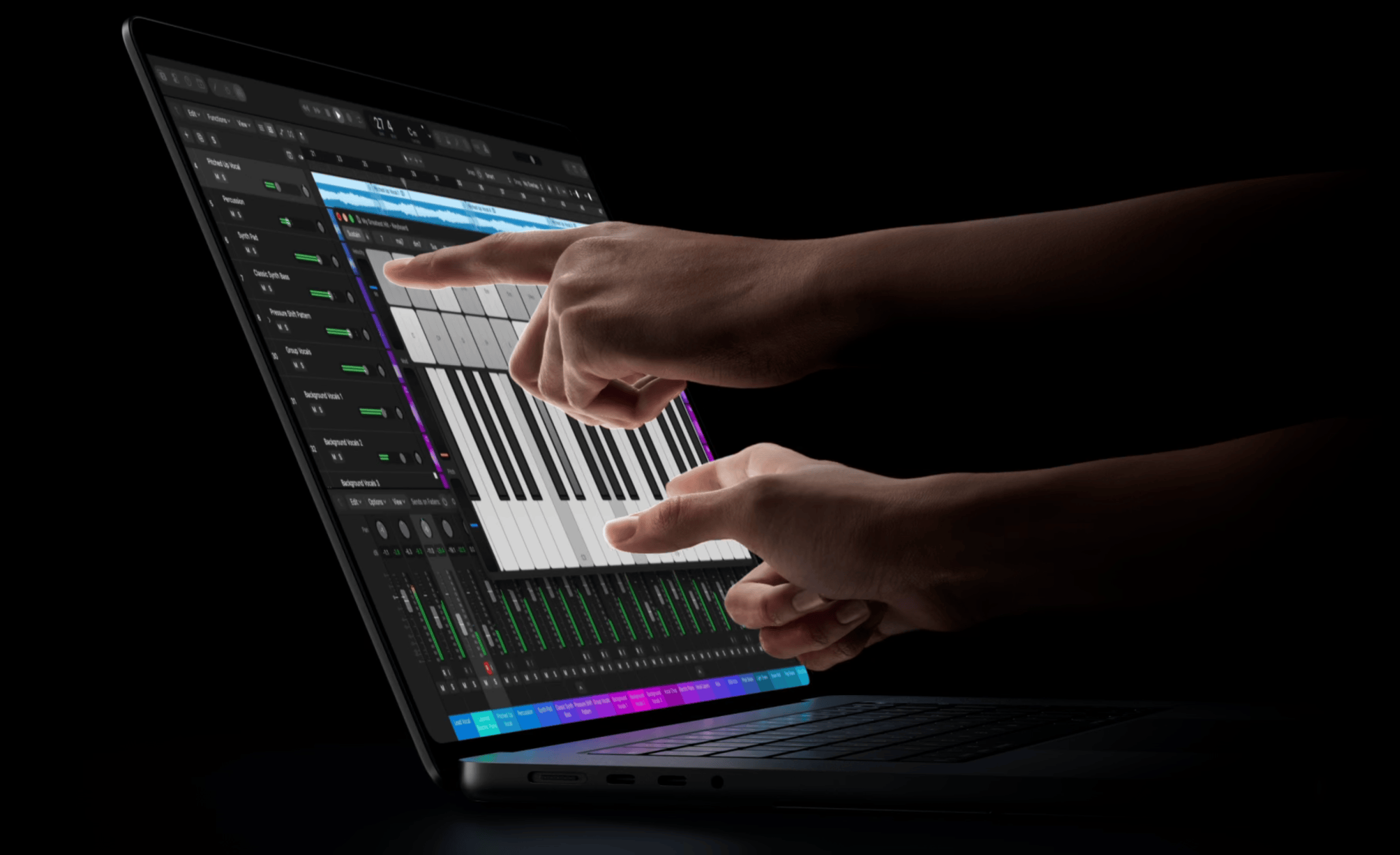
Apple’s latest MacBook Pro, featuring the advanced PROLED XDR Display and touchscreen functionality, was announced on Wednesday and will be available for purchase on November 6. Pricing begins at $2,899 for the base M5 Pro model with a 14-inch display, or $3,399 for the 16-inch variant, before any applicable education discounts.
For those who opt for the highest-end configuration through Apple’s preorder tool, the price escalates to $14,549. This premium offering raises questions about its value in today’s economic climate. Will consumers justify such a costly investment?
Configuring the Top-Tier 16-Inch MacBook Pro
Starting with the larger, more capable 16-inch PROLED XDR model priced at $3,399, the base configuration includes options for silver or space black finishes, which do not affect the price. The first upgrade adds Nano-texture glass, an antireflective coating engineered to minimize screen glare, for an additional $150.
Upgrading the GPU from the M5 Pro’s 20-core to the M5 Max’s 35-core adds $1,550, enabling enhanced performance for demanding tasks like gaming, video editing, and AI-driven workflows. A further push to the 40-core M5 Max GPU adds another $300. According to CNET’s testing, the Max 40-core variant is ideal for professionals handling 8K video, raw footage, or intensive AI and machine learning workloads.
Memory and storage upgrades significantly impact the final price. The base M5 Max includes 48GB of unified memory and 2TB of storage. Upgrading to 128GB of memory requires an additional $2,000, while expanding to 16TB of storage adds $7,000—the most expensive single upgrade. These costs reflect current market pressures driven by AI-related demand increases in RAM and solid-state storage. As CNET’s senior editor Lori Grunin notes, professionals have long paid workstation-level prices for similar components. Higher memory and storage capacities enhance performance for large video files, complex 3D models, and expansive datasets, though Apple does not offer post-purchase upgrades.
Combining all options, the fully configured 16-inch MacBook Pro with M5 Max chips arrives at $14,549. Grunin suggests that for this investment, users might expect the M5 Ultra chip—though thermal constraints may prevent its inclusion in a laptop.


Who Purchases These Ultra-Premium Models?
A $14,549 laptop defies typical consumer purchasing patterns. Who justifies such an expense? According to CNET Managing Editor Joshua Goldman, these machines are rarely purchased individually. Instead, they are typically procured via enterprise channels by organizations with substantial budgets. Engineering firms, VFX studios, and AI research teams stand to benefit from the computational power and storage capacity, often absorbing costs that individuals could not.
For context, Grunin compares this to high-end Dell Precision workstations exceeding $18,000. Five-figure mobile workstations from competitors like HP or Lenovo further validate the price point. While some affluent individuals may opt for this configuration, they represent a minor market segment. Most sales are expected to cluster in mid-range, yet still high, pricing tiers offering substantial performance without the eye-popping cost.
Also Read
- Curry Barker’s New Horror Short “Mama Bear” Delivers a Chilling Five‑Minute Thriller
- Amazon CEO Andy Jassy Announces Prime Video’s Multi‑Billion‑Dollar Revenue Milestone and Profitability
- Martian Meteorite Teghaza 001: Ancient Slice Reveals Secrets of Mars’ Early Crust
- Binance pauses withdrawals as hackers suspected of stealing billions in crypto


