







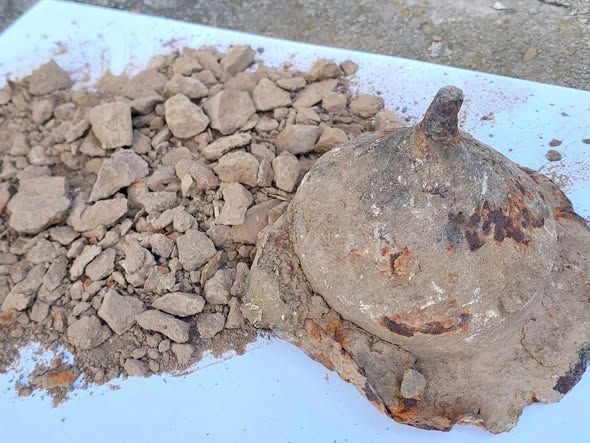

The iron shield boss was covered with caked earth when it was found.
(Image credit: Bartłomiej Bartecki, Hrubieszów Museum)
While scavenging for auto parts at a Polish junkyard, a man stumbled upon an extraordinary discovery: a fragment of an 1,800-year-old shield containing human remains.
Archaeologists suggest the artifact belonged to a Vandal warrior based on its age and origin. The Vandals were a Germanic people who inhabited Poland during that era. Following their invasions of the Roman Empire, they migrated south and settled in North Africa in A.D. 429—long after this shield had been buried.
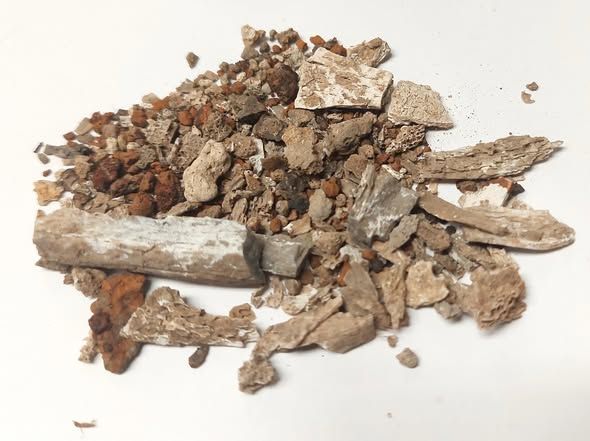
The bones appear to be from a cremation, a tradition practiced by the Vandals. However, archaeologists lamented in an August 20 Facebook post that the original burial site has been lost to time.
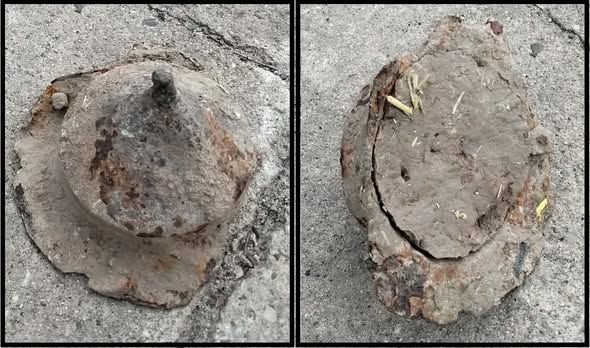
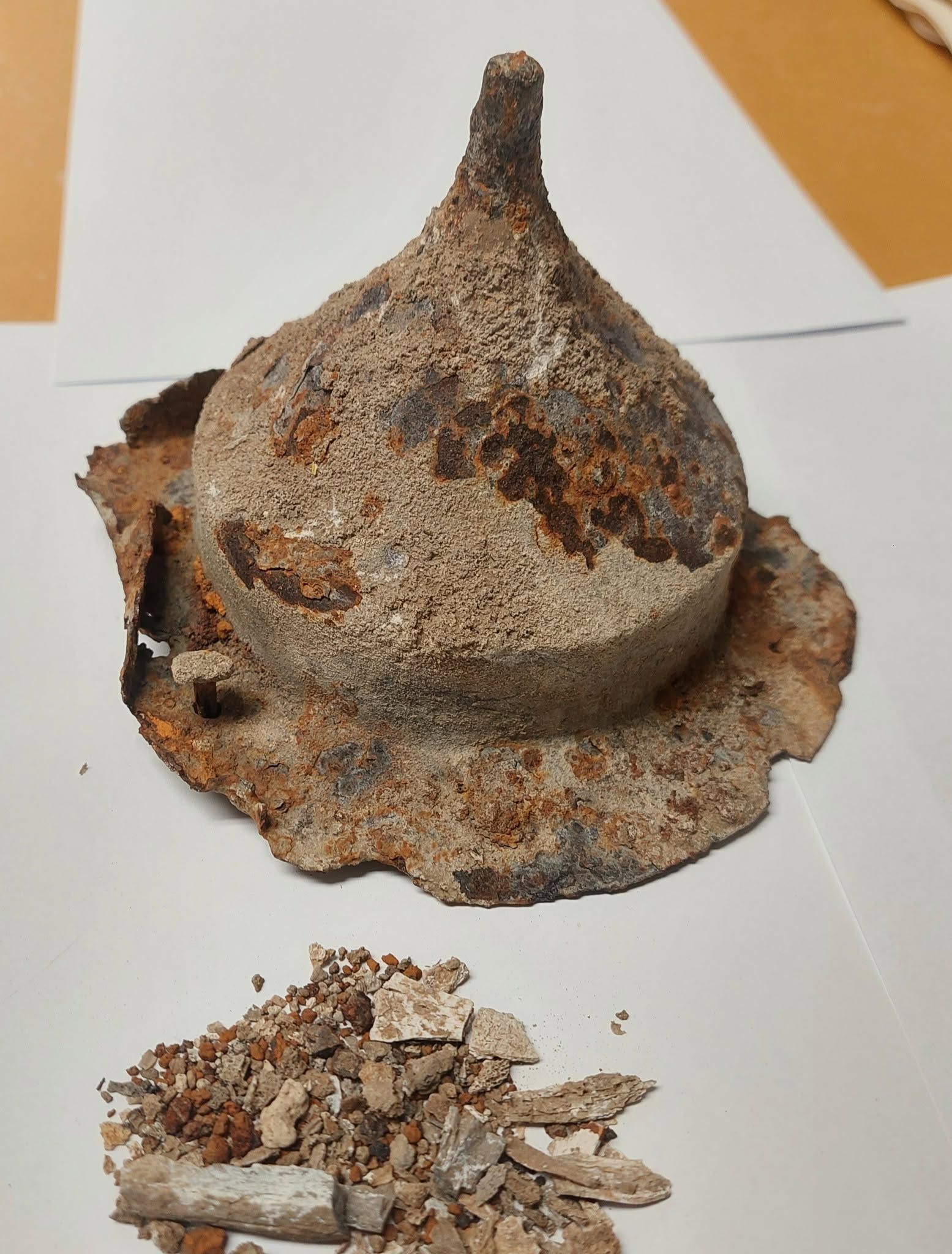
The artifact consists of the shield’s central iron “boss,” or “umbo,” which once protected the hand and supported the wooden and leather exterior. Over time, the organic materials have completely rotted away.
While Roman legionaries also utilized central bosses, they never ventured this far north. The distinct pointed design of the boss confirms its second-century Vandal origin.
Junkyard Discovery
According to the museum’s Facebook post, the shield boss was discovered earlier this month at a junkyard in Hrubieszów, a town near Poland’s southeastern border with Ukraine.
The discoverer immediately recognized the artifact’s antiquity and sent a photograph to the Father Stanisław Staszic Museum in Hrubieszów. Archaeologists at the museum verified its likely provenance, and subsequent examinations of a dried earth plug inside the boss revealed the presence of cremated bones.
“The preservation state of the umbo, particularly its characteristic surface, indicates exposure to high temperatures,” museum representatives stated in the post. “Combined with the charred bones found inside, this clearly points to the cremation burial of a Vandal warrior.” The Vandals are associated with the Przeworsk culture in Poland, named after the town where evidence of their presence was first uncovered.
“Unfortunately, we will likely never know what other items were interred in this destroyed burial—perhaps a sword, spearheads, javelins, a belt buckle, or a cloak clasp,” the museum team noted.


