






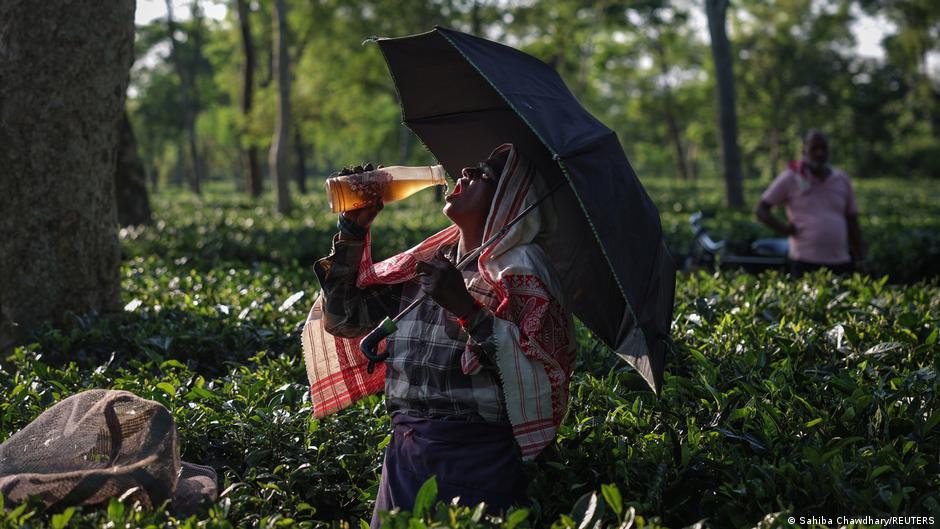
The challenges confronting Upper Assam’s tea gardens have become impossible to ignore for workers like Bidesh Kamar and Sumitra Tanti.
Recent floods halted operations for weeks across the northeastern state, compounding the uncertainty of an already fragile livelihood. More than 50 tea estates sustained damage after a severe storm tore through parts of Assam.
“Life has become unpredictable,” Tanti told DW.
“Weather disruptions halt work, wages remain low, and employment is no longer as dependable as it once was,” she added.
Kamar observed that the economics of tea have shifted fundamentally.
“Tea is no longer as profitable, and work offers far less certainty,” Kamar told DW.
After 15 years on the plantations, Kamar is now weighing whether to “move on to greener pastures.”
Assam’s Dwindling Tea Workforce
Their experience reflects a mounting crisis for Assam’s tea sector. As profitability declines and working conditions grow more volatile, the industry struggles to retain the experienced labor force that underpins the state’s tea production.
Assam produces roughly 52% of India’s tea and sustains approximately 700,000 plantation workers and 140,000 small-scale growers.
For generations, the region’s estates have depended on a vast workforce harvesting leaves by hand. That model now faces pressure from rising temperatures, shrinking margins, and a local labor pool increasingly drawn to alternative employment.
Oversupply has depressed prices, while escalating costs for wages, fertilizer, and fuel squeeze producers. Sanjiv Gogoi, owner of the 400-acre (162-hectare) Sanjiv Tea Estate, said growers are contending with a cascade of problems.
“Productivity has fallen, and labor supply is unreliable. More workers are leaving because the work no longer pays enough,” Gogoi told DW.
The strain is acute for small growers, who contribute nearly half of Assam’s output, he noted.
“They have minimal bargaining power and often must sell freshly plucked leaves to factories at depressed rates.”
A Changing Landscape for Tea
Simultaneously, erratic rainfall, climbing temperatures, and emerging pests are suppressing yields and rendering traditional tea-growing zones increasingly vulnerable.
In Assam’s key tea districts, temperatures now routinely hit 36°C to 40°C (97°F–104°F), subjecting both plants and workers to severe heat stress.
Research indicates that every 1°C temperature rise reduces tea yields by approximately 87 kilograms per hectare in India.
For pluckers who spend hours outdoors, extreme heat compounds the physical toll of already demanding labor, with dehydration, exhaustion, and fainting reported during peak hours.
Tea Deflation Drives Workers Away
Data from the North Eastern Tea Association (NETA) show that tea prices have barely kept pace with rising production costs. Labor now accounts for roughly 60% of total production expenses, pinching estates between wage pressures and weak market rates.
This dynamic has sparked a labor crisis. Plantation workers earn roughly ₹250–280 ($3.00–$3.35) per day, while unions are demanding ₹350–500 to match the rising cost of living.
“The core concern is the widening gap between production costs and realized market prices,” said Bidyananda Barkakoty, tea farmer adviser at NETA and former vice-chairman of the Tea Board of India.
He warned that the exodus of seasoned workers erodes both productivity and quality. Premium tea depends on precise plucking of the right leaves—a skill that grows scarce as experienced hands depart.
Absenteeism in some districts has reportedly surpassed 50%, as workers opt for construction, urban jobs, or government employment schemes offering better and faster returns.
Mechanization Becomes ‘a Necessity’ for Assam’s Tea Industry
Harkirat Singh Sidhu, a veteran planter with over 55 years of experience across nine countries, argues the industry must adapt proactively.
Climate change reshaping West Bengal’s tea industry
To view this video please enable JavaScript, and consider upgrading to a web browser that supports HTML5 video
“We need to make the changes and not be pushed into making changes,” Sidhu told DW.
He forecast that labor shortages will intensify, “making mechanization a necessity rather than an option.”
Sidhu advocates regenerative farming to build soil resilience, upgraded drainage, shade-canopy management, and reduced reliance on chemical pesticides.
“Everything around us has changed, and we need to seriously think through the changes required,” he added.
As experienced workers exit, estates increasingly turn to temporary or mechanical harvesting, which can further diminish quality and prices.
The result is a vicious cycle: falling productivity reduces revenue, leaving estates with less capital for replanting, irrigation, and climate adaptation—making the sector even less attractive to workers.
“The younger generation will stay only when they see a future in the tea gardens, not merely a job,” said Barkakoty.
That requires better incomes and living conditions, but also skilled roles created through mechanization and technology.
Carbon neutral tea farming in Assam
To view this video please enable JavaScript, and consider upgrading to a web browser that supports HTML5 video
Also Read
- Dolly Parton, Country Music Legend, Dies at 80
- Four Regional Fed Boards Pushed for Rate Hike Before July Policy Pause
- Prime Minister Orders Investigation as Fire Engulfs Islamabad Hospital Nursery, Killing 14 Infants
- Haidilao’s Stock Surge Driven by Delivery Expansion and Diversified Brand Portfolio


