



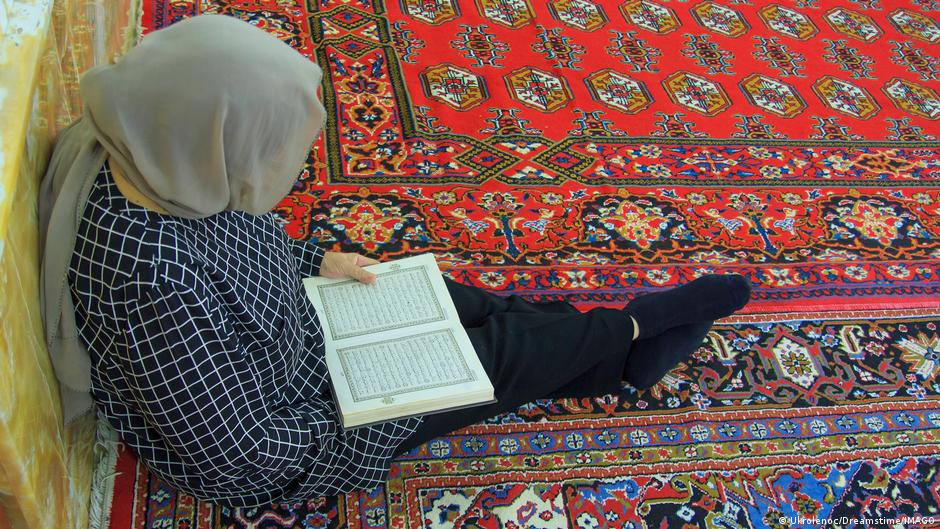
A disagreement over Islamic headscarves in Azerbaijani schools has sparked domestic protests and an unexpected diplomatic spat between Baku and Ankara. Leaders of the two nations often portray their countries as “one nation, two states,” yet the controversy now highlights tensions over religious liberty, national sovereignty, and the reach of neighboring Iran and Turkey in the South Caucasus.
Demonstrations have unfolded across Azerbaijan for almost a week, featuring children marching against the newly imposed school headscarf restrictions. Girls who wear hijabs lead the protests, while many boys have joined them in solidarity.
Public rallies are uncommon in Azerbaijan, where security forces often break up demonstrations. The participation of children makes these protests particularly unusual. As footage of the marches circulated on platforms like Instagram and TikTok, the government curtailed access to those sites, signalling the seriousness with which the authorities view the situation. Internet monitoring groups recorded the shutdowns, but officials have offered no explanation.
School rules interpreted as a hijab ban
The controversy stems from a series of recent legislative actions. On 7 July, Azerbaijan revised its general education law to reinforce secular schooling and impose standardized dress codes for students and staff. A further step came on 21 September, when the cabinet passed Resolution No. 309, which tightened uniform regulations.
The measure bans any extra apparel that interferes with the prescribed uniform or contradicts the secular ethos of schools. Although the text never explicitly names the hijab—a Muslim headscarf that covers the hair and neck—some school officials have read the rule as encompassing such headwear, turning away girls who wear it. Compliance disputes are left to each institution’s pedagogical council to adjudicate.
A further decree issued on 6 October outlines dress standards for teachers, resulting in reports that women who wear headscarves have been barred from the classroom.
Secular education and religious freedom
Azerbaijan is a largely Muslim nation, yet its constitution enshrines secularism: Article 18 separates religion from the state and mandates that public education remain secular. Articles 42 and 48 safeguard the right to education and freedom of conscience.
Proponents argue that uniform regulations must be uniformly applied to all students, regardless of gender. Opponents contend that barring girls for wearing religious head coverings infringes on their rights. The debate has broken party lines, with some government critics backing the measures while secular‑leaning citizens voice opposition. Similar headscarf restrictions sparked demonstrations in 2010 and in later years as well.
Families and teachers describe the impact
A veteran Baku literature teacher with four decades of experience reported that girls who wore hijabs were refused entry to classes at her school. Some students removed their headscarves, while others chose to go home or requested home‑based learning. The teacher, identified only as M.C., endorsed the enforcement of uniform regulations, reasoning that children were not yet mature enough to decide on religious attire.
One parent, D.A., told Deutsche Welle that the situation was not a blanket hijab prohibition but rather an issue of school uniform compliance. Another parent who objected to the restrictions withdrew an interview prior to its publication.
A Baku resident, Sarraf Cabbarov, shared on Facebook that his daughter Sevil—a primary‑school teacher in the capital—had been dismissed after refusing to take off her headscarf. He also posted a school document warning her under the newly instituted dress code.
Detentions and reactions in Azerbaijan
On 12 October, the Interior Ministry announced that 37 individuals had been apprehended for their involvement in the protests. The ministry claimed the detainees had clashed with school personnel, damaged property, and hindered school operations and traffic. Authorities opened a criminal case under Article 233, which addresses the disruption of public order. The ministry has not disclosed the identities of those arrested nor whether any of them are minors.
Cultural activist Ilkin Huseynov disappeared after launching an initiative to connect volunteer tutors with students affected by the headscarf restrictions. Local media later reported, based on sources close to him, that he had been placed under 30 days of administrative detention for allegedly failing to comply with police directives.
Observers have suggested that the new uniform regulations are part of the government’s effort to curb the influence of neighboring Iran and the rise of domestic religious movements. This perspective is echoed by officials, though they refrain from explicitly naming Iran as a target.
Fazil Mustafa, chair of the parliamentary Committee for Public Associations and Religious Institutions, stated that the authorities were worried about religious groups receiving foreign backing and defended the new schooling rules. Allahshukur Pashazade, head of the Caucasus Muslims Office, also cautioned against external meddling while urging a peaceful resolution. Independent verification of any foreign involvement has yet to emerge.
Amnesty International denounced the exclusion of girls who wear hijabs and urged the release of all individuals detained solely for engaging in peaceful protest.
Dispute reaches Turkey
The row has spilled over into Turkey, a close ally of Azerbaijan. On 3 October, demonstrators staged a protest outside the Azerbaijani consulate in Istanbul. Oktay Saral, an adviser to President Recep Tayyip Erdoğan, condemned the measures, stating that denying education to students who wear headscarves is unacceptable. The ruling New Azerbaijan Party countered that bilateral ties should not be used as a pretext for meddling in domestic affairs.
For the families involved, the pressing concern remains whether their children can continue attending school without being required to remove their headscarves.
Sinem Demir contributed reporting.
Edited by: Carla Bleiker
Also Read
- Chile’s President Makes Historic First State Visit to Bolivia in Seven Decades Amid Rightward Shift in South America
- Hyundai Recalls Nearly 95,000 Vehicles Over Front Seat Motor Fire Risk
- Japan’s electricity grid faces growing threat from millions of vulnerable home devices
- White House Confirms Press Secretary Katie Zacharia Departs After Brief Tenure