






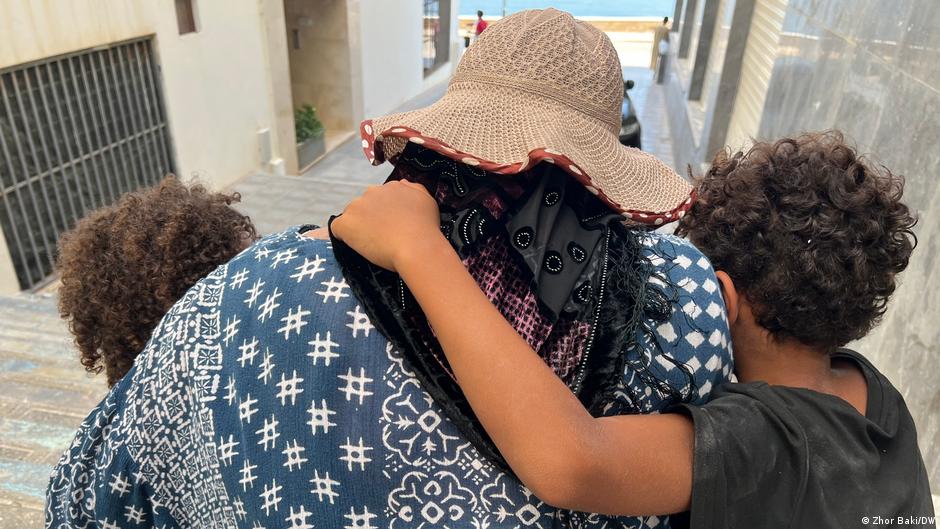
Few kilometers separate the Moroccan city of Fnideq from the Spanish enclave of Ceuta, yet the psychological and physical chasm between those who pursue the European dream and those who remain in Morocco feels insurmountable. The July 30 mass attempt, which saw an estimated 72,000 individuals attempt the journey, underscores the depth of desperation driving this exodus—and the tragic toll it exacts.
In the wake of that deadly crossing, where approximately 100 lives were lost, social media once again amplified calls for another coordinated push in mid-August. Despite the harrowing outcomes, a persistent stream of hopeful migrants continues to congregate in Fnideq, drawn by rumors of new opportunities.
Among them is Malika, a mother of two who traveled from Casablanca to Fnideq after hearing reports of successful crossings. Her voice cracked with anguish as she described her plight: “My life is below zero. I have no life.” Without disclosing her full identity, she revealed that her children—a 3-year-old daughter and an 8-year-old son—have gone without consistent meals, and the family has resorted to sleeping outdoors.
Malika’s resolve remains unshaken. “I want them to go to Ceuta. They will study there and we will be fine,” she pleaded, clinging to the belief that life across the border offers her children a reprieve from poverty and instability. But as August 15 approached, Moroccan authorities beefed up security presence around both Ceuta and Melilla, deploying checkpoints, patrol boats, and water cannons. The operation resulted in 111 arrests—but no mass crossing.
For Malika and others like her, the dream persists even as reality grows harsher.
A Generation Without Prospects
To view this video please enable JavaScript, and consider upgrading to a web browser that supports HTML5 video
Twenty-two-year-old Ahmed Amhid arrived in Fnideq from Oued Zem, lured by similar promises circulating online. Unlike Malika, he holds onto cautious optimism while acknowledging the grim landscape back home. “There’s nothing in this country,” he said bitterly. “No jobs, no industries, no companies, nothing.” Despite selling drinks on the streets to scrape together a living, his earnings barely suffice, leaving him with little hope for the future.
His sentiment echoes across a generation shaped by unemployment and stagnation. Media and culture expert Ahmed al-Dafri sheds light on how digital platforms are fueling this tide. These movements, he notes, represent a new form of grassroots mobilization—no central leadership required. Viral videos showcasing prior crossings create an infectious momentum, making dissent seem inevitable and departure urgent.
Yet not all who witness these struggles choose to act.
Choosing Stability Over Risk
Mohamed al-Dami, a 30-year-old local trader, stood near the border fence during the July surge—and watched silently. Unlike many of his peers, he harbors no intention of migrating. “Even if you get into Ceuta, it’s not worth all the trouble and risk,” he reasoned. “Why put yourself in harm’s way?”
He reflected on the aftermath of the July influx: most who crossed returned, morale dipped, and enthusiasm waned. Still, he acknowledged the broader shift. “People’s morale has really plummeted,” he observed. Yet his pragmatism holds firm—rooted in faith, survival, and acceptance of fate.
Munir Hamdouch, another lifelong resident and merchant, shares this outlook. Though he admits the economic downturn has hit hard—tourism dwindling, trade slowing—he finds purpose in staying rooted. “I have my shop and my family with young children,” he explained. “Even if the thought crossed my mind, I wouldn’t be able to leave.”
Hamdouch also critiques the mindset behind mass migration attempts. “Some people lack patience and are never satisfied,” he mused. “It’s a matter of contentment.”
These voices highlight a divided community—one driven by aspiration and desperation, the other anchored in resilience and restraint.
Transformations in Transition
Local activist Mohamed Azzouz captures the evolving identity of Fnideq. Once merely a transit hub, it now serves as a temporary refuge for would-be migrants, reshaping its social fabric. Economically and culturally, migration has left an indelible mark. Tourism suffers, livelihoods falter, and uncertainty looms.
To view this video please enable JavaScript, and consider upgrading to a web browser that supports HTML5 video
As policymakers grapple with managing border flows, the human dimension remains paramount. Behind every statistic lies a story—of sacrifice, survival, and sometimes, surrender.
If you are experiencing emotional distress or suicidal thoughts, professional help is available globally through international resources.
This article was adapted from the original Arabic.
Also Read
- Ukrainian Border Crossing Near Moldova Targeted in Russian Drone Strike, Per Kyiv
- Pricing the First Mover in Southeast Asia’s Traditional Savings Circle
- Intercontinental Exchange Commits Up to $2 Billion to Predictive Market Platform Investment
- A magnitude 6.7 earthquake has shaken Peru’s southern Andes, USGS says


