



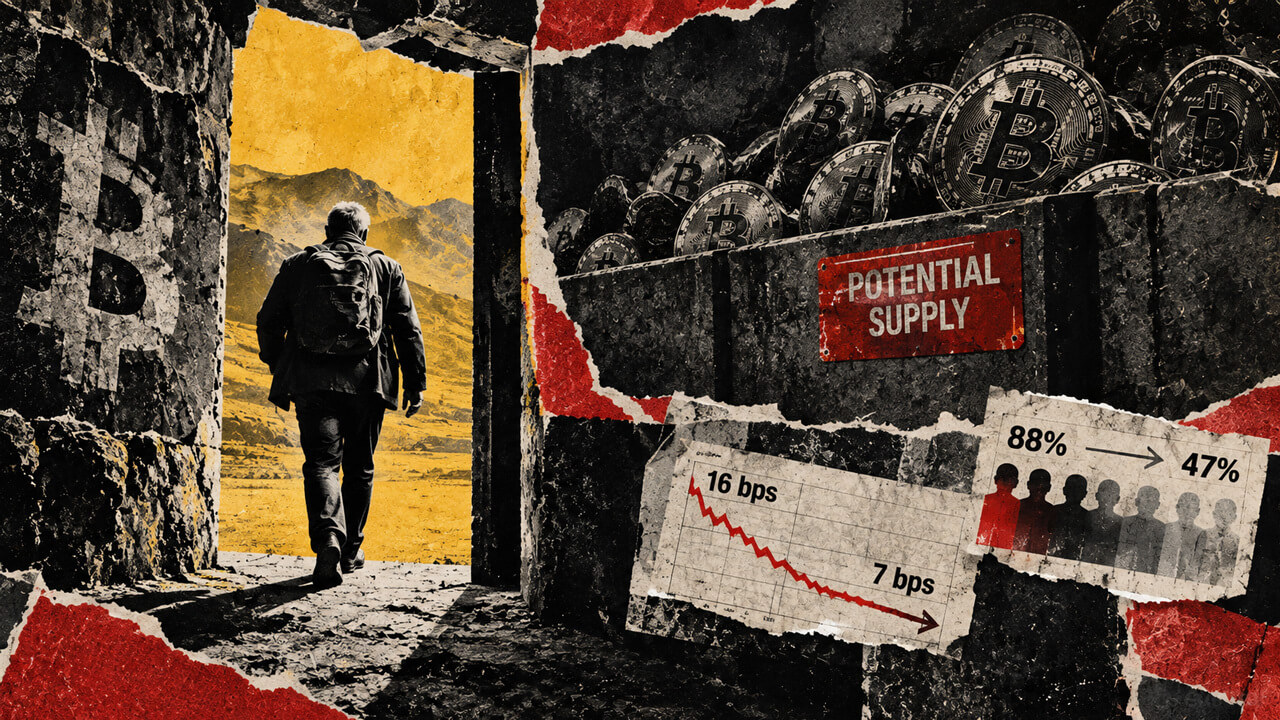
Bitcoin’s on‑chain sell‑side risk has slipped to under half of its August high, alleviating one gauge of potential selling pressure despite a sizable stack of older coins still sitting at purchase prices above today’s market.
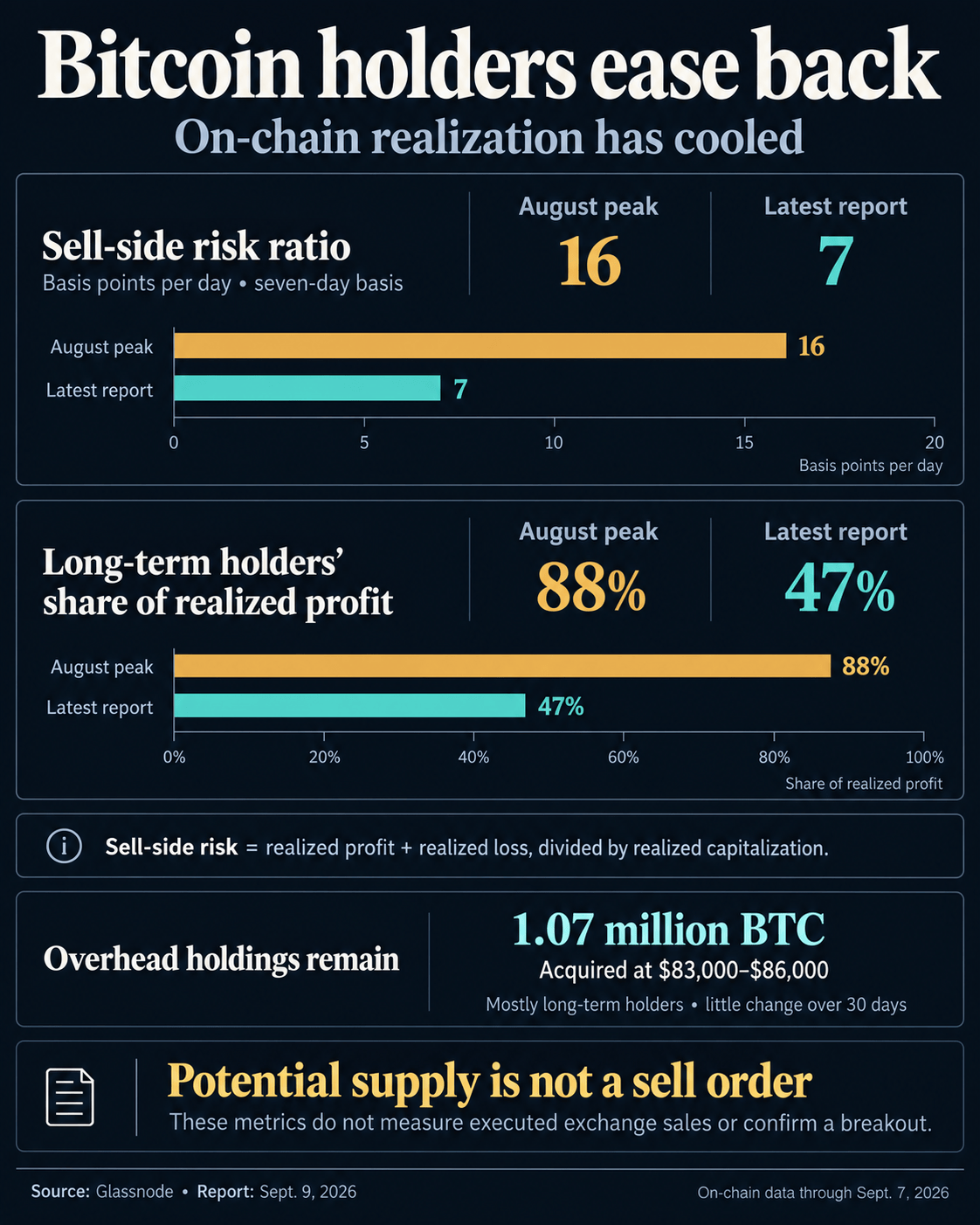
According to Glassnode’s September 9 report, which incorporates on‑chain data through September 7, the Sell‑Side Risk Ratio stands at seven basis points per day on a seven‑day average, down from sixteen basis points at the August peak.
Long‑term holders now represent 47% of realized profit, down from 88% at the August peak. While older holders are contributing a smaller slice of the market’s realized profit, this figure does not reflect their total share of Bitcoin sales.
The Sell‑Side Risk Ratio is calculated by summing on‑chain profits and losses, then dividing by realized capitalization. It gauges value realization against that capital base, serving as an indicator of potential selling pressure.
A reading that falls below half its previous level does not imply that the exchange‑traded volume of Bitcoin has been cut in half.
Glassnode also notes that the realized‑profit spike on September 3 was less than half the magnitude of August’s spike. This compares individual profit spikes, which are separate from the seven‑day risk metric. Taken together, the data point to a calmer realization environment and a shift in which holders are booking profits.
The analysis notes that about 1.07 million BTC were acquired in the $83,000‑to‑$86,000 range, virtually all of which are held by long‑term investors, and that this cohort has remained largely unchanged over the past month.
These holdings continue to represent potential supply, whereas the realization data reveal what holders have been doing lately.
Exchange demand is a separate test
Analysts observed negative exchange spot flow on September 8, with the spot cumulative volume delta (CVD) staying negative even as it improved, indicating that aggressive selling on exchanges still outpaced aggressive buying.
CVD measures the net balance of executed trades, while sell‑side risk tracks on‑chain profit‑and‑loss realization against realized capitalization. A decline in sell‑side risk does not necessitate a positive turn in CVD.
Bitcoin holders are currently realizing less profit and loss relative to the capital base, while the majority of overhead coins remain unmoved. Considering the entire block as immediate selling pressure would overstate the situation.
For a lasting price advance to materialize, buyers must still absorb the supply that actually reaches the market.
Also Read
- Dollar Reversal Risks Ending Emerging-Market Carry Trade Boom
- NZD/USD Inches Toward 0.5850 Ahead of US PPI Inflation Release
- Canadian Dollar Holds Firm as Rising Oil Offsets a Stronger US Dollar Before PPI Data
- Hunter Biden launched LAPTOP to cure memecoin grift and created a whole new batch of losers