



        <img src="https://npr.brightspotcdn.com/dims3/default/strip/false/crop/5712x4284+0+0/resize/1100/quality/50/format/jpeg/?url=http%3A%2F%2Fnpr-brightspot.s3.amazonaws.com%2Fd3%2F03%2Fde9817d84d8a9e366a8bf6f11d44%2Fimg-7134.jpeg" data-template="https://npr.brightspotcdn.com/dims3/default/strip/false/crop/5712x4284+0+0/resize/{width}/quality/{quality}/format/{format}/?url=http%3A%2F%2Fnpr-brightspot.s3.amazonaws.com%2Fd3%2F03%2Fde9817d84d8a9e366a8bf6f11d44%2Fimg-7134.jpeg" class="img" alt="Kaleb Cabell, Andrea Coln McNeill and Jeffrey McNeill perform as part of The Illharmonic Orchestra at NPR's headquarters in Washington, D.C." fetchpriority="high"/>


        <p>

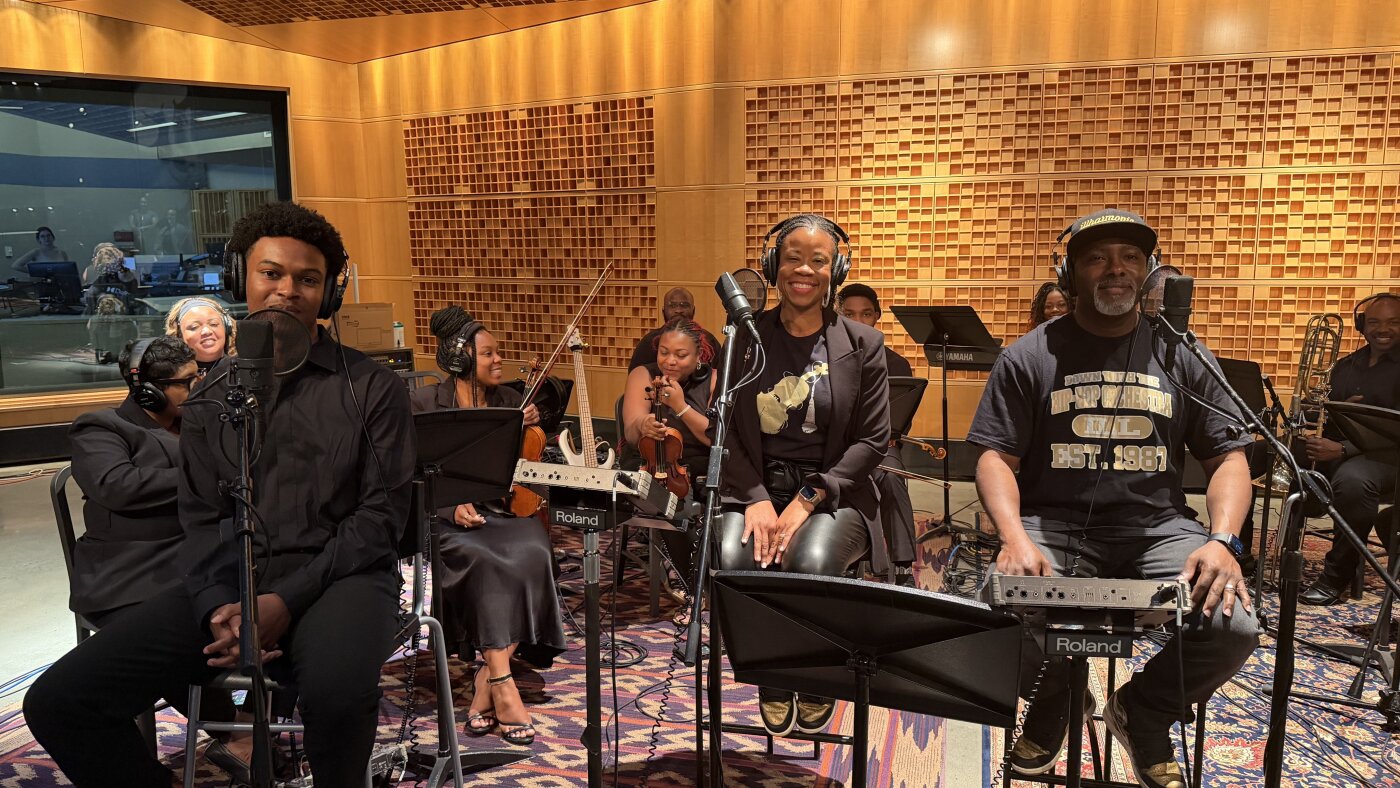
            Kaleb Cabell, Andrea Coln McNeill and Jeffrey McNeill perform as part of The Illharmonic Orchestra at NPR's Washington headquarters.
            <b class="credit" aria-label="Image credit">

                Brianna Scott/NPR

            </b>
            <b class="hide-caption"><b>hide caption</b></b>
        </p>


        <b class="toggle-caption">

          <b>toggle caption</b>
        </b>


<span class="credit" aria-label="Image credit">


    Brianna Scott/NPR

</span>
Vocalist and composer Jeffrey McNeill shares that his early exposure to hip-hop, through his father introducing him to *The Sugarhill Gang*’s *Rapper’s Delight* and his brother bringing home *Beastie Boys*’ *Paul Revere*, created an unconscious connection between the genres. “It sounded like it went perfectly with Beethoven’s Fifth Symphony,” McNeill recalled during an interview with *All Things Considered*.
Nearly four decades later, this synesthetic approach defines The Illharmonic Orchestra, which has performed in major concert venues nationwide over two decades. The group merges hip-hop and R&B vocals with live orchestral elements—horns, woodwinds, strings, and percussion—performed by all-Black ensembles. This deliberate representation underscores their mission to challenge stereotypes about classical music diversity.
McNeill—performing under the alias “Thee Phantom”—and Coln McNeill—known as “The Phoenix”—emphasize their fusion’s cultural significance. Coln McNeill noted during a visit to NPR headquarters,
“It was crucial for us to demonstrate that hip-hop and classical aren’t as disparate as people assume. Even in 2026, many major symphony orchestras still lack diversity. But the talent exists within communities of color—whether formally trained, self-taught, or educated at conservatories,” she explained.
For audiences, the experience is both entertaining and revelatory. McNeill described it as
“A house party in a concert hall—a community-driven experience. People connect with the music, see themselves on stage, and that’s what sustains us.”