Blue Origin New Glenn rocket explodes during launch pad test at Cape Canaveral – YouTube
Watch On
When Blue Origin’s New Glenn rocket experienced a catastrophic failure during a static fire test at Cape Canaveral earlier this year, it generated acoustic waves that traveled more than 1,000 miles (1,600 kilometers) across the United States. Although these ultra-low-frequency vibrations were imperceptible to human ears, they provided researchers with valuable data to analyze the explosion in remarkable detail.
New Glenn represents Blue Origin’s largest and most powerful commercial launch vehicle. Standing at 320 feet (98 meters) tall—comparable in size to NASA’s Space Launch System—the rocket was developed to compete with SpaceX’s massive Starship vehicles. The vehicle has completed three orbital attempts: its maiden flight in January 2025, a successful mission in November 2025 that deployed two NASA spacecraft toward Mars, and most recently in April of this year, when it reached space but encountered an issue during satellite deployment. Notably, during the November mission, Blue Origin successfully recovered the rocket’s reusable first-stage booster, becoming only the second company after SpaceX to accomplish this feat.
However, on May 29, during a pre-launch static fire test at Cape Canaveral Space Force Station—conducted prior to the vehicle’s planned fourth mission—the rocket’s booster exploded catastrophically without warning. The violent detonation scattered burning debris across the area and produced a massive fireball that briefly illuminated the night sky. On August 5, Blue Origin announced that a defective oxygen valve was the likely cause of the explosion, according to Live Science’s sister site Space.com. The company has not attempted another New Glenn launch since the incident.
Latest Videos FromLive Science
The explosive failure ranks among the most powerful pre-launch detonations ever recorded. According to Ars Technica, the damage sustained by the launch facility alone will require at least a year to repair. This setback not only impacts Blue Origin’s launch capabilities but could also delay NASA’s planned lunar surface infrastructure, which depends on New Glenn for transporting certain components.
No injuries were reported from the explosion. However, thousands of nearby residents experienced a thunderous sonic boom as the shockwave propagated up to 135 miles (217 kilometers) from the launchpad, as previously reported by Florida Today. Yet regarding the overall acoustic energy released, this represented merely the most audible portion of the event.
You may like
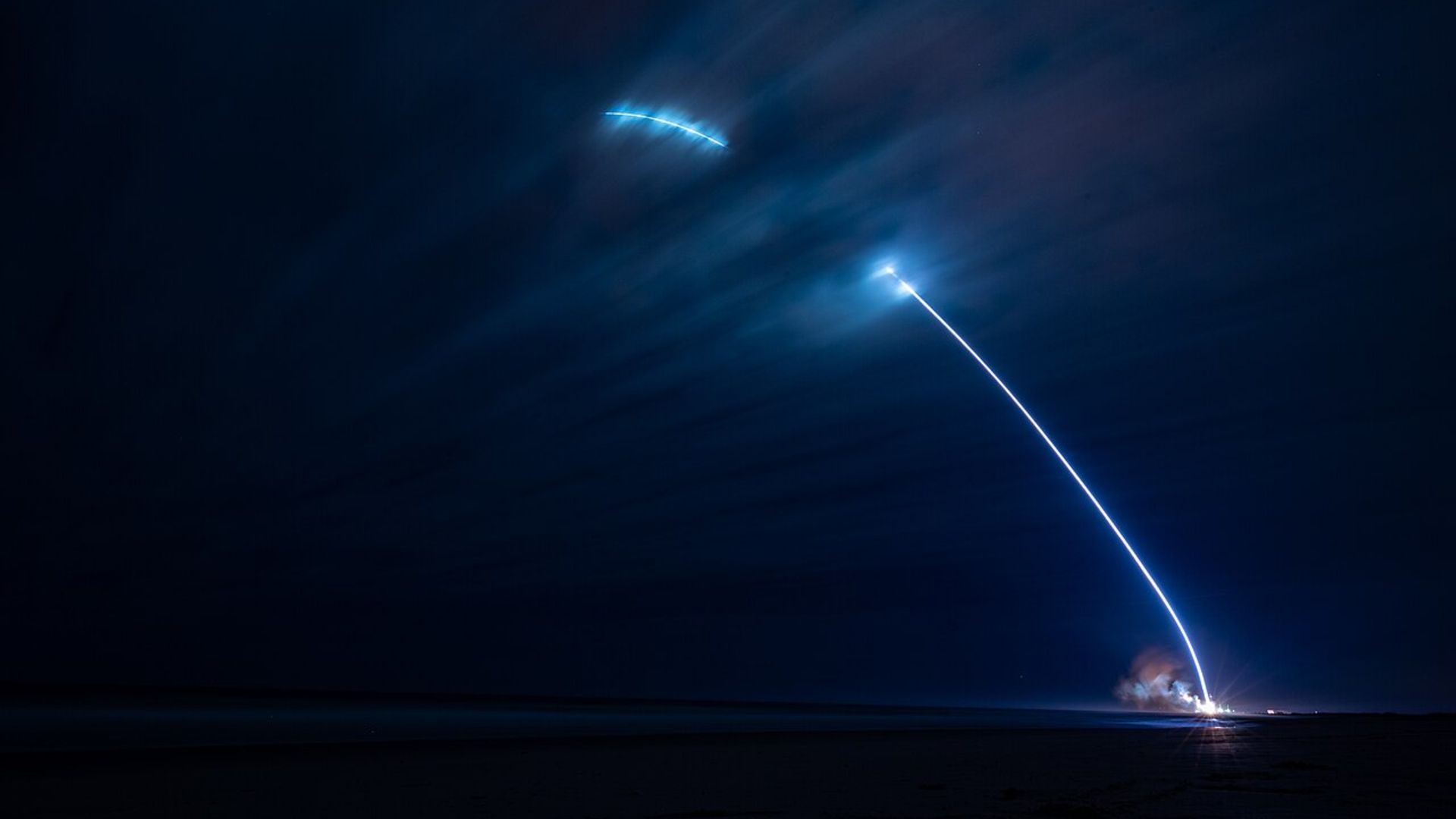
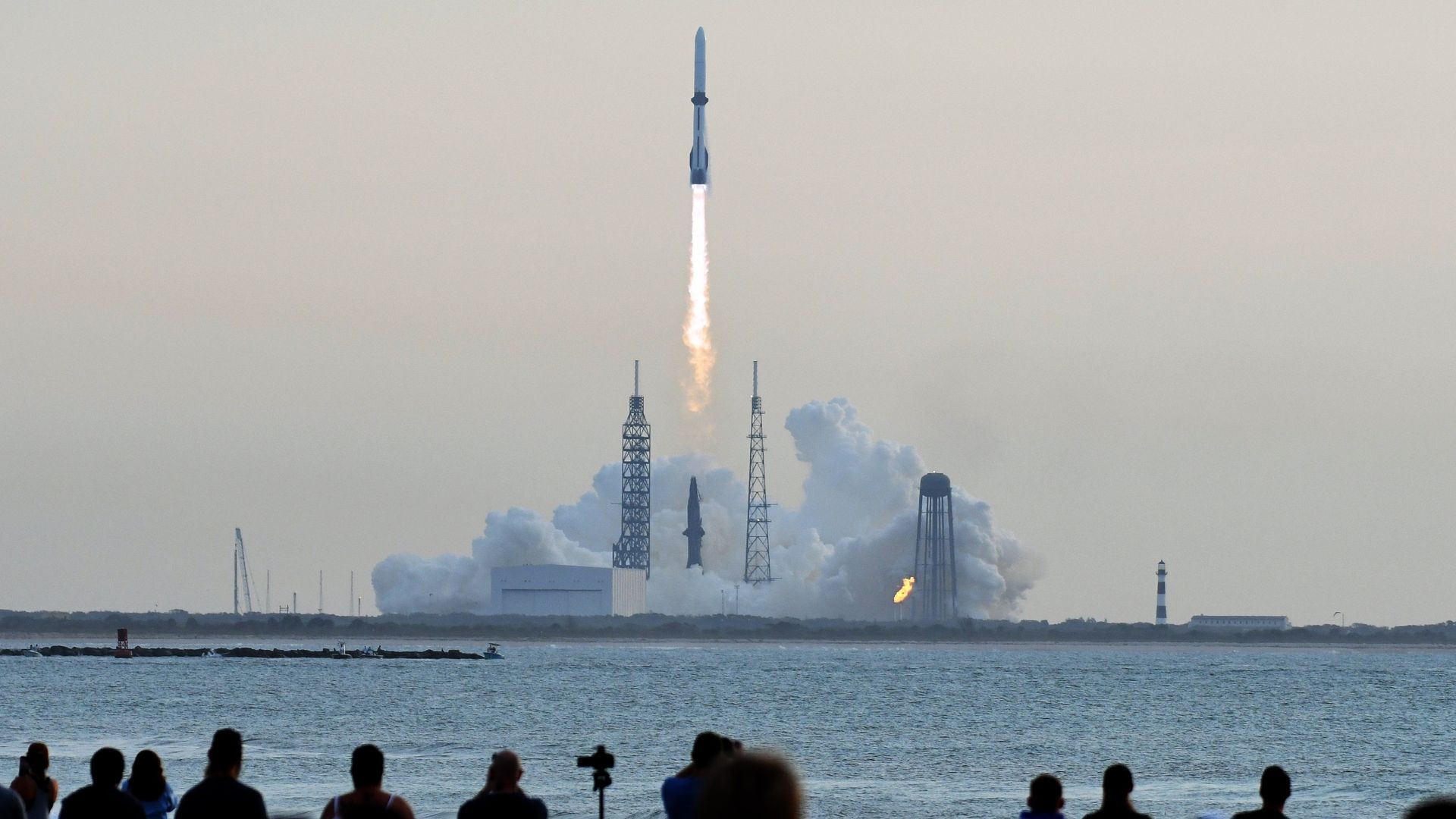
New Glenn first launched from Cape Canaveral Space Force Station on Jan. 16, 2025, and successfully deployed one of Blue Origin’s prototype spacecraft platforms in low Earth orbit.
(Image credit: U.S. Space Force)
In a study published August 12 in the journal The Seismic Record, researchers examined data from acoustic monitoring stations distributed throughout the United States to detect infrasound signals—ultra-low-frequency sound waves below the threshold of human hearing—generated by the explosion. At least 36 monitoring stations recorded infrasonic signatures from the blast, with the most distant detection occurring at a facility in northeast Texas, approximately 1,046 miles (1,684 kilometers) from Cape Canaveral Space Force Station.
Detecting such distant low-frequency acoustic waves not only demonstrates the immense scale of the explosion but also offered researchers a rare opportunity to study “a very rare opportunity to study [the] large real-world energetic event” in greater depth, according to the study’s lead author Elizabeth Silber, a physicist and planetary scientist at Sandia National Laboratories in Albuquerque, New Mexico.
Based on the frequency characteristics and propagation distance of the detected sound waves, the research team estimated that the explosion released energy equivalent to approximately 0.131 kilotons (144 U.S. tons) of TNT. This value slightly exceeds the initial blast yield from the nuclear reactor destruction at Chornobyl in 1986, according to a 2009 study.
The most recent New Glenn launch occurred on April 19 this year, when the rocket made it to space but failed to properly deploy a communications satellite.
(Image credit: Paul Hennesy/Anadolu via Getty Images)
The research team also calculated the proportion of the rocket’s propellant consumed during the initial detonation. While the exact fuel load of the booster remains proprietary information, the scientists estimate that between 3% and 6% of the vehicle’s cryogenic propellant was expended in the initial blast. Although this percentage may appear modest given the scale of the fireball, researchers noted that it falls within expected parameters for such incidents.
“In a large propellant accident, the fuel and oxidizer do not necessarily mix and react all at once,” Silber explained. “Some material can contribute to the initial blast, while other material can burn more gradually in the fireball and the plume.”
The researchers suggest that infrasound monitoring represents an underutilized yet potentially valuable method for detecting and analyzing spacecraft accidents or other large-scale explosions occurring anywhere on the globe.
The same research group has previously employed low-frequency acoustic detection to track meteors and spacecraft reentering Earth’s atmosphere, including NASA’s OSIRIS-REx return capsule in 2023.