






Bosnia-Herzegovina Balanced by Conflict, Uncertainty, and Euroaspirations
Bosnia-Herzegovina defies simple characterization as a fragmented nation. The Balkan state compartmentalizes its governance across a tripartite center—multietnic national government, the self‑governing Brcko District, and two semi‑autonomous entities operating largely as parallel sovereignties. These federal units comprise cantons and communities distributed along ethnic lines: centrally‑western regions host Bosniak and Croat majorities, while northern and eastern territories are dominated by Bosnian Serbs.
The country’s demographics reflect deep societal fissures. With a population of roughly 3.1 million, the society splits evenly between Bosniaks, 31 percent of whom identify as Serb, and 15 percent as Croat. Additional segments represent Roma, Jewish communities, and various minorities, and Bosnia, Croatian, and Serbian are all recognized as official languages alongside Turkish, Albanian, and others documented locally.
The 1995 constitution institutionalized Bosnia’s multi‑ethnic balance, designating Bosniaks, Orthodox Serbs, and Catholic Croats as “constituent peoples” entitled to equal rights. National authority is exercised through a rotating three‑presidency, where one representative from each constituent group fills memberships. While this guarantees broad participation, the arrangement often yields standoffish politics, with ethnic interests prevailing over cohesive policymaking.
Dayton Peace Accords brought an end to war
The accord concluding the Bosnian conflict was born from the 1995 Dayton negotiations, embedding a fragile power‑sharing framework to secure lasting stability. Originating amid the 1992–1995 struggle—which saw Bosniaks initially clash with Croats before all three groups fought together and neighbors like Serbia and Croatia intervened—the treaty sought to legally entrench the balance of power among competing communities.
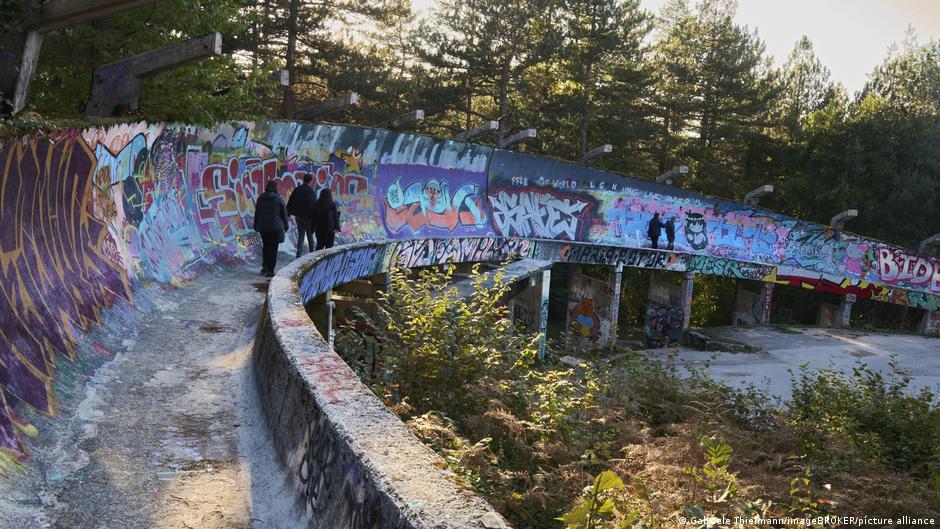
Throughout the conflict, cities faced destruction and atrocities, highlighted by the sustained siege of Sarajevo and the Srebrenica genocide that claimed thousands of Bosniak lives. By year’s end, roughly 100,000 people were killed and an estimated 2.2 million were displaced through mass expulsions and forced migration. Only after heightened international pressure, particularly from the United States, did diplomacy produce the settlement concluded at a military base outside Dayton, Ohio in November 1995.
International oversight — essential, or no longer relevant?
Though recognized globally since the Dayton agreement and seated at the United Nations, Bosnia-Herzegovina remains effectively partially sovereign. The Office of the High Representative (OHR)—a UN mandate established in 1995—supervises adherence to civilian obligations of the accords. Its chief, first Christian Schmidt (Germany) and now acting Louis J. Crishock (United States), wields extensive authority, capable of dismissing parliaments, passing legislation, creating new agencies, and overriding domestic judicial decisions.
The Dayton Peace Accords: 30 years onward
Originally negotiated during a 1997 Peace Implementation Council meeting in Bonn, Germany, the Dayton framework has struggled to resolve longstanding deadlocks. The high representative’s mandate birthed the term “Bonn Powers,” and from 2002 to 2011 he also served as the European Union’s special envoy for the country. Recent debates question whether this office remains indispensable, with supporters insisting it safeguards unity yet opponents cautioning that unchecked autonomy creates a de facto proxy relationship that erodes democratic institutions.
The structure’s rigidity persists politically and socially, frequently steering decision‑making toward ethnic priority and blocking consensus.
War’s legacy: from combat to reconstruction void
The war’s devastation reshaped the landscape, leaving behind shattered towns, memorial sites, and a generation hardened by trauma. After the final ceasefire, hundreds of thousands perished and millions fled the ruins, seeking refuge elsewhere. Humanitarian aid became vital, but rebuilding the shattered infrastructure required sustainable solutions that the existing power division has proved incapable of delivering.
Separatist ambitions resurface: Milorad Dodik’s challenge
Criticism intensified from Republika Srpska’s leadership, whose Prime Minister and President, Milorad Dodik—once serving until mid‑2025—views the centralized, multi‑entity system upheld by Dayton as an obstruction to his expansionist goals. With tangible support from Belgrade, Moscow, and intermittently Washington, Dodik has explored diversifying Republika Srpska’s borders through proposals such as a distinct Croatian entity and closer tighter integration with neighboring Croatia.
The same trend emerges among Bosnian Croats, who seek additional federal autonomy—or potentially a third, self‑governing Croatian entity—to limit influence by Sarajevic elites. Their proposals enjoy backing from Croatia’s central government, suggesting a broader cross‑border dialogue on governance models.
EU integration as a potential catalyst
A promising avenue to destalone modern paralysis lies in deeper European Union linkage, commonly termed the “European perspective.” Bosnia-Herzegovina formally applied for Union membership in 2016, and the Council approved accession negotiations to begin in early 2024. Realizing those opportunities demands comprehensive reforms—particularly in rule of law, combating organized crime, prosecuting transnational networks, and stabilizing public institutions.
Emerging hurdles to enlargement
Financial assistance has flowed to Bosnia-Herzegovina since 2007 through pre‑accession programs, and the European Commission’s Economic and Investment Plan for the Western Balkans promises substantial infrastructure investment. Yet progress stalls when considering regions like Republika Srpska, whose continued separatist rhetoric has prompted partial suspension of development funds. As policymakers weigh the benefits of greater integration against entrenched identities, the path forward hinges on decisive institutional renewal.
The article was originally written in German.
Also Read
- Polanski Suggests Greens Could Steer Labour Toward Progressive Policies
- Omani Co‑Pilot Named in FlyDubai Assault as Gaza Strikes Kill Five
- Zach Bryan Makes Political Statement in Free Palestine Shirt at Gillette Stadium
- Shipping Container Bottleneck Deepens at Karachi Port Amid Islamabad Security Measures


