







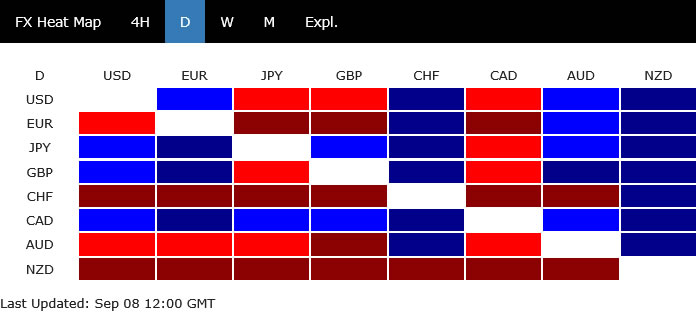
The recent surge in Brent crude above $99 has fundamentally reshaped daily currency rankings, though it has yet to spark a broader macroeconomic repricing. Today’s market dynamics are highly idiosyncratic: the Canadian Dollar capitalized on improving terms-of-trade to claim the top spot, while the Japanese Yen maintains its weekly dominance driven by a robust Bank of Japan tightening narrative. Conversely, the Australian and New Zealand Dollars remain constrained by domestic policy headwinds, and Treasury yields have failed to react meaningfully to the latest oil spike. Ultimately, while oil dictates relative currency performance today, central bank trajectories and local economic data will determine which moves possess lasting power.
Why it matters: Oil and yields set a shared backdrop, but each currency’s actual ranking today reflects its own largely independent story. That distinction matters going forward: a move driven mainly by oil/risk transmission, like the CAD’s terms-of-trade lift, can fade quickly if Brent stalls, while central-bank-driven repricing, like the Yen’s BoJ story or the RBA’s inflation stance, tends to have more staying power.

Oil Takes Over as the Day’s Clearest FX Catalyst
Brent’s renewed acceleration above $99 has reshuffled the currency leaderboard, even if it has yet to trigger a broader macro repricing. The Canadian Dollar has overtaken the Yen as the strongest major currency of the day, while the Yen still leads for the week. Elsewhere, moves remain more idiosyncratic: AUD and NZD are being constrained by their own domestic rate stories, while Treasury yields have barely responded to the latest jump in oil and the Dollar’s recovery remains tentative.
The key distinction is that oil is reordering relative currency performance rather than driving every market in the same direction. The CAD is the clearest beneficiary. The Yen is still trading the BoJ story. The Antipodeans are being held back by domestic policy and growth concerns, while the broader inflation signal from higher oil has not yet been confirmed by US yields.
CAD Overtakes Yen as Oil Does the Heavy Lifting
The Canadian Dollar is the clearest beneficiary of the oil move, strengthening broadly as Brent extends a rally driven by renewed Middle East supply risks. Canada’s retaliatory tariffs on US imports also took effect Tuesday after trade talks collapsed last month, with duties ranging from 15% to 50% across around $27.6bn of goods and tariffs on steel, aluminum and iron doubled to 50%.
But those measures had been signalled well in advance. Today’s CAD strength looks much more like an oil story than a tariff story. The rise in crude is improving Canada’s relative terms-of-trade backdrop at the same time geopolitical supply risks are moving back to the centre of the energy market. That has lifted CAD to the top of the daily rankings and left it second only to Yen for the week so far.
Canada’s Retaliatory Tariffs, Already Priced In
- Effective Tuesday, after trade talks collapsed last month.
- Duties: 15% to 50% across roughly $27.6bn of goods.
- Steel, aluminum and iron tariffs doubled to 50%.
Yen Still Owns the Week
Yen’s underlying story has not changed. Upgraded Japanese Q2 GDP and the strongest wage growth since 1997 have strengthened expectations for a more sustained BoJ tightening path, leaving Yen as the strongest major currency for the week.
What has changed today is simply that CAD has received the fresher catalyst. Yen strength is also becoming more visible outside FX, with Nikkei falling –1.70% as the stronger currency added pressure on Japanese exporters. That does not mean Yen alone explains the equity decline, but it is becoming a more visible headwind after the strong gains seen earlier in the week.
Two Currencies at the Top, Two Different Drivers
| CAD | Yen | |
|---|---|---|
| Today’s ranking | Strongest major of the day | Second today, still strongest for the week |
| Driver | Oil’s terms-of-trade lift as Brent breaks $99 | BoJ tightening path, upgraded Q2 GDP and strongest wage growth since 1997 |
| Spillover | Not yet visible beyond the FX market | Nikkei dropped 1.70% as exporters feel the stronger currency |
AUD and NZD Remain Trapped by Their Own Rate Stories
Kiwi continues to struggle as markets resist extending last week’s RBNZ hike into a substantially more aggressive tightening path. The central bank has tightened, but investors are still reluctant to price a much faster sequence of follow-up moves. NZD therefore remains a relative-rate disappointment story rather than an oil story.
Aussie is more conflicted. RBA Deputy Governor Andrew Hauser described inflation as the Bank’s “one big problem” and identified the Middle East conflict, the AI-driven global boom and weak Australian supply capacity as a “three-headed monster” of inflation risks. That hawkish message is being offset by weak domestic surveys, with NAB business conditions turning negative and Westpac consumer sentiment falling sharply. AUD is therefore caught between a more inflation-focused RBA and an economy increasingly showing the effects of the tightening already delivered.
AUD’s Conflicting Signals
- Hauser: inflation is “one big problem,” a “three-headed monster” of Middle East conflict, AI-driven global boom and weak domestic supply capacity.
- NAB business conditions: turned negative.
- Westpac consumer sentiment: fell sharply.
CHF Lags, but the Oil Link Is Less Direct
Swiss Franc is also among the laggards, although its weakness should not be reduced to a simple oil trade. The SNB remains at 0%, leaving CHF at a relative-rate disadvantage while markets continue to entertain renewed tightening elsewhere.
Higher oil prices could reinforce that contrast if they generate broader inflation pressure, but today’s bond-market response shows that channel is not yet convincing. Euro and Sterling, meanwhile, remain comparatively directionless ahead of Thursday’s ECB decision and Friday’s UK GDP, trade and industrial production releases.
Gold and Treasuries Are Not Confirming the Oil Shock Yet
The most interesting cross-asset signal may be what has not happened. Gold has weakened again despite the latest geopolitical escalation, suggesting its existing Dollar-and-rates framework continues to dominate over the immediate war headlines.
US Treasury yields have also barely moved even as Brent broke above $99. The 10-year yield is still struggling around the 4.80% psychological area. So far, oil is having a much more visible effect on currency leadership than on broader inflation pricing.
What’s Not Confirming the Shock
- Gold: weakened again despite the fresh escalation.
- US 10-year Treasury yield: still struggling around 4.80%.
What to Watch Next
The next test is not simply whether Brent clears $100. The more important question is whether US yields and the Dollar finally begin to respond if oil continues higher. DXY is attempting a comeback, but the move remains marginal rather than convincing.
If Brent pushes decisively higher while Treasury yields remain contained, the shock may remain primarily an energy and FX story. A simultaneous acceleration in oil, yields and the Dollar would be a much stronger sign that the latest supply shock is spreading into the wider macro trade.
Summary
- Brent’s acceleration above $99 pushed CAD to the top of today’s currency rankings on a terms-of-trade story, not Tuesday’s already-signalled retaliatory tariffs.
- Yen remains the strongest major for the week on its own BoJ-tightening story, upgraded Q2 GDP and the strongest wage growth since 1997, even after ceding today’s top spot to CAD.
- NZD and AUD are held back by their own domestic rate stories rather than oil, NZD by muted RBNZ follow-through expectations, AUD by weak NAB and Westpac data offsetting Hauser’s hawkish inflation warning.
- Gold weakened despite the fresh Middle East escalation and the 10-year Treasury yield is still stuck near 4.80%, showing the oil shock has not yet spread into broader inflation pricing.
- The next test is whether Brent clearing $100 finally pulls Treasury yields and the Dollar higher in tandem, rather than remaining primarily an energy and FX story.
Also Read
- Chainlink Nears 100% Rally as LINK Gains Renew XRP Overtake Speculation
- Bitcoin miner burns through millions in BTC to buy compute, but new coins are not returning to treasury
- Brent Crude Approaches $100 Amid Escalating Middle East Tensions
- Liquid recovers 3,400 BTC as hacker asks “is that ok?” after pocketing $47 million in Bitcoin


