






Haiti has been mired in crisis since 2018, battered by protests, the assassination of its president and widespread gang violence that has brought the country to its knees.
Earlier this week, however, Haitian Prime Minister Alix Didier Fils-Aime hailed a major breakthrough in the fight against that violence, crediting “the commitment of the Salvadorean forces in the fight against gangs.”
El Salvador’s President Nayib Bukele had said earlier that a joint task force between the two countries had “destroyed” what he described as “the house of Lanmo San Jou and the 400 Mawozo gang’s headquarters.” He also posted an as-yet unverified video showing helicopters firing on a sprawling property.
Why are Salvadoran troops in Haiti?
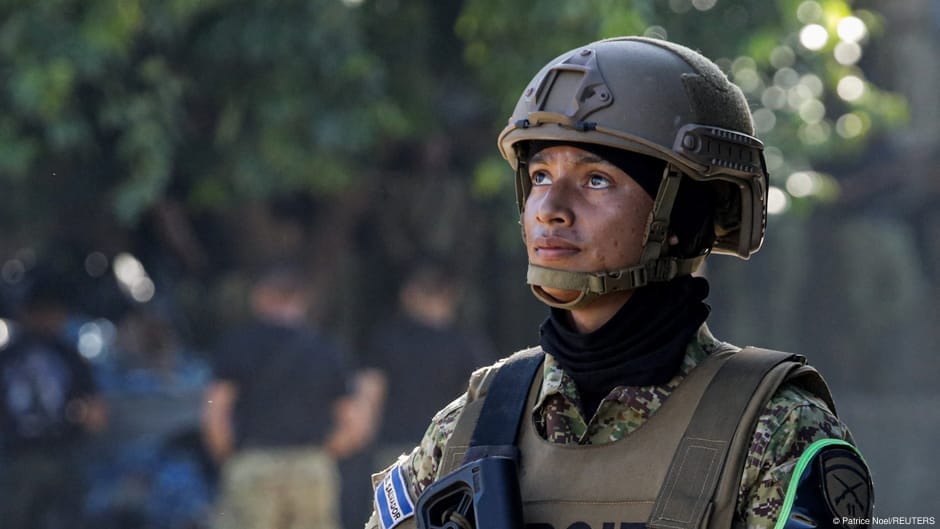
A contingent of Salvadoran troops has been stationed in Haiti, nearly 2,000 kilometers from their homeland, since the beginning of 2025, largely in an effort to curb gang influence.
Last month, Bukele dispatched more than 2,000 troops and special forces to Haiti, ostensibly to rescue four Salvadorans who were ambushed on October 18 and have not yet been found.
How the West messed with Haiti
To view this video please enable JavaScript, and consider upgrading to a web browser that supports HTML5 video
In a post on the social media platform X, Fils-Aime thanked the Salvadoran military for assisting “the fight against gangs.” The two nations, he added, are working alongside the UN-backed Gang Suppression Force (GSF) in an attempt to “regain control of the territory and restore state authority.”
The GSF has been operating in Haiti since 2016, but questions remain about the legitimacy of El Salvador’s presence.
“Where the lines are and where the coordination begins and ends between a bunch of distinct entities and security forces is a huge concern about how this actually plays out, and El Salvador are trying to frame it as their choice, their action,” Jake Johnston, a Haiti expert and director of international research at the Center for Economic and Policy Research (CEPR) in Washington, told the non-profit news agency The New Humanitarian this week.
What is the current situation in Haiti?
A UN report on Haiti released on Thursday described “bloody turf wars, sexual violence and other horrors,” noting that serious violations and abuses continue across the Port-au-Prince metropolitan area and in the Artibonite and South-East departments.
The report found that between July and September 2026, at least 1,167 people were killed and 459 injured, with more than half of that violence stemming from “ground or aerial operations carried out by security forces against gangs, sometimes with the support of a private military company using drones.”
For many observers, this chaos is a major part of the appeal for Bukele, who appears eager to export his mano dura (“iron fist”) policy to foreign soil. That policy led to the mass imprisonment of gang members and a significant drop in the murder rate in a country once notorious for homicide. But Romain Le Cour Grandmaison, a Haiti expert at the Global Initiative Against Transnational Organized Crime, told DW earlier this month that Haiti’s gang problem is more deeply entrenched. He argues that using the same tactics as in El Salvador may not produce the same result.
“Haiti does not currently have the conditions to replicate the Salvadoran model: Its prisons were emptied in 2024, its justice system is largely paralyzed and criminal groups resemble militias more than gangs, with territory, taxes, weapons of war and political networks that protect them,” Le Cour Grandmaison said.
Does El Salvador have US support?
Although El Salvador was among the countries Donald Trump disparaged in 2018 in notorious remarks that he later partially denied, relations between the United States and El Salvador have improved markedly during Trump’s second term.
The number of migrants deported to El Salvador from the United States rose by 98% at the start of 2026, and Le Cour Grandmaison said the US plays “a central, albeit very discreet, role in public life” in El Salvador.
By positioning himself as an ally of Trump, Bukele has secured a level of endorsement and autonomy from the US president to do what he deems necessary to protect El Salvador’s security and that of its troops.
“He said that he has a big problem with Haiti. I said: ‘Look, you’re running your country. You have to do what you have to do,’” Trump said in November.


