







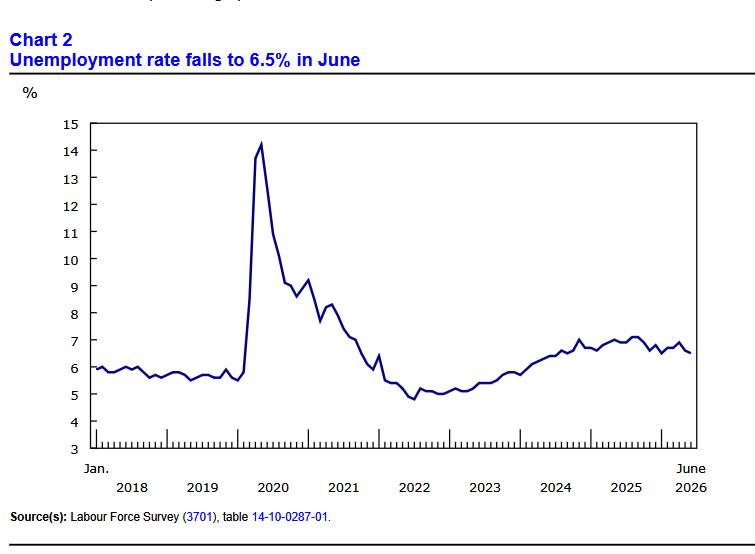
Canada’s labor market demonstrated continued strength in June, as employment rose by 18.2 k—exceeding the projected 10.0 k increase. Although hiring decelerated from May’s robust gain of 87.8 k, the data suggest ongoing stability rather than the sharp slowdown many analysts had expected. The unemployment rate fell unexpectedly to 6.5% from 6.6%, marking a second successive monthly drop and underscoring persistent labor demand despite heightened trade uncertainties.
The report’s nuances were largely positive. The employment rate climbed 0.1 point to 60.8%, while the labor force participation rate remained unchanged at 65.0%, signaling that the fall in unemployment stemmed from increased hiring rather than workers exiting the market. Year‑over‑year, total employment grew by 99 k (0.5%), driven primarily by a 131 k increase in full‑time jobs. Wage growth accelerated, with average hourly earnings up 3.3% YoY after a 3.0% rise in May, indicating that income gains continue to bolster household spending.
While the data are not expected to alter the Bank of Canada’s policy trajectory, they reduce the likelihood of markets pricing in a more accommodative stance ahead of next week’s meeting. Governor Tiff Macklem has noted that Canada’s principal challenge is structural, not cyclical, with USMCA trade‑policy reviews poised to reshape investment and growth dynamics. A single robust employment report does little to address those long‑term uncertainties, but it does indicate that the economy is navigating the adjustment period from a stronger footing than many investors anticipated.

Also Read
- Bitcoin is “A Screaming Buy”: Standard Chartered Backs $100,000 Target, Shrugs Off Strategy (MSTR) Sell-Off
- Sony Advances Stablecoin Plan After OCC Trust Bank Conditional Approval
- SEC Review of 24+ Prediction‑Market ETFs Signals Potential for Brokerage‑Account Betting
- Binance Shifts Policy on Emergency Crypto Freezes, Potentially Slowing U.S. Investigations


