







Cut marks on fossils of an ancient human relative in a Spanish cave provide evidence that members of this species engaged in cannibalism, including both adults and children, approximately 850,000 years ago. New research from the Gran Dolina cave in the Sierra de Atapuerca archaeological complex in northern Spain has uncovered significant insights into this practice previously observed at the site.
The study, conducted by the Catalan Institute of Human Paleoecology and Social Evolution (IPHES), identified cut marks on over two dozen bones and teeth from Homo predecessor, an extinct relative of modern humans that inhabited Europe between 1.2 million and 770,000 years ago. The remains include fragments of a skull, spine, arm, and leg bones, as well as three teeth. These marks, indicative of stone tool activity, confirm the species’ engagement in cannibalistic behavior.
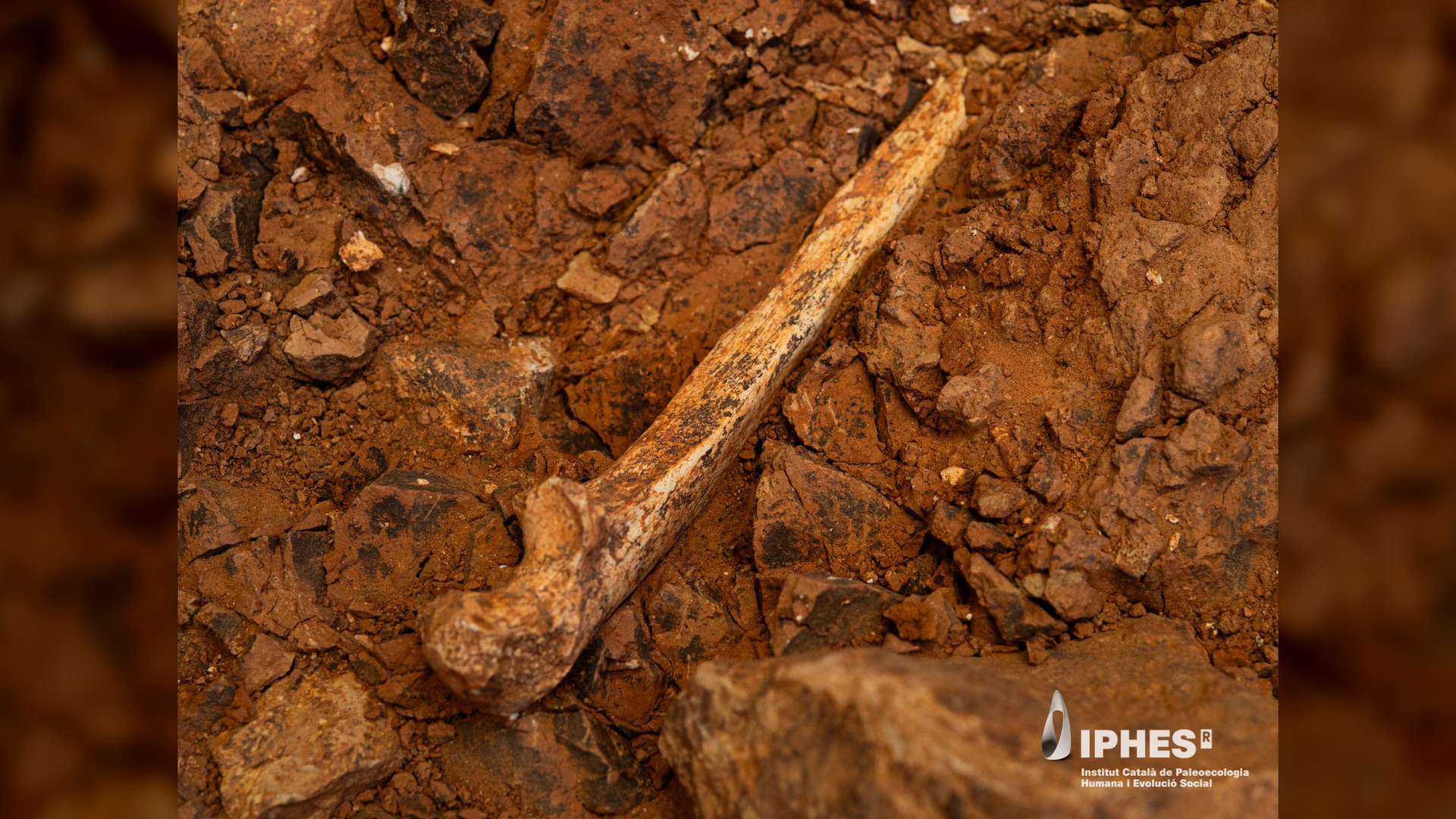

The first-ever ulna (forearm bone) discovered from an adult Homo predecessor individual at Gran Dolina in Atapuerca, Spain.
The discovery of dozens of bones and teeth from this species, including adults, challenges earlier assumptions that cannibalism at Gran Dolina primarily targeted younger individuals. Previously, researchers believed that infants and juveniles were targeted due to their vulnerability. However, the new findings indicate that the practice extended to adult members of their own species, suggesting a more complex social or nutritional imperative.
Gran Dolina’s history of cannibalism among Homo predecessor makes this species the earliest known human relative to systematically consume its own group members, according to the IPHES. The site’s stone tools, made from flint and quartzite, align with the cut marks on human remains, and animal bones from species like hyenas, deer, and rhinoceroses show similar butchering techniques.
“The discovery of more adult individuals, some bearing cut marks, demonstrates that cannibalism was not restricted to younger individuals,” explained biological anthropologist Palmira Saladié, who led the study. “This shifts our understanding of the species’ behavior and social dynamics.”
Current analysis of the remains, which now number over a dozen individuals at Gran Dolina, aims to clarify the frequency and duration of cannibalistic episodes, as well as the community’s social structure. Researchers emphasize that excavations are ongoing, with further discoveries expected to shed light on the motivations behind this practice.


